
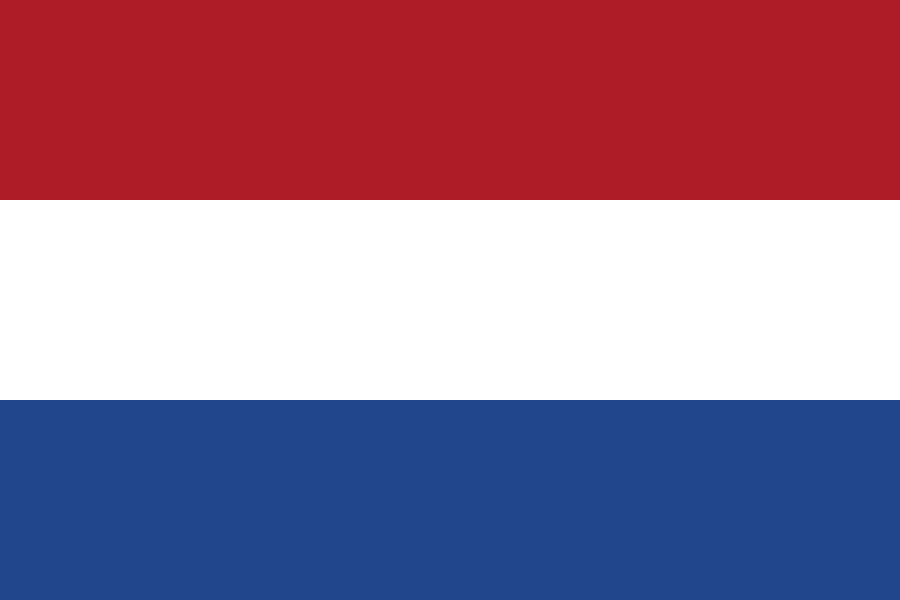
 Netherlands (Kingdom of the)
Netherlands (Kingdom of the) as a State Party to the World Heritage Convention
State Party since: August 26, 1992
Status: Acceptance
Mandates to the World Heritage Committee: 2003-2007
Total of Mandate Years: 4
Total of Mandates: 1
WHC Electoral Group: I (Western Europe/North America)
World Heritage Sites in Netherlands (Kingdom of the) (13)
Cultural: 12 | Natural: 1 | Mixed: 0
- Colonies of Benevolence · Cultural (Transboundary)
- Droogmakerij de Beemster (Beemster Polder) · Cultural
- Dutch Water Defence Lines · Cultural
- Eisinga Planetarium in Franeker · Cultural
- Frontiers of the Roman Empire – The Lower German Limes · Cultural (Transboundary)
- Historic Area of Willemstad, Inner City and Harbour, Curaçao · Cultural
- Ir.D.F. Woudagemaal (D.F. Wouda Steam Pumping Station) · Cultural
- Mill Network at Kinderdijk-Elshout · Cultural
- Rietveld Schröderhuis (Rietveld Schröder House) · Cultural
- Schokland and Surroundings · Cultural
- Seventeenth-Century Canal Ring Area of Amsterdam inside the Singelgracht · Cultural
- Van Nellefabriek · Cultural
- Wadden Sea · Natural (Transboundary)
Map of World Heritage Sites
This interactive map shows the location of all UNESCO World Heritage Sites in Netherlands (Kingdom of the).
World Heritage Inscription Timeline
Tentative World Heritage Sites (2)
- Bonaire Marine Park · submitted: August 17, 2011
- Plantations in West Curaçao · submitted: August 17, 2011
Country Profile Netherlands (Kingdom of the)
Official Name: Kingdom of the Netherlands
Continent: Europe
Subregion: Western Europe
UNESCO Region: Europe and North America
Capital: Amsterdam
Population (2024): 17,994,237
Land Area: 33,670 km²
Currency: Euro (EUR)
About States Parties
States Parties are countries that have joined the World Heritage Convention. They commit to identifying, nominating, and protecting properties of outstanding cultural or natural value on their territory. States Parties are also expected to monitor and report on the condition of inscribed sites.