
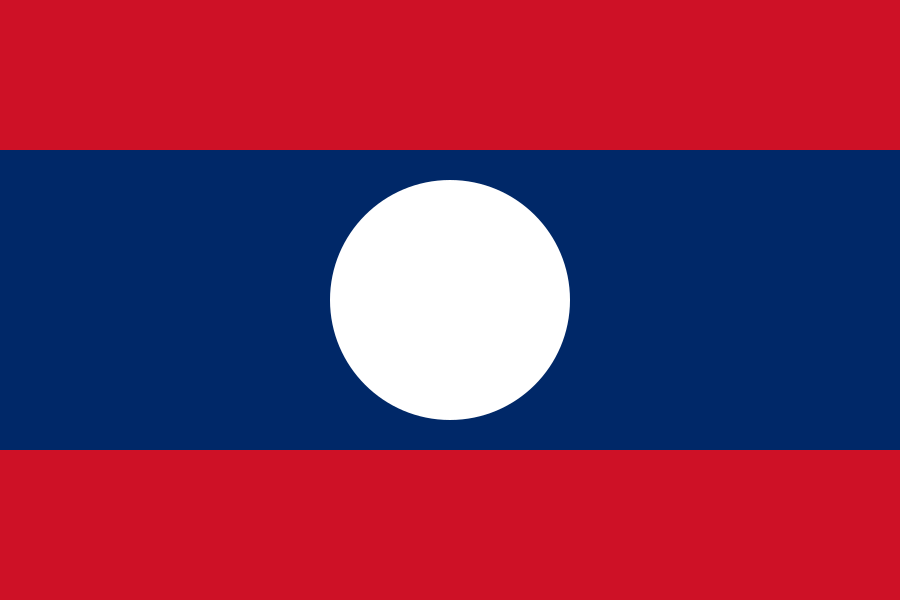
 Lao People's Democratic Republic
Lao People's Democratic Republic as a State Party to the World Heritage Convention
State Party since: March 20, 1987
Status: Ratification
Mandates to the World Heritage Committee: None
Total of Mandate Years: 0
Total of Mandates: 0
WHC Electoral Group: IV (Asia/Pacific)
World Heritage Sites in Lao People's Democratic Republic (4)
Cultural: 3 | Natural: 1 | Mixed: 0
- Megalithic Jar Sites in Xiengkhuang – Plain of Jars · Cultural
- Phong Nha-Ke Bang National Park and Hin Nam No National Park · Natural (Transboundary)
- Town of Luang Prabang · Cultural
- Vat Phou and Associated Ancient Settlements within the Champasak Cultural Landscape · Cultural
Map of World Heritage Sites
This interactive map shows the location of all UNESCO World Heritage Sites in Lao People's Democratic Republic.
World Heritage Inscription Timeline
Tentative World Heritage Sites (2)
- Nakai – Nam Theun National Park (NNT NP) · submitted: June 30, 2025
- That Luang de Vientiane · submitted: March 25, 1992
Country Profile Lao People's Democratic Republic
Official Name: Lao People's Democratic Republic
Continent: Asia
Subregion: South-Eastern Asia
UNESCO Region: Asia and the Pacific
Capital: Vientiane
Population (2024): 7,769,819
Land Area: 230,800 km²
Currency: Lao kip (LAK)
About States Parties
States Parties are countries that have joined the World Heritage Convention. They commit to identifying, nominating, and protecting properties of outstanding cultural or natural value on their territory. States Parties are also expected to monitor and report on the condition of inscribed sites.