
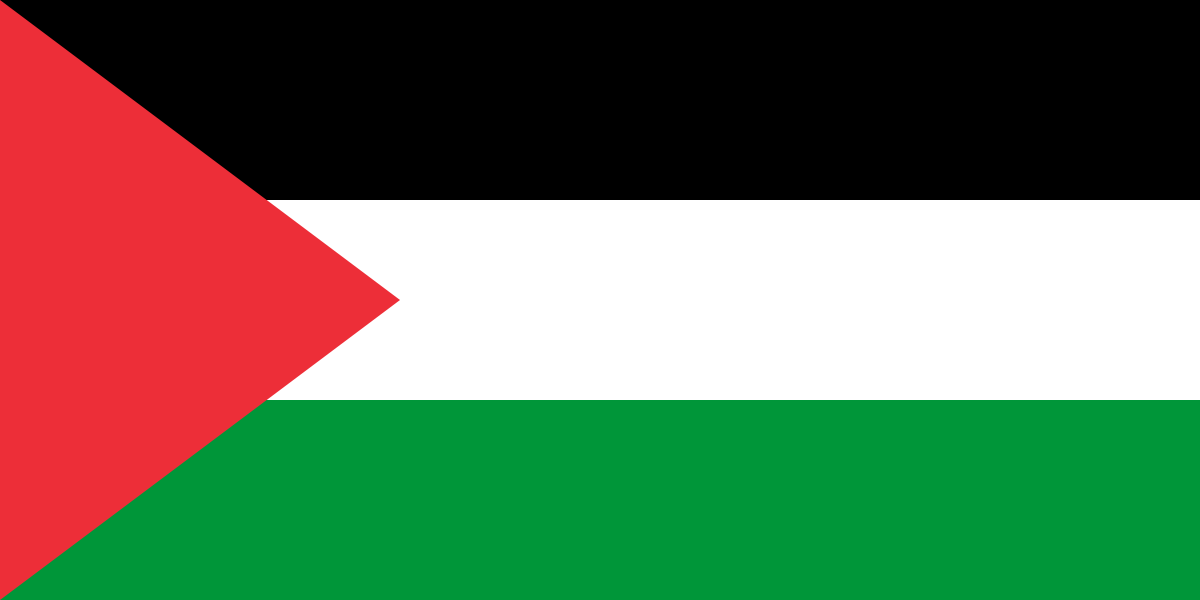
 State of Palestine
State of Palestine as a State Party to the World Heritage Convention
State Party since: December 8, 2011
Status: Ratification
Mandates to the World Heritage Committee: None
Total of Mandate Years: 0
Total of Mandates: 0
WHC Electoral Group: V(b) (Arab States)
World Heritage Sites in State of Palestine (6)
Cultural: 6 | Natural: 0 | Mixed: 0
- Ancient Jericho/Tell es-Sultan · Cultural
- Birthplace of Jesus: Church of the Nativity and the Pilgrimage Route, Bethlehem · Cultural
- Hebron/Al-Khalil Old Town · Cultural
- Palestine: Land of Olives and Vines – Cultural Landscape of Southern Jerusalem, Battir · Cultural
- Saint Hilarion Monastery/ Tell Umm Amer · Cultural
- Sebastia · Cultural
Map of World Heritage Sites
This interactive map shows the location of all UNESCO World Heritage Sites in State of Palestine.
World Heritage Inscription Timeline
Tentative World Heritage Sites (12)
- Hisham’s Palace/ Khirbet al- Mafjar · submitted: October 20, 2020
- Baptism Site “Eshria’a” (Al-Maghtas) · submitted: October 28, 2015
- Wadi Natuf and Shuqba Cave · submitted: June 6, 2013
- Throne Villages · submitted: June 6, 2013
- Mount Gerizim and the Samaritans · submitted: April 2, 2012
- QUMRAN: Caves and Monastery of the Dead Sea Scrolls · submitted: April 2, 2012
- El-Bariyah: wilderness with monasteries · submitted: April 2, 2012
- Old Town of Nablus and its environs · submitted: April 2, 2012
- Sebastia · submitted: April 2, 2012
- Anthedon Harbour · submitted: April 2, 2012
- Umm Al-Rihan forest · submitted: April 2, 2012
- Wadi Gaza Coastal Wetlands · submitted: April 2, 2012
Country Profile State of Palestine
Official Name: State of Palestine
Continent: Asia
Subregion: Western Asia
UNESCO Region: Arab States
Capital: Ramallah; Jerusalem
Population (2024): 5,289,152
Land Area: 6,030 km²
Currency: Egyptian pound (EGP;ILS;JOD)
Related Resources
UNESCO World Heritage Convention: State Party State of Palestine
About States Parties
States Parties are countries that have joined the World Heritage Convention. They commit to identifying, nominating, and protecting properties of outstanding cultural or natural value on their territory. States Parties are also expected to monitor and report on the condition of inscribed sites.