
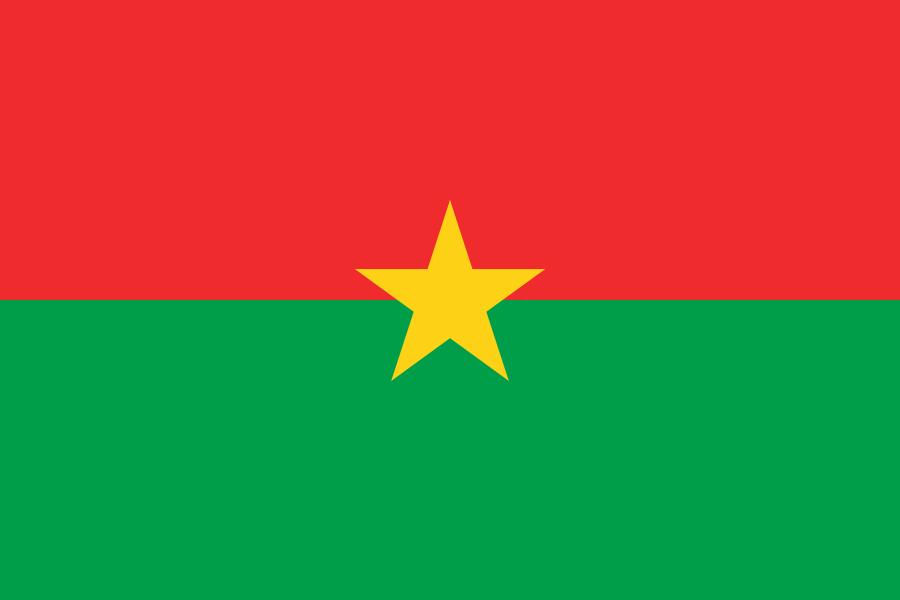
 Burkina Faso
Burkina Faso as a State Party to the World Heritage Convention
State Party since: April 2, 1987
Status: Ratification
Mandates to the World Heritage Committee: 2015-2019
Total of Mandate Years: 4
Total of Mandates: 1
WHC Electoral Group: V(a) (Africa)
World Heritage Sites in Burkina Faso (4)
Cultural: 3 | Natural: 1 | Mixed: 0
- Ancient Ferrous Metallurgy Sites of Burkina Faso · Cultural
- Royal Court of Tiébélé · Cultural
- Ruins of Loropéni · Cultural
- W-Arly-Pendjari Complex · Natural (Transboundary)
Map of World Heritage Sites
This interactive map shows the location of all UNESCO World Heritage Sites in Burkina Faso.
World Heritage Inscription Timeline
Tentative World Heritage Sites (8)
- L’art rupestre au Burkina Faso · submitted: January 5, 2026
- Forêt classée de la mare aux hippopotames · submitted: January 5, 2026
- La Maison du peuple · submitted: January 5, 2026
- Les Mosquées du style soudanais au Burkina Faso · submitted: January 5, 2026
- Sya, centre historique de Bobo-Dioulasso · submitted: January 5, 2026
- Le Village architectural de Koumi · submitted: January 5, 2026
- Les gravures rupestres du Sahel burkinabè : Pobé-Mengao, Arbinda et Markoye · submitted: January 24, 2012
- Les nécropoles de Bourzanga · submitted: April 9, 1996
Country Profile Burkina Faso
Official Name: Burkina Faso
Continent: Africa
Subregion: Western Africa
UNESCO Region: Africa
Capital: Ouagadougou
Population (2024): 23,548,781
Land Area: 273,600 km²
Currency: West African CFA franc (XOF)
Related Resources
About States Parties
States Parties are countries that have joined the World Heritage Convention. They commit to identifying, nominating, and protecting properties of outstanding cultural or natural value on their territory. States Parties are also expected to monitor and report on the condition of inscribed sites.