
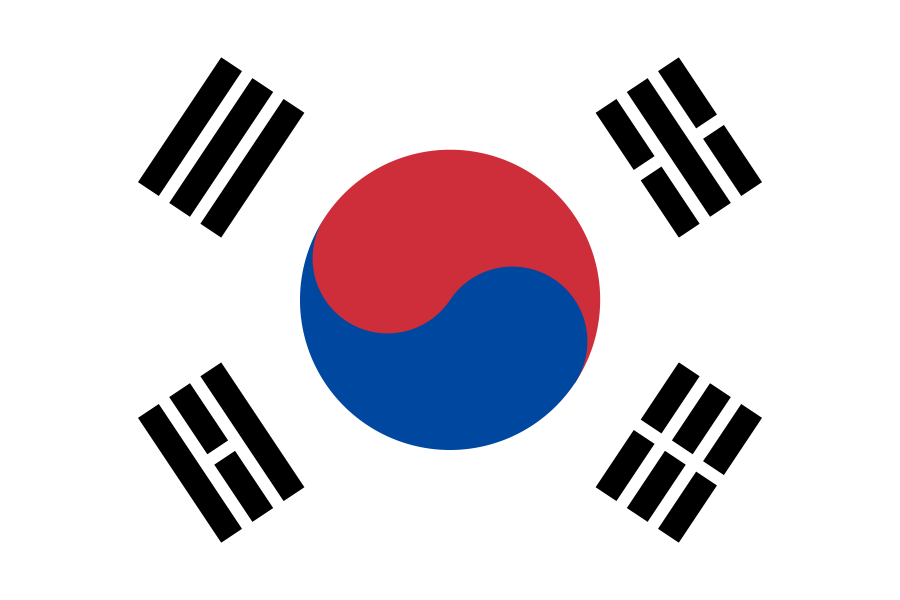
 Republic of Korea
Republic of Korea as a State Party to the World Heritage Convention
State Party since: September 14, 1988
Status: Acceptance
Mandates to the World Heritage Committee: 1997-2003, 2005-2009, 2013-2017, 2023-2027
Total of Mandate Years: 18
Total of Mandates: 4
WHC Electoral Group: IV (Asia/Pacific)
World Heritage Sites in Republic of Korea (17)
Cultural: 15 | Natural: 2 | Mixed: 0
- Baekje Historic Areas · Cultural
- Changdeokgung Palace Complex · Cultural
- Gaya Tumuli · Cultural
- Getbol, Korean Tidal Flats · Natural
- Gochang, Hwasun and Ganghwa Dolmen Sites · Cultural
- Gyeongju Historic Areas · Cultural
- Haeinsa Temple Janggyeong Panjeon, the Depositories for the Tripitaka Koreana Woodblocks · Cultural
- Historic Villages of Korea: Hahoe and Yangdong · Cultural
- Hwaseong Fortress · Cultural
- Jeju Volcanic Island and Lava Tubes · Natural
- Jongmyo Shrine · Cultural
- Namhansanseong · Cultural
- Petroglyphs along the Bangucheon Stream · Cultural
- Royal Tombs of the Joseon Dynasty · Cultural
- Sansa, Buddhist Mountain Monasteries in Korea · Cultural
- Seokguram Grotto and Bulguksa Temple · Cultural
- Seowon, Korean Neo-Confucian Academies · Cultural
Map of World Heritage Sites
This interactive map shows the location of all UNESCO World Heritage Sites in Republic of Korea.
World Heritage Inscription Timeline
Tentative World Heritage Sites (13)
- Getbol, Korean Tidal Flats (Extension) · submitted: May 25, 2023
- Sites of the Busan Wartime Capital · submitted: May 16, 2023
- Archaeological Remains at the Hoeamsa Temple Site in Yangju City · submitted: July 20, 2022
- Stone Buddhas and Pagodas at Hwasun Unjusa Temple · submitted: January 24, 2017
- Capital Fortifications of Hanyang : Hangyangdoseong Capital City Wall, Bukhansanseong Mountain Fortress and Tangchundaeseong Defense Wall · submitted: November 23, 2012
- Naganeupseong, Town Fortress and Village · submitted: March 11, 2011
- Oeam Village · submitted: March 11, 2011
- Upo Wetland · submitted: January 11, 2011
- Salterns · submitted: January 11, 2010
- Ancient Mountain Fortresses in Central Korea · submitted: January 11, 2010
- Sites of fossilized dinosaurs throughout the Southern seacoast · submitted: January 25, 2002
- Kangjingun Kiln Sites · submitted: September 1, 1994
- Mt. Soraksan Nature Reserve · submitted: September 1, 1994
Country Profile Republic of Korea
Official Name: Republic of Korea
Continent: Asia
Subregion: Eastern Asia
UNESCO Region: Asia and the Pacific
Capital: Seoul
Population (2024): 51,751,065
Land Area: 97,600 km²
Currency: South Korean won (KRW)
Related Resources
UNESCO World Heritage Convention: State Party Republic of Korea
About States Parties
States Parties are countries that have joined the World Heritage Convention. They commit to identifying, nominating, and protecting properties of outstanding cultural or natural value on their territory. States Parties are also expected to monitor and report on the condition of inscribed sites.