
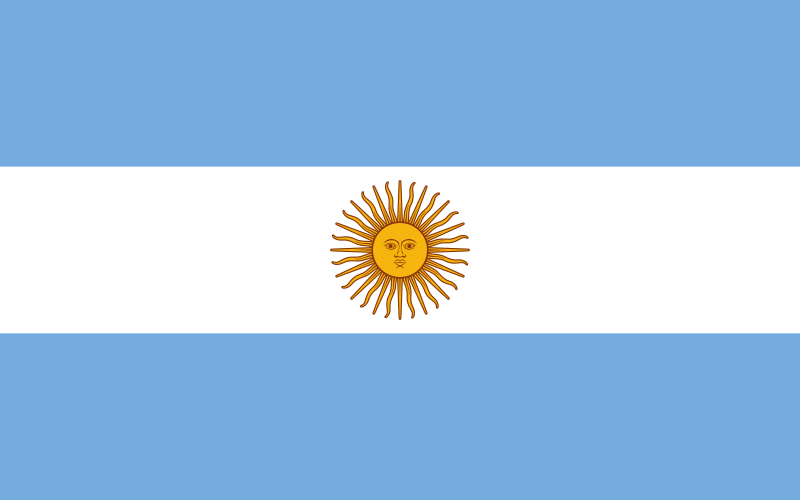
 Argentina
Argentina as a State Party to the World Heritage Convention
State Party since: August 23, 1978
Status: Acceptance
Mandates to the World Heritage Committee: 1978-1985, 2001-2005, 2021-2025
Total of Mandate Years: 15
Total of Mandates: 3
WHC Electoral Group: III (Latin America/Caribbean)
World Heritage Sites in Argentina (12)
Cultural: 7 | Natural: 5 | Mixed: 0
- Cueva de las Manos, Río Pinturas · Cultural
- ESMA Museum and Site of Memory – Former Clandestine Centre of Detention, Torture and Extermination · Cultural
- Iguazu National Park · Natural
- Ischigualasto / Talampaya Natural Parks · Natural
- Jesuit Block and Estancias of Córdoba · Cultural
- Jesuit Missions of the Guaranis: San Ignacio Mini, Santa Ana, Nuestra Señora de Loreto and Santa Maria Mayor (Argentina), Ruins of Sao Miguel das Missoes (Brazil) · Cultural (Transboundary)
- Los Alerces National Park · Natural
- Los Glaciares National Park · Natural
- Península Valdés · Natural
- Qhapaq Ñan, Andean Road System · Cultural (Transboundary)
- Quebrada de Humahuaca · Cultural
- The Architectural Work of Le Corbusier, an Outstanding Contribution to the Modern Movement · Cultural (Transboundary)
Map of World Heritage Sites
This interactive map shows the location of all UNESCO World Heritage Sites in Argentina.
World Heritage Inscription Timeline
Tentative World Heritage Sites (8)
- Workers’ Assembly Halls · submitted: December 5, 2023
- Cueva de las Manos and associated sites of the Pinturas river basin · submitted: January 31, 2018
- City of Tigre and its rowing clubs · submitted: June 8, 2017
- Moisés Ville · submitted: June 29, 2015
- Geological, Paleontological and Archaeological Provincial Reserve Pehuén co - Monte Hermoso · submitted: January 17, 2014
- La Payunia, Campos Volcánicos Llancanelo y Payún Matrú · submitted: April 18, 2011
- Sierra de las Quijadas National Park · submitted: February 24, 2005
- Valle Calchaquí · submitted: November 15, 2001
Country Profile Argentina
Official Name: Argentine Republic
Continent: Americas
Subregion: South America
UNESCO Region: Latin America and the Caribbean
Capital: Buenos Aires
Population (2024): 45,696,159
Land Area: 2,736,690 km²
Currency: Argentine peso (ARS)
Related Resources
About States Parties
States Parties are countries that have joined the World Heritage Convention. They commit to identifying, nominating, and protecting properties of outstanding cultural or natural value on their territory. States Parties are also expected to monitor and report on the condition of inscribed sites.