World Heritage Identification Number: 995
World Heritage since: 2000
Category: Cultural Heritage
WHE Type: Religious Sites & Sacred Architecture
Transboundary Heritage: No
Endangered Heritage: No
Country: 🇦🇷 Argentina
Continent: Americas
UNESCO World Region: Latin America and the Caribbean
Map
The Jesuit Block and Estancias of Córdoba: A Unique Blend of Religion, Education, and Agriculture
The Jesuit Block and Estancias of Córdoba, inscribed as a UNESCO World Heritage Site in 2000, offer a fascinating glimpse into the history of the Jesuit Province of Paraguay. This site, located in the Argentine province of Córdoba, is a testament to the unique religious, social, and economic experiment that spanned over 150 years in the 17th and 18th centuries.
More to come…UNESCO Description of the World Heritage Site
The Jesuit Block in Córdoba, heart of the former Jesuit Province of Paraguay, contains the core buildings of the Jesuit system: the university, the church and residence of the Society of Jesus, and the college. Along with the five estancias, or farming estates, they contain religious and secular buildings, which illustrate the unique religious, social, and economic experiment carried out in the world for a period of over 150 years in the 17th and 18th centuries.
UNESCO Justification of the World Heritage Site
Criterion (ii) The Jesuit buildings and ensembles of Córdoba and the estancias are exceptional examples of the fusion of European and indigenous values and cultures during a seminal period in South America.
Criterion (iv) The religious, social and economic experiment carried out in South America for over 150 years by the Society of Jesus produced a unique form of material expression, which is illustrated by the Jesuit buildings and ensembles of Córdoba and the estancias.
Encyclopedia Record: Jesuit Block and Estancias of Córdoba
The Jesuit Block and Estancias of Córdoba are a former Jesuit reduction built by missionaries in the province of Córdoba, Argentina, named a World Heritage Site in 2000.Additional Site Details
Area: 38.12 hectares
Number of Components: 6
(iv) — Outstanding example of a type of building or landscape
Coordinates: -31.42056 , -64.19111
Image
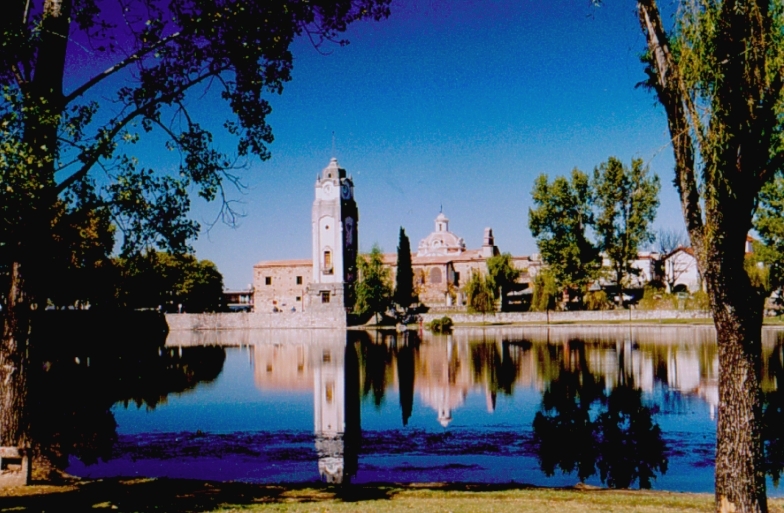
© Unknown, CC BY-SA 3.0 Resized from original. (This derivative is under the same CC BY-SA license.)
World Heritage Research
Discover scientific research and academic studies that deepen our understanding of Jesuit Block and Estancias of Córdoba from its history and significance to its conservation, management, and contemporary challenges.
-
Los afrodescendientes esclavizados en la estancia jesuita de Jesús María (Córdoba) al momento de la expulsión
Afro-descendant enslaved individuals played a crucial role in sustaining the productivity of the Jesuit ranch at Jesús María, Córdoba, which supported the free education provided by the University of San Ignacio. Analysis of inventory data from the time of the expulsion reveals that these workers were essential for both self-sufficiency and market exchanges, though the findings are not representative of broader Jesuit practices. The study provides a demographic snapshot—including age, sex, and other variables—of this enslaved population, despite limitations in available documentation. This research highlights the significance of enslaved labor in the economic functioning of Jesuit establishments during a pivotal historical period.
Küffer, C. F. (2024). Afro-descendants enslaved in the Jesuit ranch of Jesús María (Córdoba) at the time of the expulsion. Antiguos Jesuitas En Iberoamérica, 12, 1–15. https://doi.org/10.31057/2314.3908.v12.46995
View Publication Record | Read Publication -
Las tierras del clero en Córdoba: estancias, chacras y quintas de seculares y regulares. Del antiguo régimen a la organización nacional.
Religious orders, particularly the Jesuits, were highly effective rural entrepreneurs in 17th-century Córdoba, unlike other clerical groups. This study reveals that while Jesuit estates received significant attention in historical research due to their successful management, other religious orders' rural properties were often neglected. The research analyzes the formation of these estates, production strategies, and responses to political and economic crises during the transition from colonial rule to provincial governance. By examining capellanías (pious linkages) and loan collateralization practices, the study highlights the diverse approaches to land acquisition and management among regular and secular clergy, while also capturing the experiences of subaltern subjects within these rural establishments.
Ferreyra, A. (2022). Las tierras del clero en Córdoba: estancias, chacras y quintas de seculares y regulares. Del antiguo régimen a la organización nacional. Estudios Rurales, 2(2). https://doi.org/10.48160/22504001er2.232
View Publication Record | Read Publication -
Arte rupestre en contexto colonial. Análisis preliminares del sitio Alero Estancia Guayascate, norte de Córdoba (Argentina)
Preliminary analysis of rock art at the Alero Estancia Guayascate site, part of the Jesuit Block and Estancias of Córdoba UNESCO World Heritage Site, reveals insights into the intersection of Indigenous and colonial identities during the 16th century. The study suggests that the rock art, traditionally a marker of shared identity among local groups in northern Córdoba, lost its original significance under colonial rule due to disruptions caused by the introduction of new populations through land grants (encomiendas). Archaeological evidence indicates that the site's use declined as Spanish authorities and introduced populations altered daily life, leading to a cessation of rock art production. The research combines ethnohistorical and archaeological methods to contextualize the site within broader colonial dynamics.
López, L., & Recalde, M. A. (2022). Arte rupestre en contexto colonial. Análisis preliminares del sitio Alero Estancia Guayascate, norte de Córdoba (Argentina). Memoria Americana. Cuadernos de Etnohistoria, 30(1), 6–23. https://doi.org/10.34096/mace.v30i1.10436
View Publication Record | Read Publication -
La expresión gráfica en el patrimonio jesuítico de Córdoba la Nueva. De la tradición a la innovación
Advanced graphic representation techniques, building on the traditional manual documentation by architect Juan Kronfuss, offer new potential for preserving and revitalizing the Jesuit heritage of Córdoba la Nueva. Kronfuss's 20th-century drawings, which captured the architectural details of abandoned Jesuit estates and other buildings, laid the groundwork for modern conservation efforts. This study identifies how contemporary technologies—such as Geographic Information Systems (SIG), drones, Building Information Modeling (BIM), and augmented reality models—can enhance territorial structuring, conservation monitoring, and public engagement with this neo-Andalusian heritage. By integrating these methods, researchers propose a more precise and dynamic approach to safeguarding and reactivating historical sites, bridging the gap between traditional documentation and modern innovation.
Gustavo Adolfo, S. F., María Mercedes, P. O. d. I., & Eduardo, M. A. La expresión gráfica en el patrimonio jesuítico de Córdoba la Nueva. De la tradición a la innovación. XIX Congreso Internacional de Expresión Gráfica Arquitectónica, Junio 2022. https://doi.org/10.31428/10317/11398
View Publication Record | Read Publication -
Dueñas de la tierra: representaciones e imaginarios construidos en relación a las herederas de Estancia Tuyutí, Córdoba, 1912-1966
Two women defied societal norms of their time by managing a cattle ranch (estancia) for over 50 years, challenging traditional gender roles and expanding beyond domestic spaces. The study examines the strategies they employed to overcome these constraints and analyzes how their legacy was shaped in the collective imagination from 1912 to 1966. By focusing on biographical trajectories, this research sheds light on the resilience of women in rural Córdoba, Argentina, during a period marked by strict gender norms.
Roizarena, S. (2021). Dueñas de la tierra: representaciones e imaginarios construidos en relación a las herederas de Estancia Tuyutí, Córdoba, 1912-1966. Estudios Del ISHiR, 11(30). https://doi.org/10.35305/eishir.v11i30.1376
View Publication Record | Read Publication