World Heritage Identification Number: 266
World Heritage since: 1983
Category: Cultural Heritage
WHE Type: Buildings & Architectural Ensembles
Transboundary Heritage: No
Endangered Heritage: No
Country: 🇺🇸 United States of America
Continent: Americas
UNESCO World Region: Europe and North America
Map
A Historical and Architectural Marvel: La Fortaleza and San Juan National Historic Site in Puerto Rico
The La Fortaleza and San Juan National Historic Site in Puerto Rico stands as a testament to the rich history and architectural prowess of the Spanish Empire in the New World. Established in 1983, this UNESCO World Heritage Site offers a unique blend of historical significance and architectural beauty that has captivated visitors for centuries.
More to come…UNESCO Description of the World Heritage Site
Between the 16th and 20th centuries, a series of defensive structures was built at this strategic point in the Caribbean Sea to protect the city and the Bay of San Juan. They represent a fine display of European military architecture adapted to harbour sites on the American continent.
UNESCO Justification of the World Heritage Site
Criterion (vi): La Fortaleza and San Juan National Historic Site outstandingly illustrate the adaptation to the Caribbean context of European developments in military architecture from the 16th to 20th centuries. They represent the continuity of more than four centuries of architectural, engineering, military, and political history.
Encyclopedia Record: La Fortaleza and San Juan National Historic Site in Puerto Rico
La Fortaleza and San Juan National Historic Site in Puerto Rico is a UNESCO World Heritage Site located in Puerto Rico, an unincorporated territory of the United States in the Caribbean. The world heritage site consists of several historic defensive structures built by the Spanish Empire between the 16th and 20th centuries to defend the strategically located colonial city of San Juan and its bay from foreign attacks. These fortifications are among the oldest European-built defensive systems and largest of its kind in the Western Hemisphere. In addition to its historic importance the site is notable for its architectural significance as one of the most prominent military adaptations of Renaissance and Baroque architecture in the Americas.Additional Site Details
Area: 33.39 hectares
Number of Components: 3
Coordinates: 18.46666667 , -66.125
Image
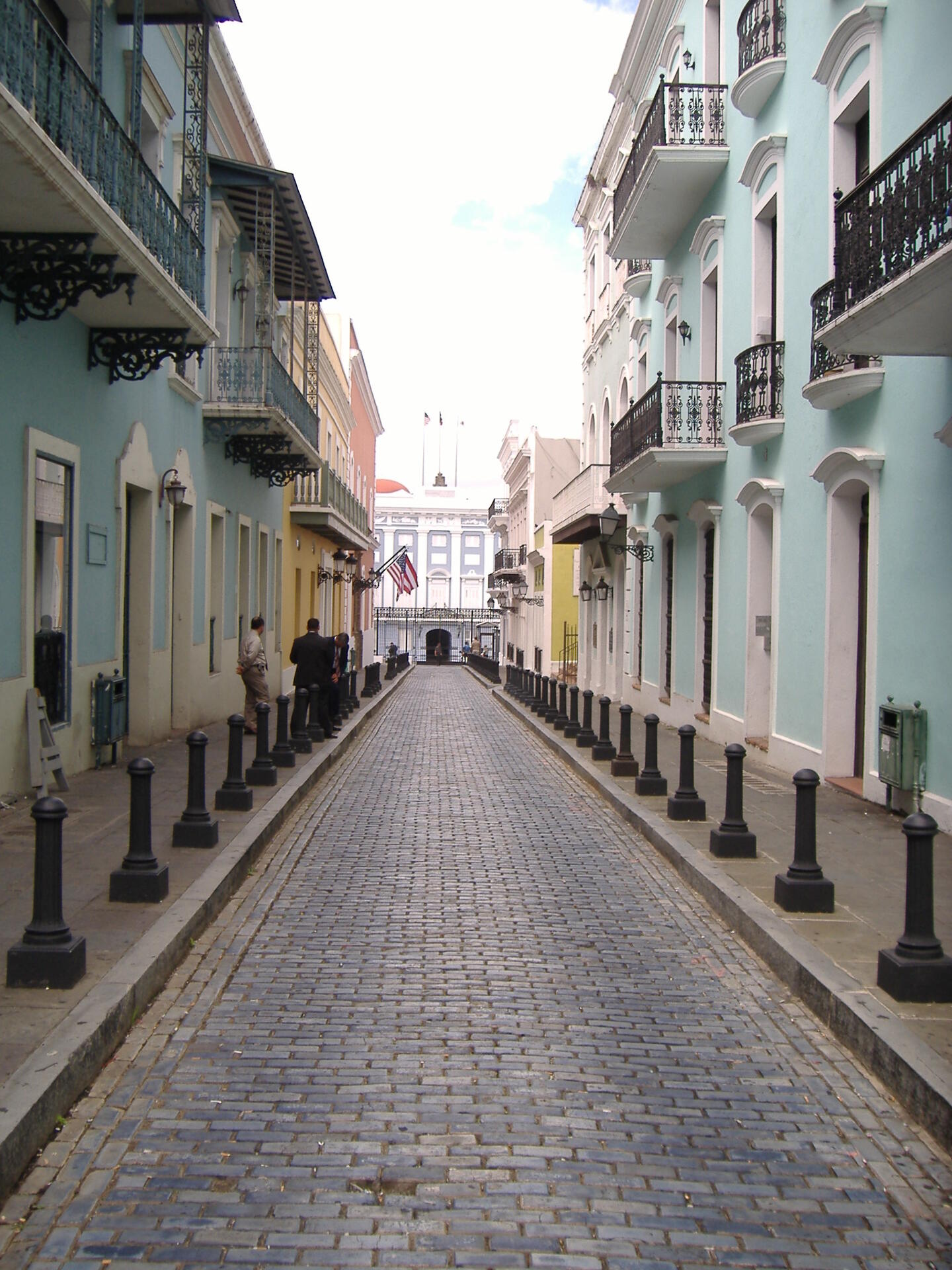
© User:Mtmelendez, CC BY-SA 3.0 Resized from original. (This derivative is under the same CC BY-SA license.)
World Heritage Research
Discover scientific research and academic studies that deepen our understanding of La Fortaleza and San Juan National Historic Site in Puerto Rico from its history and significance to its conservation, management, and contemporary challenges.
-
Proyecto de casa de recreo de los gobernadores y capitanes generales de Puerto Rico: tipo y referentes en el Caribe hispano
A previously overlooked summer residence for Puerto Rico's governors and captains general, constructed in Río Piedras during the 18th and 19th centuries, shares architectural similarities with other recreational homes in the Greater Antilles. This finding emerges from an analysis of extensive graphic and documentary sources, revealing projects, expansions, and renovations carried out by military engineers who also worked on Santa Catalina Fortress—a key site for Puerto Rico's Capitanía General. The study highlights the residence's significance in Caribbean Hispanic architectural history, contrasting it with more documented structures.
Hinarejos Martín, N. (2025). Recreation house project for governors and captains general of Puerto Rico: typology and references in the Hispanic Caribbean. UCOARTE. Revista de Teoría E Historia Del Arte, 105–132. https://doi.org/10.21071/ucoarte.v14i.17523
View Publication Record | Read Publication -
Projected sea-level rise and high tide flooding at San Juan National Historic Site, Puerto Rico
A collaborative study by the U.S. Geological Survey (USGS) and the National Park Service (NPS) projects that sea-level rise (SLR) and high tide flooding (HTF) will significantly threaten San Juan National Historic Site (SAJU), Puerto Rico, with potential inundation of coastal habitats like tidal wetlands and mangrove forests, as well as historic infrastructure. Using 2021-23 data, researchers modeled flood probabilities under various SLR scenarios to assess risks to cultural resources in the park's 0.29 km² land area. The resulting maps provide critical insights for managing future flooding hazards, building on methods from a 2024 study by Thurman and colleagues.
Thurman, H. R., Enwright, N. M., Osland, M. J., Passeri, D. L., Day, R. H., & Simons, B. M. (2024). Projected sea-level rise and high tide flooding at San Juan National Historic Site, Puerto Rico. Fact Sheet. https://doi.org/10.3133/fs20243021
View Publication Record | Read Publication -
De los plátanos de Oller a los Food Trucks: Comida, alimentación y cocina puertorriqueña en ensayos y recetas by Cruz M. Ortiz-Cuadra
Cruz M. Ortiz-Cuadra's work, 'De los plátanos de Oller a los Food Trucks: Comida, alimentación y cocina puertorriqueña en ensayos y recetas,' offers a novel exploration of Puerto Rican culinary culture by intertwining historical analysis with personal and diplomatic recipes. The book reveals the deep cultural significance of food in Puerto Rico, from its role in rural diets to its symbolic representation in art, such as Francisco Oller's 'El Velorio.' It traces the evolution of Puerto Rican cuisine through various lenses—colonial history, gender dynamics (e.g., Doña Inés María Mendoza’s influence), and societal transformations like the rise of supermarkets during the muñocista era. By blending anthropological insights with culinary traditions, Ortiz-Cuadra demonstrates how food is not merely sustenance but a powerful dimension of identity, history, and social change in Puerto Rico.
Torres-González, J. A. (2021). De los plátanos de Oller a los Food Trucks: Comida, alimentación y cocina puertorriqueña en ensayos y recetas by Cruz M. Ortiz-Cuadra. Caribbean Studies, 49(2), 184–186. https://doi.org/10.1353/crb.2021.0024
View Publication Record | Read Publication -
National Treasures Program Strategies for Engaging Diverse Communities
A key insight from the study is that engaging diverse and previously underrepresented communities can significantly enhance the preservation and recognition of historic sites. The research demonstrates how strategic outreach to new constituencies, such as African American churches near Fort Monroe or Native American tribes associated with Chimney Rock, can lead to national monument designations. This approach involves collaborating with community leaders, leveraging existing partnerships (e.g., Crow Canyon Archaeological Center), and tailoring advocacy efforts to reflect the cultural significance of these sites. The study also highlights the importance of respectful engagement and trust-building in preservation efforts, as seen in the successful designation of Chimney Rock National Monument through coordinated tribal support.
Bowers, T. (2015). National Treasures Program Strategies for Engaging Diverse Communities. Forum Journal, 29(2), 39–48. https://doi.org/10.1353/fmj.2015.a567070
View Publication Record | Read Publication