
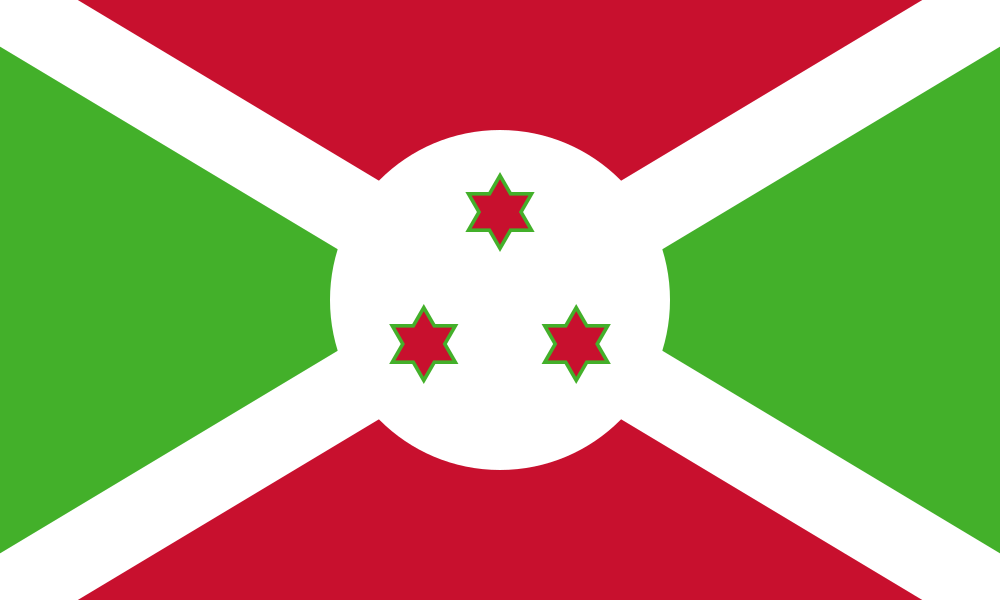
 Burundi
Burundi as a State Party to the World Heritage Convention
State Party since: May 19, 1982
Status: Ratification
Mandates to the World Heritage Committee: None
Total of Mandate Years: 0
Total of Mandates: 0
WHC Electoral Group: V(a) (Africa)
World Heritage Sites
No sites inscribed yet.
Map
No sites to display on the map.
World Heritage Inscription Timeline
No sites inscribed yet.
Tentative World Heritage Sites (10)
- Résidence Royale de Gishora · submitted: February 3, 2026
- Le lac Tanganyika · submitted: February 3, 2026
- La faille de Nyakazu · submitted: February 3, 2026
- Le Parc National de la Ruvubu · submitted: February 3, 2026
- Les Chutes de Karera · submitted: February 3, 2026
- Le Parc National de la Kibira · submitted: February 3, 2026
- Les Lacs du Nord du Burundi · submitted: February 3, 2026
- Les paysages naturels sacrés de Muramvya, de Mpotsa et de Nkiko-Mugamba · submitted: May 9, 2007
- Gasumo, la source la plus méridionale du Nil · submitted: May 9, 2007
- La réserve naturelle de la Rusizi · submitted: May 9, 2007
Country Profile Burundi
Official Name: Republic of Burundi
Continent: Africa
Subregion: Eastern Africa
UNESCO Region: Africa
Capital: Gitega
Population (2024): 14,047,786
Land Area: 25,680 km²
Currency: Burundian franc (BIF)
Related Resources
About States Parties
States Parties are countries that have joined the World Heritage Convention. They commit to identifying, nominating, and protecting properties of outstanding cultural or natural value on their territory. States Parties are also expected to monitor and report on the condition of inscribed sites.