
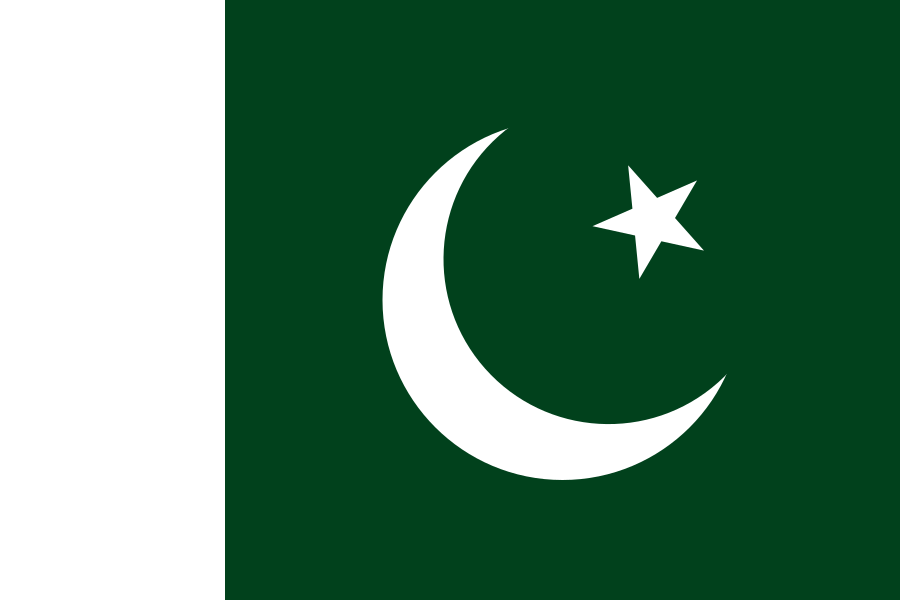
 Pakistan
Pakistan as a State Party to the World Heritage Convention
State Party since: July 23, 1976
Status: Ratification
Mandates to the World Heritage Committee: 1978-1985, 1987-1993
Total of Mandate Years: 13
Total of Mandates: 2
WHC Electoral Group: IV (Asia/Pacific)
World Heritage Sites in Pakistan (6)
Cultural: 6 | Natural: 0 | Mixed: 0
- Archaeological Ruins at Moenjodaro · Cultural
- Buddhist Ruins of Takht-i-Bahi and Neighbouring City Remains at Sahr-i-Bahlol · Cultural
- Fort and Shalamar Gardens in Lahore · Cultural
- Historical Monuments at Makli, Thatta · Cultural
- Rohtas Fort · Cultural
- Taxila · Cultural
Map of World Heritage Sites
This interactive map shows the location of all UNESCO World Heritage Sites in Pakistan.
World Heritage Inscription Timeline
Tentative World Heritage Sites (26)
- Derawar and the Desert Forts of Cholistan · submitted: April 12, 2016
- Hingol Cultural Landscape · submitted: April 12, 2016
- Karez System Cultural Landscape · submitted: April 12, 2016
- Nagarparkar Cultural Landscape · submitted: April 12, 2016
- Central Karakorum National Park · submitted: April 12, 2016
- Deosai National Park · submitted: April 12, 2016
- Ziarat Juniper Forest · submitted: April 12, 2016
- The Salt Range and Khewra Salt Mine · submitted: April 12, 2016
- Archaeological Site of Mehrgarh · submitted: January 30, 2004
- Archaeological Site of Rehman Dheri · submitted: January 30, 2004
- Archaeological Site of Harappa · submitted: January 30, 2004
- Archaeological Site of Ranigat · submitted: January 30, 2004
- Shahbazgarhi Rock Edicts · submitted: January 30, 2004
- Mansehra Rock Edicts · submitted: January 30, 2004
- Baltit Fort · submitted: January 30, 2004
- Tomb of Bibi Jawindi, Baha'al-Halim and Ustead and the Tomb and Mosque of Jalaluddin Bukhari · submitted: January 30, 2004
- Tomb of Shah Rukn-e-Alam · submitted: January 30, 2004
- Port of Banbhore · submitted: January 30, 2004
- Badshahi Mosque, Lahore · submitted: December 14, 1993
- Wazir Khan's Mosque, Lahore · submitted: December 14, 1993
- Tombs of Jahangir, Asif Khan and Akbari Sarai, Lahore · submitted: December 14, 1993
- Hiran Minar and Tank, Sheikhupura · submitted: December 14, 1993
- Tomb of Hazrat Rukn-e-Alam, Multan · submitted: December 14, 1993
- Rani Kot Fort, Dadu · submitted: December 14, 1993
- Shah Jahan Mosque, Thatta · submitted: December 14, 1993
- Chaukhandi Tombs, Karachi · submitted: December 14, 1993
Country Profile Pakistan
Official Name: Islamic Republic of Pakistan
Continent: Asia
Subregion: Southern Asia
UNESCO Region: Asia and the Pacific
Capital: Islamabad
Population (2024): 251,269,164
Land Area: 770,880 km²
Currency: Pakistani rupee (PKR)
About States Parties
States Parties are countries that have joined the World Heritage Convention. They commit to identifying, nominating, and protecting properties of outstanding cultural or natural value on their territory. States Parties are also expected to monitor and report on the condition of inscribed sites.