
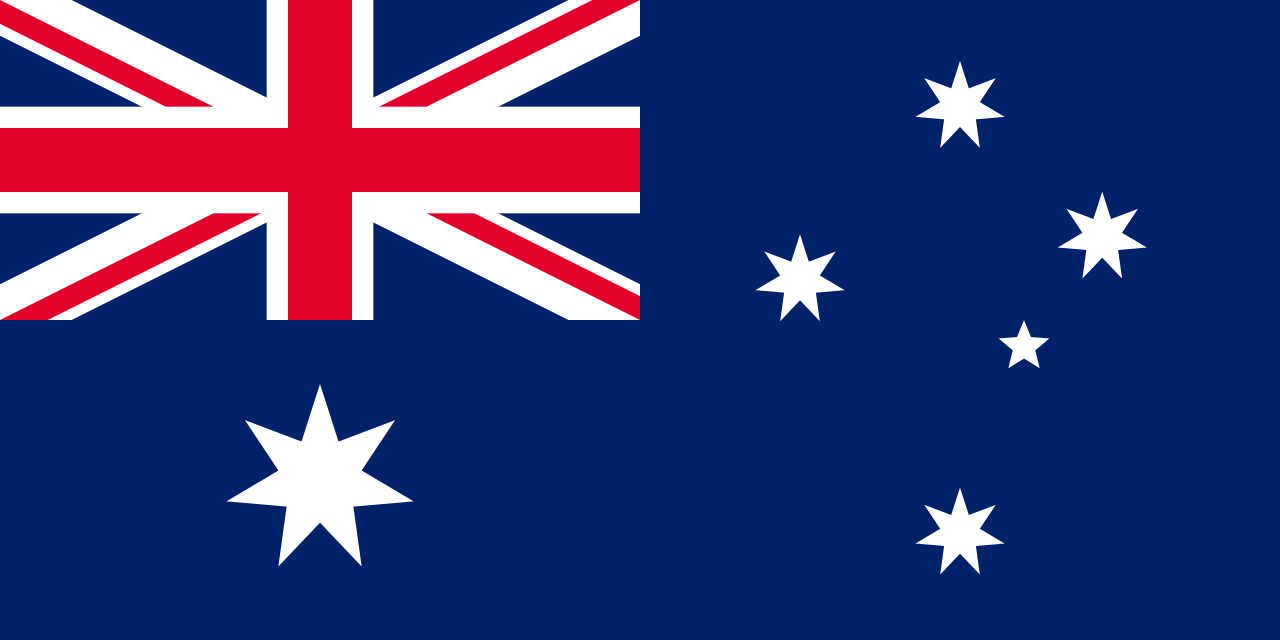
 Australia
Australia as a State Party to the World Heritage Convention
State Party since: August 22, 1974
Status: Ratification
Mandates to the World Heritage Committee: 1976-1983, 1983-1989, 1995-2001, 2007-2011, 2017-2021
Total of Mandate Years: 27
Total of Mandates: 5
WHC Electoral Group: IV (Asia/Pacific)
World Heritage Sites in Australia (21)
Cultural: 5 | Natural: 12 | Mixed: 4
- Australian Convict Sites · Cultural
- Australian Fossil Mammal Sites (Riversleigh / Naracoorte) · Natural
- Budj Bim Cultural Landscape · Cultural
- Gondwana Rainforests of Australia · Natural
- Great Barrier Reef · Natural
- Greater Blue Mountains Area · Natural
- Heard and McDonald Islands · Natural
- Kakadu National Park · Mixed
- K’gari (Fraser Island) · Natural
- Lord Howe Island Group · Natural
- Macquarie Island · Natural
- Murujuga Cultural Landscape · Cultural
- Ningaloo Coast · Natural
- Purnululu National Park · Natural
- Royal Exhibition Building and Carlton Gardens · Cultural
- Shark Bay, Western Australia · Natural
- Sydney Opera House · Cultural
- Tasmanian Wilderness · Mixed
- Uluru-Kata Tjuta National Park · Mixed
- Wet Tropics of Queensland · Natural
- Willandra Lakes Region · Mixed
Map of World Heritage Sites
This interactive map shows the location of all UNESCO World Heritage Sites in Australia.
World Heritage Inscription Timeline
Tentative World Heritage Sites (8)
- Victorian Goldfields · submitted: January 28, 2025
- Australian Cornish Mining Sites: Burra and Moonta · submitted: September 3, 2024
- Cultural Landscapes of Cape York Peninsula · submitted: June 18, 2024
- Workers’ Assembly Halls · submitted: December 15, 2023
- Parramatta Female Factory and Institutions Precinct · submitted: September 13, 2023
- Flinders Ranges · submitted: April 15, 2021
- The Gondwana Rainforests of Australia World Heritage Area (extension to existing property) · submitted: May 7, 2010
- Great Sandy World Heritage Area · submitted: January 4, 2010
Country Profile Australia
Official Name: Commonwealth of Australia
Continent: Oceania
Subregion: Australia and New Zealand
UNESCO Region: Asia and the Pacific
Capital: Canberra
Population (2024): 27,204,809
Land Area: 7,692,020 km²
Currency: Australian dollar (AUD)
Related Resources
About States Parties
States Parties are countries that have joined the World Heritage Convention. They commit to identifying, nominating, and protecting properties of outstanding cultural or natural value on their territory. States Parties are also expected to monitor and report on the condition of inscribed sites.