World Heritage Identification Number: 147
World Heritage since: 1981
Category: Mixed Cultural Heritage and Natural Heritage
WHE Type: Protected Areas & National Parks
Transboundary Heritage: No
Endangered Heritage: No
Country: 🇦🇺 Australia
Continent: Oceania
UNESCO World Region: Asia and the Pacific
Map
Kakadu National Park: A Unique Archaeological and Ethnological Reserve
Kakadu National Park, located in the Northern Territory of Australia, is a remarkable World Heritage Site that offers a captivating blend of natural beauty and rich cultural heritage. Inscribed as a World Heritage Site in 1981, this expansive protected area lies approximately 250 kilometers east of Darwin, extending over an area of diverse landscapes, including tidal flats, floodplains, lowlands, and plateaus.
The park's unique charm lies in its continuous human habitation dating back between 40,000 and 65,000 years. The ancient cave paintings scattered throughout the park serve as a testament to the skills and lifestyle of the region's indigenous inhabitants, ranging from prehistoric hunter-gatherers to the modern Aboriginal communities who maintain strong cultural and custodial connections to the park and live in communities on and around Aboriginal land associated with Kakadu.
Artworks and other artefacts provide valuable insights into the history, culture, and spiritual beliefs of the region's original inhabitants. Most recent archaeological discoveries at the Madjedbebe rock shelter, located on Mirarr Aboriginal land near the eastern boundary of Kakadu, have pushed the scientifically dated evidence of human occupation back to arrund 65,000 years ago, making the region home to one of the oldest, if not the oldest, continuous living cultures on earth.
Kakadu National Park is not only a significant archaeological site but also a biodiversity hotspot. Its complex ecosystems harbor a vast array of rare or endemic plant and animal species. The park is home to numerous threatened species such as the northern quoll and the Gouldian finch, as well as iconic animals like the saltwater crocodile. The park's diverse habitats support a rich avifauna, making it a popular destination for birdwatchers worldwide.
One of the most striking features of Kakadu National Park, which covers an area of 19,800 square kilometers, is its seasonal flooding. During the wet season, vast areas of the park are submerged, creating a dynamic landscape that supports a diverse array of aquatic life. Conversely, during the dry season, the water recedes, revealing a mosaic of open woodland, savannah, and billabongs teeming with wildlife.
In addition to its natural wonders, Kakadu National Park boasts several culturally significant sites. Ubirr Rock, for instance, features a series of ancient rock paintings depicting the Dreamtime stories of the local Bininj/Mungguy people. Nourlangie Rock, another important site, showcases a variety of rock art styles, providing a fascinating glimpse into the evolution of Aboriginal art over thousands of years.
Visitors to Kakadu National Park can explore the park through various means, including guided tours, hiking trails, and boat cruises. The park offers a range of accommodations, from campgrounds to luxury lodges, ensuring that travelers of all preferences can experience this extraordinary destination.
To recap, Kakadu National Park stands as a testament to the rich cultural heritage and breathtaking natural beauty of Australia's Top End. Its unique combination of archaeological sites, ethnological reserves, and diverse ecosystems make it a must-visit destination for anyone seeking to immerse themselves in the heart of Australia's wilderness and gain insights into the continent's deep historical roots.
UNESCO Description of the World Heritage Site
This unique archaeological and ethnological reserve, located in the Northern Territory, has been inhabited continuously for more than 40,000 years. The cave paintings, rock carvings and archaeological sites record the skills and way of life of the region’s inhabitants, from the hunter-gatherers of prehistoric times to the Aboriginal people still living there. It is a unique example of a complex of ecosystems, including tidal flats, floodplains, lowlands and plateaux, and provides a habitat for a wide range of rare or endemic species of plants and animals.
UNESCO Justification of the World Heritage Site
Criterion (i) : Kakadu’s art sites represent a unique artistic achievement because of the wide range of styles used, the large number and density of sites and the delicate and detailed depiction of a wide range of human figures and identifiable animal species, including animals long-extinct.
Criterion (vi) : The rock art and archaeological record is an exceptional source of evidence for social and ritual activities associated with hunting and gathering traditions of Aboriginal people from the Pleistocene era until the present day.
Criterion (vii) : Kakadu National Park contains a remarkable contrast between the internationally recognised Ramsar–listed wetlands and the spectacular rocky escarpment and its outliers. The vast expanse of wetlands to the north of the park extends over tens of kilometres and provides habitat for millions of waterbirds. The escarpment consists of vertical and stepped cliff faces up to 330 metres high and extends in a jagged and unbroken line for hundreds of kilometres. The plateau areas behind the escarpment are inaccessible by vehicle and contain large areas with no human infrastructure and limited public access. The views from the plateau are breathtaking.
Criterion (ix) : The property incorporates significant elements of four major river systems of tropical Australia. Kakadu’s ancient escarpment and stone country span more than two billion years of geological history, whereas the floodplains are recent, dynamic environments, shaped by changing sea levels and big floods every wet season. These floodplains illustrate the ecological and geomorphological effects that have accompanied Holocene climate change and sea level rise. The Kakadu region has had relatively little impact from European settlement, in comparison with much of the Australian continent. With extensive and relatively unmodified natural vegetation and largely intact faunal composition, the park provides a unique opportunity to investigate large-scale evolutionary processes in a relatively intact landscape. Kakadu’s indigenous communities and their myriad rock art and archaeological sites represent an outstanding example of humankind’s interaction with the natural environment.
Criterion (x) : The park is unique in protecting almost the entire catchment of a large tropical river and has one of the widest ranges of habitats and greatest number of species documented of any comparable area in tropical northern Australia. Kakadu’s large size, diversity of habitats and limited impact from European settlement has resulted in the protection and conservation of many significant habitats and species. The property protects an extraordinary number of plant and animal species including over one third of Australia’s bird species, one quarter of Australia’s land mammals and an exceptionally high number of reptile, frog and fish species. Huge concentrations of waterbirds make seasonal use of the park’s extensive coastal floodplains.
Encyclopedia Record: Kakadu National Park
Kakadu National Park is a protected area in the Northern Territory of Australia, 171 km (106 mi) southeast of Darwin. It is a World Heritage Site. Kakadu is also gazetted as a locality, covering the same area as the national park, with 313 people recorded living there in the 2016 Australian census.Additional Site Details
Area: 1,980,995 hectares
Number of Components: 3
(vi) — Directly associated with events or living traditions
(vii) — Contains superlative natural phenomena or beauty
(ix) — Outstanding example representing ecological and biological processes
(x) — Contains most important habitats for biodiversity
Coordinates: -12.83333333 , 132.8333333
IUCN World Heritage Outlook
The 2025 Conservation Outlook on Kakadu National Park reports the following assessment:
Source: International Union for Conservation of Nature (IUCN) · View assessment
Image
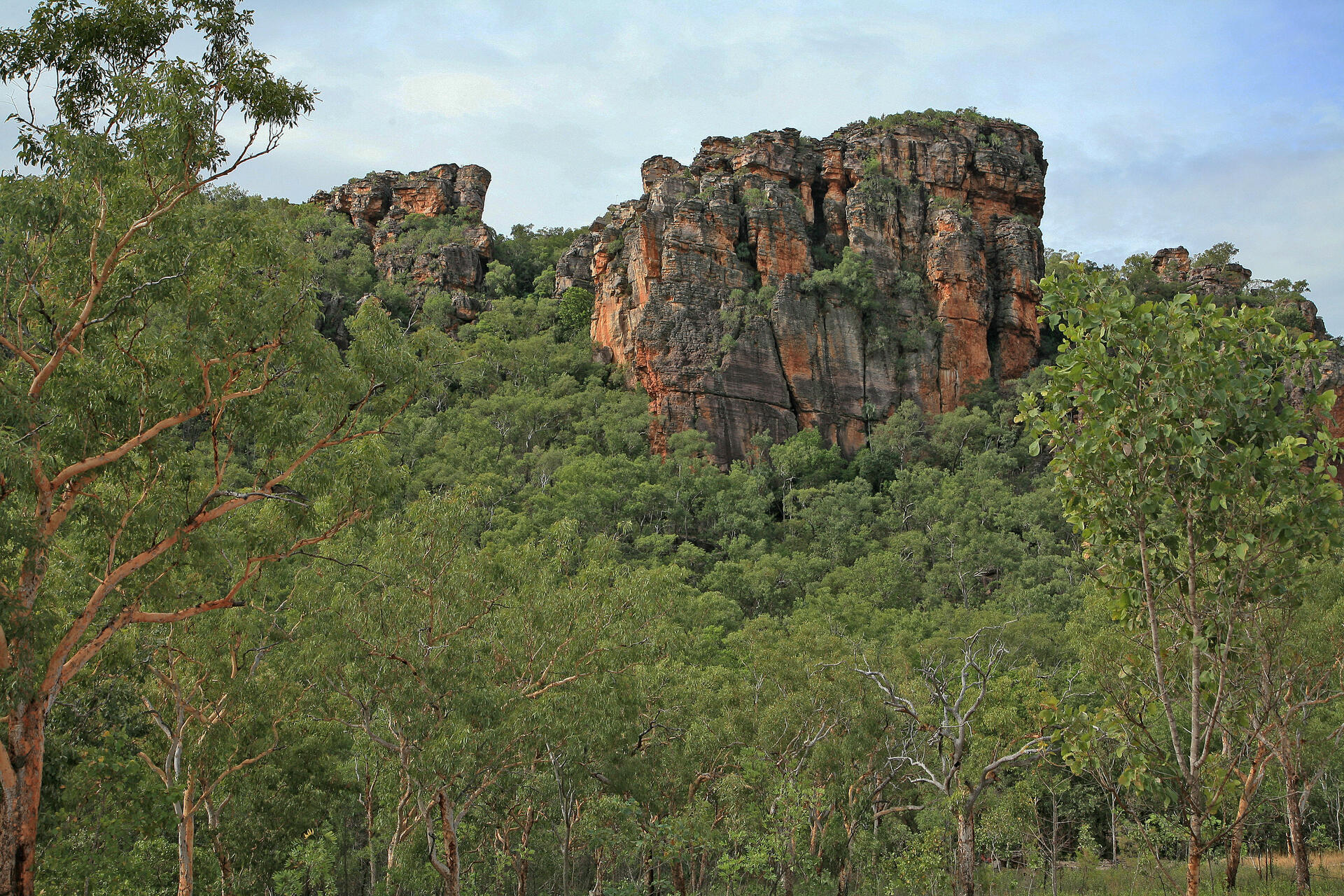
© W. Bulach, CC BY-SA 4.0 Resized from original. (This derivative is under the same CC BY-SA license.)
World Heritage Research
Discover scientific research and academic studies that deepen our understanding of Kakadu National Park from its history and significance to its conservation, management, and contemporary challenges.
-
Contextualising digital cultural heritage: Bininj GIS and 3D modelling for conservation at Ubirr rock art complex, Kakadu National Park, Australia
A groundbreaking digital approach to cultural heritage conservation at Ubirr rock art complex, Kakadu National Park, demonstrates how 3D modelling and Participatory GIS can amplify Traditional Owner voices while addressing complex management challenges. The study reveals that integrating Indigenous cultural values through photogrammetry and Unreal Engine 5 creates a culturally safe framework for heritage protection, balancing Aboriginal ownership, tourism, and conservation efforts. This methodology sets a precedent for Indigenous communities, cartographers, and practitioners to engage with digital mapping in ways that respect cultural protocols while preserving intangible and tangible heritage values.
Provost, S., Jones, T., Marshall, M., Wesley, D., Rangers, N., & Nayinggul, A. (2025). Contextualising digital cultural heritage: Bininj GIS and 3D modelling for conservation at Ubirr rock art complex, Kakadu National Park, Australia. International Journal of Heritage Studies, 31(11), 1440–1469. https://doi.org/10.1080/13527258.2025.2543749
View Publication Record | Read Publication -
Understanding Indigenous values and priorities for wetlands to guide weed management actions: Lessons from the Nardab floodplain in northern Australia’s Kakadu National Park
Indigenous-led research on the Nardab floodplain in Kakadu National Park reveals that effective weed management must account for diverse, site-specific cultural values and priorities. The study found that relationships between Indigenous peoples and wetlands vary significantly across even small areas, necessitating tailored approaches to conservation rather than generalized strategies. Key factors guiding management included bush tucker populations, ceremonial significance, knowledge-sharing potential, and visitor experiences. This approach ensures that ecological restoration aligns with the cultural landscapes embedded in Indigenous Country, offering a model for inclusive wetland management in World Heritage Areas.
Bangalang, N.-g., Nadji, J., Nayinggul, A., Nadji, S., Nayinggul, A., Dempsey, S., Mangiru, K., Dempsey, J., McCartney, S., Mairi Macdonald, J., & Robinson, C. J. (2022). Understanding Indigenous values and priorities for wetlands to guide weed management actions: Lessons from the Nardab floodplain in northern Australia’s Kakadu National Park. Ecological Management & Restoration, 23(S1), 105–116. Portico. https://doi.org/10.1111/emr.12542
View Publication Record | Read Publication -
Looking After the Rock Art of Kakadu National Park, Australia
A collaborative, decolonized approach to rock art conservation in Kakadu National Park demonstrates that centering Indigenous culture and traditional knowledge can enhance the protection of significant Aboriginal heritage. The study highlights how a partnership between Traditional Owners, park staff, and specialists integrates Western scientific techniques with Aboriginal stewardship practices, guided by Elders' voices. This co-designed program fosters intergenerational knowledge exchange through reconnecting families to Country, improving conservation skills among local communities and rangers. By prioritizing culture over conventional methods, the model advances best practices for preserving rock art (bim), ensuring its enduring legacy while strengthening cultural connections.
Marshall, M., May, K., Lee, J., & O’Loughlin, G. (2022). Looking After the Rock Art of Kakadu National Park, Australia. Studies in Conservation, 67(sup1), 156–165. https://doi.org/10.1080/00393630.2022.2066321
View Publication Record | Read Publication -
Double-Differenced dNBR: Combining MODIS and Landsat Imagery to Map Fine-Grained Fire MOSAICS in Lowland Eucalyptus Savanna in Kakadu National Park, Northern Australia
Researchers developed the 'double-differenced dNBR' method, which combines high-resolution Landsat and coarse-scale MODIS/VIIRS imagery to map fine-grained fire mosaics (pyrodiversity) in Kakadu National Park's lowland eucalyptus savannas. This approach enhances contrast by subtracting long-term average dNBR from seasonal Landsat mosaics, effectively addressing the limitations of existing satellite-based fire mapping techniques. The study demonstrates that this method accurately captures pyrodiversity—critical for biodiversity persistence—in homogenous landscapes, though it may not suit heterogeneous areas. Comparison with other fire metrics suggests high accuracy, but further field validation is recommended.
Williamson, G. J., Ellis, T. M., & Bowman, D. M. J. S. (2022). Double-Differenced dNBR: Combining MODIS and Landsat Imagery to Map Fine-Grained Fire MOSAICS in Lowland Eucalyptus Savanna in Kakadu National Park, Northern Australia. Fire, 5(5), 160. https://doi.org/10.3390/fire5050160
View Publication Record | Read Publication -
Coproduction mechanisms to weave Indigenous knowledge, artificial intelligence, and technical data to enable Indigenous-led adaptive decision making: lessons from Australia’s joint managed Kakadu National Park
A collaborative research project in Kakadu National Park, Australia, demonstrates how Indigenous knowledge can be ethically integrated with artificial intelligence (AI) and technical data to support adaptive environmental management. The study developed coproduction mechanisms that combined qualitative Indigenous assessments of culturally significant sites with quantitative ecological data from drone and camera surveys. These mechanisms enabled local Bininj traditional owners to guide on-the-ground actions, ensuring that multiple knowledge sources were used respectfully and effectively. This approach empowers Indigenous-led decision-making while addressing complex environmental challenges, such as those faced in managing the Ramsar-listed Nardab wetland within a UNESCO World Heritage Site.
Robinson, C., Macdonald, J., Perry, J., Nadji, J., Nadji, S., McCartney, S., Taylor, A., Hunter, F., Cooper, D., Moyle, F., Drummond, A., Borovac, C., van Bodegraven, S., Gilfedder, M., Setterfield, S., & Douglas, M. (2022). Coproduction mechanisms to weave Indigenous knowledge, artificial intelligence, and technical data to enable Indigenous-led adaptive decision making: lessons from Australia’s joint managed Kakadu National Park. Ecology and Society, 27(4). https://doi.org/10.5751/es-13747-270436
View Publication Record | Read Publication -
An Analysis of Motif Clusters at the Nanguluwurr Rock Art Site, Kakadu National Park, N. T. Australia
Recent analysis of Nanguluwurr, a rock art site within Kakadu National Park's Burrungkuy (Nourlangie) complex, reveals distinct clusters of motifs—spirit figures, material culture, fish, and painted hands—suggesting 'meaning clusters' that may reflect bursts of painting activity spanning millennia. The study identifies these motif groupings as significant markers of cultural expression, linking ancient Dynamic Figures to more recent X-ray fish depictions. By examining spatial distribution and chronological sequences, researchers propose that the site's artistry evolved in discrete phases, offering insights into its role within a broader cultural landscape.
Hayward, J. A., May, S. K., Goldhahn, J., Jalandoni, A., & Taçon, P. S. C. (2021). An Analysis of Motif Clusters at the Nanguluwurr Rock Art Site, Kakadu National Park, N. T. Australia. Journal of Field Archaeology, 46(6), 414–428. https://doi.org/10.1080/00934690.2021.1926698
View Publication Record | Read Publication -
Indigenous-led responsible innovation: lessons from co-developed protocols to guide the use of drones to monitor a biocultural landscape in Kakadu National Park, Australia
Indigenous-led responsible innovation protocols for drone use in Kakadu National Park demonstrate how traditional worldviews can guide ethical technological integration. These protocols empower Indigenous governance, foster trusted research relationships, and enable ongoing Indigenous-led technological advancement. Applied at Jarrangbarnmi, a biocultural landscape owned by the Jawoyn people, the protocols ensure that cultural responsibilities for knowledge sharing and stewardship inform the co-design of innovations like drones. This approach offers a model for adaptive co-management of Indigenous lands, balancing technological progress with deep cultural values.
Macdonald, J. M., Robinson, C. J., Perry, J., Lee, M., Barrowei, R., Coleman, B., Markham, J., Barrowei, A., Markham, B., Ford, H., Douglas, J., Hunter, J., Gayoso, E., Ahwon, T., Cooper, D., May, K., Setterfield, S., & Douglas, M. (2021). Indigenous-led responsible innovation: lessons from co-developed protocols to guide the use of drones to monitor a biocultural landscape in Kakadu National Park, Australia. Journal of Responsible Innovation, 8(2), 300–319. https://doi.org/10.1080/23299460.2021.1964321
View Publication Record | Read Publication