World Heritage Identification Number: 698
World Heritage since: 1994
Category: Natural Heritage
WHE Type: Natural Landscapes & Geographic Features
Transboundary Heritage: No
Endangered Heritage: No
Country: 🇦🇺 Australia
Continent: Oceania
UNESCO World Region: Asia and the Pacific
Map
The Australian Fossil Mammal Sites: A Window into Evolutionary History
The Australian Fossil Mammal Sites, comprising the Riversleigh and Naracoorte regions in Queensland and South Australia respectively, are a testament to the richness and diversity of Australia's unique faunal history. Inscribed as a UNESCO World Heritage Site in 1994, these sites rank among the top 10 fossil sites globally, offering an exceptional insight into the key stages of evolution of Australia's distinctive mammalian species.
The Riversleigh World Heritage area, located in northwestern Queensland, extends across 10,000 ha and sits within Boodjamulla National Park. Riversleigh boasts one of the most extensive and well-preserved fossil records in the world. Dating roughly from the Oligocene to Miocene, about 10–30 million years ago, the site contains exquisitely preserved remains of ancestral marsupials, monotremes, bats, possums, kangaroos, and many other lineages. The exceptional preservation of these fossils provides valuable information about the evolution and adaptation of these animals to changing climates and environments, and a crucial window into the origins of modern Australian mammal diversity.
In contrast, the Naracoorte World Heritage area, situated in South Australia, covers around 305 hectares within a larger national park and offers a more recent record of Australia's mammalian history, preserving a fossil record from about 530,000 years ago to the present. The site features numerous limestone caves that have preserved an impressive arrayof species, including giant kangaroos, enormous wombats, thylacines, and the formidable marsupial lion (Thylacoleo carnifex). These fossils provide insights into the adaptability of Australia's unique mammals during periods of significant climate change.
Both Riversleigh and Naracoorte offer a remarkable glimpse into the evolutionary history of Australia's mammals. Their fossil records span millions of years, providing researchers with a wealth of data to study the development and diversification of Australia's unique fauna. The exceptional preservation of these fossils has enabled scientists to reconstruct the diets, behaviors, and habitats of long-extinct species, shedding light on the factors that contributed to their extinction and the survival of modern-day species.
Moreover, the Australian Fossil Mammal Sites serve as a powerful educational tool, fostering public understanding and appreciation of Australia's natural heritage. By visiting these sites, interested visitors can gain a deeper appreciation for the richness and diversity of Australia's unique fauna and the importance of preserving these precious resources for future generations.
To sum it up, the Australian Fossil Mammal Sites at Riversleigh and Naracoorte represent an invaluable resource for understanding the evolutionary history of Australia's unique mammals. These sites offer a rare opportunity to explore the diverse and fascinating world of Australia's extinct mammals, providing insights into the factors that shaped the continent's current fauna. As such, they are rightfully recognized as a UNESCO World Heritage Site, a symbol of Australia's rich natural heritage and a testament to the power of scientific research in uncovering the mysteries of our planet's past.
UNESCO Description of the World Heritage Site
Riversleigh and Naracoorte, situated in the north and south respectively of eastern Australia, are among the world’s 10 greatest fossil sites. They are a superb illustration of the key stages of evolution of Australia’s unique fauna.
UNESCO Justification of the World Heritage Site
Criterion (viii): These fossil deposits are outstanding examples representing major stages of earth's history, including the record of life. Riversleigh provides exceptional, and in many cases unique, mammal assemblages from the Oligocene to Miocene, spanning from 10-30 million years ago. These assemblages document changes in habitat from humid, lowland rainforest to dry eucalypt forests and woodlands, and provide the first fossil record for many distinctive groups of living mammals such as the marsupial moles and feather-tailed possums. The assemblages recovered from the caves at Naracoorte Victoria Fossil Cave preserve an outstanding record of more recent terrestrial vertebrate life. These open a window into a significant period of earth’s history from the mid-Pleistocene to present (530,000 years ago to today), a period characterised by great climatic changes.
Criterion (ix): Both sites provide complementary evidence of key stages in the evolution of the fauna of one of the world's most isolated continents. The history of mammal lineages in modern Australia can be traced through these fossil deposits and, as a consequence, there is a better understanding of the conservation status of living mammals and their communities. At Riversleigh the mammal fossil assemblages indicate changes in habitat from humid lowland rainforest to dry eucalypt forests and woodlands from the Oligocene to the Miocene, and indicate the rainforest origins for the majority of mammal groups that today occupy arid Australia. The vertebrate species present at Naracoorte provide a key clue to understanding their responses to climate change, and include superbly preserved examples of the Australian ice age megafauna (giant, now extinct mammals, birds and reptiles), such as the enigmatic extinct marsupial lion (Thylocoleo carnifex). This site also hosts essentially modern species including marsupials such as the Tasmanian devil (Sarcophilus harrisii), Tasmanian tiger (Thylacinus cynocephalus), wallabies and possums; placental mammals including mice and bats; and snakes, lizards, frogs and turtles. The Naracoorte assemblages span the probable time of arrival of humans to Australia and thus are of additional value in helping unravel the complex relationships between humans and their environment. They highlight the impacts of both climatic change and humans on Australia’s mammals, including its now vanished megafauna.
Additional Site Details
Area: 10,326 hectares
Number of Components: 7
(ix) — Outstanding example representing ecological and biological processes
Coordinates: -19.08333333 , 138.7166667
IUCN World Heritage Outlook
The 2025 Conservation Outlook on Australian Fossil Mammal Sites (Riversleigh / Naracoorte) reports the following assessment:
Source: International Union for Conservation of Nature (IUCN) · View assessment
Image
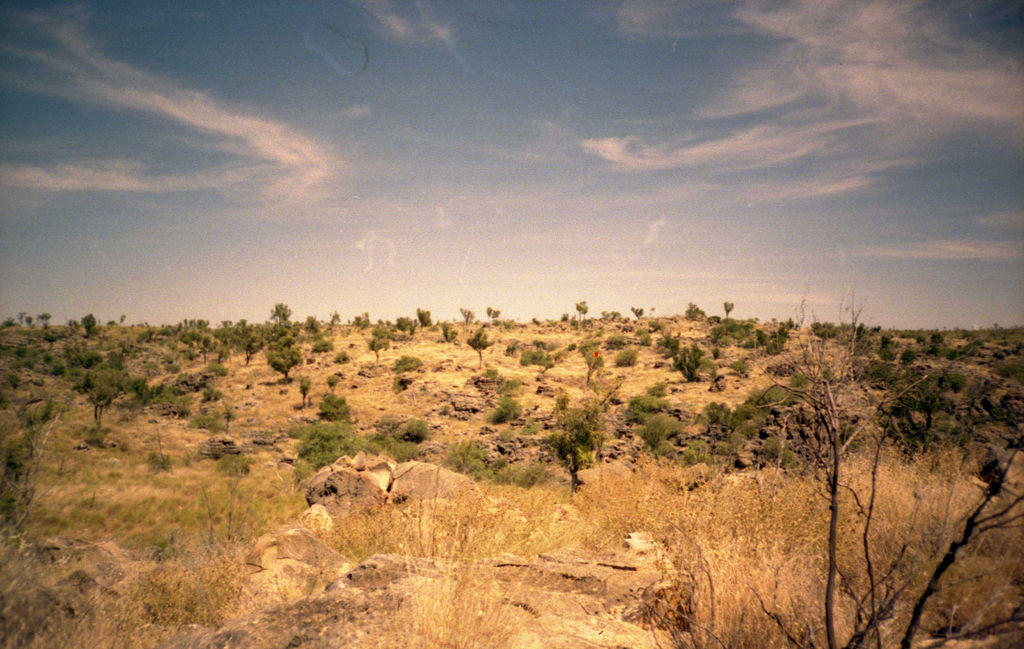
© Huygens, CC BY-SA 2.0 Resized from original. (This derivative is under the same CC BY-SA license.)