World Heritage Identification Number: 154
World Heritage since: 1981
Category: Natural Heritage
WHE Type: Natural Landscapes & Geographic Features
Transboundary Heritage: No
Endangered Heritage: No
Country: 🇦🇺 Australia
Continent: Oceania
UNESCO World Region: Asia and the Pacific
Map
The Great Barrier Reef: A Natural Wonder of the World
The Great Barrier Reef, located off the northeast coast of Australia, is a natural wonder of the world and a UNESCO World Heritage Site since 1981. Stretching over 2,300 kilometres (1,400 mi) and covering an area of approximately 344,400 square kilometres (133,000 sq mi), this vast coral reef system is the largest of its kind on Earth.
Composed of over 2,900 individual reefs and 900 islands, the Great Barrier Reef is home to an incredible array of marine life. With 400 types of coral, 1,500 species of fish, and 4,000 types of molluscs, this underwater ecosystem is a veritable treasure trove of biodiversity. The reef is also of great scientific interest due to its unique habitats, including seagrass beds, mangrove forests, and lagoons.
One of the most notable inhabitants of the Great Barrier Reef is the dugong, or sea cow. This large, herbivorous marine mammal is critically endangered, with populations estimated at only around 6,500 individuals. The reef also provides refuge for the large green turtle, another threatened species. These animals play essential roles in maintaining the health and balance of the reef ecosystem.
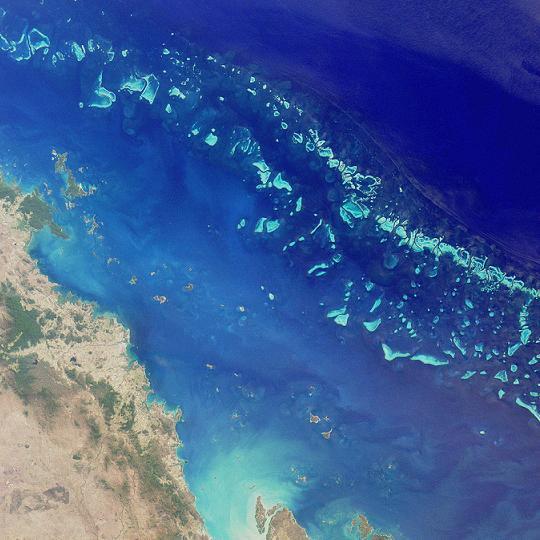
The Great Barrier Reef can be seen from outer space and is one of the largest single structures made by living organisms. This reef structure is composed of and built by billions of tiny organisms, known as coral polyps. These polyps secrete calcium carbonate to form the hard structures that make up the reef. Over thousands of years, these structures have grown and accumulated, creating the complex and diverse ecosystem we see today.
Despite its immense size and importance, the Great Barrier Reef faces numerous threats. Climate change, pollution, and overfishing are major concerns. Rising ocean temperatures can lead to mass coral bleaching events, which can kill large areas of the reef. Pollution from land-based sources, such as agricultural runoff and plastics, can harm marine life and degrade water quality. Overfishing can deplete fish stocks and disrupt the food chain.
Efforts to protect the Great Barrier Reef include strict fishing regulations, marine protected areas, and education and awareness campaigns. The Great Barrier Reef Marine Park was established in 1975 to manage and protect the reef and its surrounding waters. Visitors to the reef are encouraged to follow sustainable practices, such as using reef-safe sunscreens and not touching or feeding the wildlife.
In conclusion, the Great Barrier Reef is a natural wonder of the world and a vital ecosystem that supports an incredible array of marine life. Despite facing numerous threats, efforts to protect and preserve this unique and important ecosystem continue. As a UNESCO World Heritage Site, the Great Barrier Reef is a testament to the importance of conserving our natural heritage for future generations.
UNESCO Description of the World Heritage Site
The Great Barrier Reef is a site of remarkable variety and beauty on the north-east coast of Australia. It contains the world’s largest collection of coral reefs, with 400 types of coral, 1,500 species of fish and 4,000 types of mollusc. It also holds great scientific interest as the habitat of species such as the dugong (‘sea cow’) and the large green turtle, which are threatened with extinction.
UNESCO Justification of the World Heritage Site
Criterion (vii): The GBR is of superlative natural beauty above and below the water, and provides some of the most spectacular scenery on earth. It is one of a few living structures visible from space, appearing as a complex string of reefal structures along Australia's northeast coast. From the air, the vast mosaic patterns of reefs, islands and coral cays produce an unparalleled aerial panorama of seascapes comprising diverse shapes and sizes. The Whitsunday Islands provide a magnificent vista of green vegetated islands and spectacular sandy beaches spread over azure waters. This contrasts with the vast mangrove forests in Hinchinbrook Channel, and the rugged vegetated mountains and lush rainforest gullies that are periodically cloud-covered on Hinchinbrook Island. On many of the cays there are spectacular and globally important breeding colonies of seabirds and marine turtles, and Raine Island is the world’s largest green turtle breeding area. On some continental islands, large aggregations of over-wintering butterflies periodically occur. Beneath the ocean surface, there is an abundance and diversity of shapes, sizes and colours; for example, spectacular coral assemblages of hard and soft corals, and thousands of species of reef fish provide a myriad of brilliant colours, shapes and sizes. The internationally renowned Cod Hole near Lizard Island is one of many significant tourist attractions. Other superlative natural phenomena include the annual coral spawning, migrating whales, nesting turtles, and significant spawning aggregations of many fish species.
Criterion (viii): The GBR, extending 2,000 kilometres along Queensland's coast, is a globally outstanding example of an ecosystem that has evolved over millennia. The area has been exposed and flooded by at least four glacial and interglacial cycles, and over the past 15,000 years reefs have grown on the continental shelf. During glacial periods, sea levels dropped, exposing the reefs as flat-topped hills of eroded limestone. Large rivers meandered between these hills and the coastline extended further east. During interglacial periods, rising sea levels caused the formation of continental islands, coral cays and new phases of coral growth. This environmental history can be seen in cores of old massive corals. Today the GBR forms the world’s largest coral reef ecosystem, ranging from inshore fringing reefs to mid-shelf reefs, and exposed outer reefs, including examples of all stages of reef development. The processes of geological and geomorphological evolution are well represented, linking continental islands, coral cays and reefs. The varied seascapes and landscapes that occur today have been moulded by changing climates and sea levels, and the erosive power of wind and water, over long time periods. One-third of the GBR lies beyond the seaward edge of the shallower reefs; this area comprises continental slope and deep oceanic waters and abyssal plains.
Criterion (ix): The globally significant diversity of reef and island morphologies reflects ongoing geomorphic, oceanographic and environmental processes. The complex cross-shelf, longshore and vertical connectivity is influenced by dynamic oceanic currents and ongoing ecological processes such as upwellings, larval dispersal and migration. Ongoing erosion and accretion of coral reefs, sand banks and coral cays combine with similar processes along the coast and around continental islands. Extensive beds of Halimeda algae represent active calcification and accretion over thousands of years. Biologically the unique diversity of the GBR reflects the maturity of an ecosystem that has evolved over millennia; evidence exists for the evolution of hard corals and other fauna. Globally significant marine faunal groups include over 4,000 species of molluscs, over 1,500 species of fish, plus a great diversity of sponges, anemones, marine worms, crustaceans, and many others. The establishment of vegetation on the cays and continental islands exemplifies the important role of birds, such as the Pied Imperial Pigeon, in processes such as seed dispersal and plant colonisation. Human interaction with the natural environment is illustrated by strong ongoing links between Aboriginal and Torres Strait Islanders and their sea-country, and includes numerous shell deposits (middens) and fish traps, plus the application of story places and marine totems.
Criterion (x): The enormous size and diversity of the GBR means it is one of the richest and most complex natural ecosystems on earth, and one of the most significant for biodiversity conservation. The amazing diversity supports tens of thousands of marine and terrestrial species, many of which are of global conservation significance. As the world's most complex expanse of coral reefs, the reefs contain some 400 species of corals in 60 genera. There are also large ecologically important inter-reefal areas. The shallower marine areas support half the world's diversity of mangroves and many seagrass species. The waters also provide major feeding grounds for one of the world's largest populations of the threatened dugong. At least 30 species of whales and dolphins occur here, and it is a significant area for humpback whale calving. Six of the world’s seven species of marine turtle occur in the GBR. As well as the world’s largest green turtle breeding site at Raine Island, the GBR also includes many regionally important marine turtle rookeries. Some 242 species of birds have been recorded in the GBR. Twenty-two seabird species breed on cays and some continental islands, and some of these breeding sites are globally significant; other seabird species also utilize the area. The continental islands support thousands of plant species, while the coral cays also have their own distinct flora and fauna.
Encyclopedia Record: Great Barrier Reef
The Great Barrier Reef is the world's largest coral reef system, composed of over 2,900 individual reefs and 900 islands stretching for over 2,300 kilometres (1,400 mi) over an area of approximately 344,400 square kilometres (133,000 sq mi). The reef is located in the Coral Sea, off the coast of Queensland, Australia, separated from the coast by a channel 160 kilometres (100 mi) wide in places and over 61 metres (200 ft) deep. The Great Barrier Reef can be seen from outer space and is the world's biggest single structure made by living organisms. This reef structure is composed of and built by billions of tiny organisms, known as coral polyps. It supports a wide diversity of life and was selected as a World Heritage Site in 1981. CNN labelled it one of the Seven Natural Wonders of the World in 1997. Australian World Heritage places included it in its list in 2007. The Queensland National Trust named it a state icon of Queensland in 2006.Additional Site Details
Area: 34,870,000 hectares
Number of Components: 1
(viii) — Outstanding example representing major earth stages
(ix) — Outstanding example representing ecological and biological processes
(x) — Contains most important habitats for biodiversity
Coordinates: -18.28611111 , 147.7
IUCN World Heritage Outlook
The 2025 Conservation Outlook on Great Barrier Reef reports the following assessment:
Source: International Union for Conservation of Nature (IUCN) · View assessment
World Heritage Research
Discover scientific research and academic studies that deepen our understanding of Great Barrier Reef from its history and significance to its conservation, management, and contemporary challenges.
-
Climate change disables coral bleaching protection on the Great Barrier Reef
Climate change is eroding the Great Barrier Reef's ability to protect itself from coral bleaching, according to a study tracking three decades of heat stress. Historically, corals acclimated to rising temperatures before hot seasons, building resilience against thermal stress. However, recent severe temperature increases have disabled this protective mechanism, leading to widespread bleaching and mortality, particularly during the 2016 El Niño event. Researchers analyzed long-term data to demonstrate how climate change is disrupting coral adaptation, threatening one of Earth's most iconic ecosystems.
Ainsworth, T. D., Heron, S. F., Ortiz, J. C., Mumby, P. J., Grech, A., Ogawa, D., Eakin, C. M., & Leggat, W. (2016). Climate change disables coral bleaching protection on the Great Barrier Reef. Science, 352(6283), 338–342. https://doi.org/10.1126/science.aac7125
View Publication Record | Read Publication -
The 27–year decline of coral cover on the Great Barrier Reef and its causes
A 27-year decline in coral cover on the Great Barrier Reef, from 28.0% to 13.8%, was driven primarily by tropical cyclones (48%), crown-of-thorns starfish predation (42%), and bleaching (10%), resulting in a mortality rate of 3.38% per year. Despite this decline, the northern region remained stable, and reefs demonstrated substantial recovery potential at 2.85% per year without these stressors. Reducing crown-of-thorns starfish populations through improved water quality and alternative control measures could mitigate further decline, but only if climate conditions are stabilized to curb increasing losses from bleaching and cyclones.
De’ath, G., Fabricius, K. E., Sweatman, H., & Puotinen, M. (2012). The 27–year decline of coral cover on the Great Barrier Reef and its causes. Proceedings of the National Academy of Sciences, 109(44), 17995–17999. https://doi.org/10.1073/pnas.1208909109
View Publication Record | Read Publication -
Adaptive management of the Great Barrier Reef: A globally significant demonstration of the benefits of networks of marine reserves
Large-scale networks of marine reserves significantly enhance the resilience and biodiversity of the Great Barrier Reef (GBR), demonstrating their critical role in adaptive management. A comprehensive review reveals that no-take zones benefit targeted fish species, sharks, coral abundance, and ecosystem health by reducing crown-of-thorns starfish outbreaks. While mobile species like sharks show lesser benefits compared to site-attached fish, reserves also contribute to fisheries sustainability and tourism value protection. Spatial analyses confirm the effectiveness of best-practice conservation principles even in data-poor situations. Economic evaluations suggest net benefits from expanded marine reserve networks, with protection costs being minimal relative to reef tourism revenue. The implementation of an Outlook Report provides a framework for regular environmental assessment and policy adaptation, offering a cost-effective strategy to mitigate climate change impacts on the GBR.
McCook, L. J., Ayling, T., Cappo, M., Choat, J. H., Evans, R. D., De Freitas, D. M., Heupel, M., Hughes, T. P., Jones, G. P., Mapstone, B., Marsh, H., Mills, M., Molloy, F. J., Pitcher, C. R., Pressey, R. L., Russ, G. R., Sutton, S., Sweatman, H., Tobin, R., et al. (2010). Adaptive management of the Great Barrier Reef: A globally significant demonstration of the benefits of networks of marine reserves. Proceedings of the National Academy of Sciences, 107(43), 18278–18285. https://doi.org/10.1073/pnas.0909335107
View Publication Record | Read Publication -
Water quality as a regional driver of coral biodiversity and macroalgae on the Great Barrier Reef
Poor water quality significantly degrades coral biodiversity and promotes macroalgae growth on the Great Barrier Reef (GBR), according to a large-scale study. The research found that inshore reefs, characterized by lower water clarity and higher chlorophyll levels due to runoff, exhibit reduced richness in hard corals and phototrophic octocorals while experiencing a fivefold increase in macroalgal cover compared to offshore regions. Water quality explained 18–46% of the variation in these biotic groups, with spatial patterns also playing a role. The study identifies potential water quality guidelines—Secchi disk depth >10 meters and chlorophyll <0.45 g/L—that correlate with low macroalgal cover and high coral richness. Improving water quality on 23% of GBR reefs currently exceeding these thresholds could reduce macroalgae by 39% and boost hard coral and phototrophic octocoral richness by 16% and 33%, respectively, offering a target for pollution reduction strategies.
De’ath, G., & Fabricius, K. (2010). Water quality as a regional driver of coral biodiversity and macroalgae on the Great Barrier Reef. Ecological Applications, 20(3), 840–850. Portico. https://doi.org/10.1890/08-2023.1
View Publication Record | Read Publication