
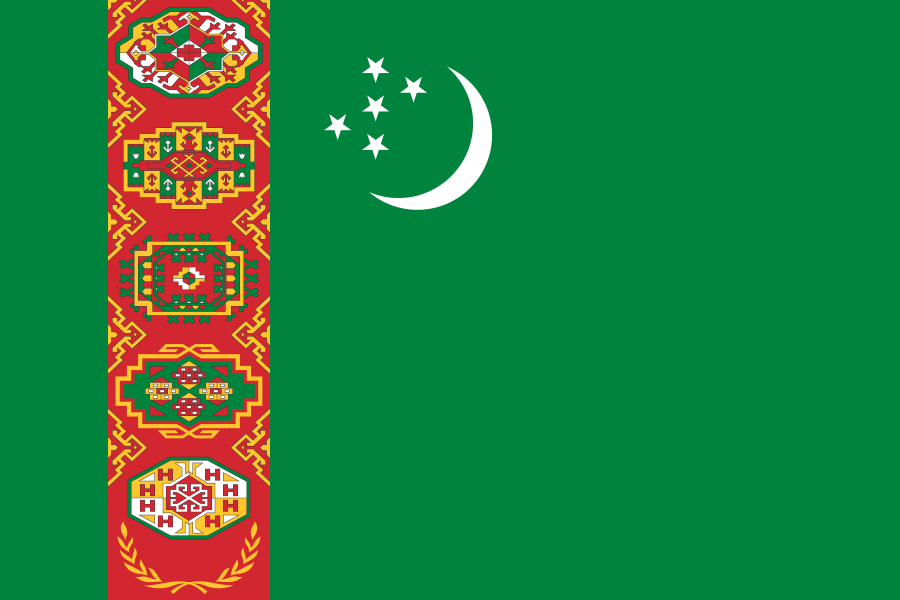
 Turkmenistan
Turkmenistan as a State Party to the World Heritage Convention
State Party since: September 30, 1994
Status: Succession
Mandates to the World Heritage Committee: None
Total of Mandate Years: 0
Total of Mandates: 0
WHC Electoral Group: IV (Asia/Pacific)
World Heritage Sites in Turkmenistan (5)
Cultural: 4 | Natural: 1 | Mixed: 0
- Cold Winter Deserts of Turan · Natural (Transboundary)
- Kunya-Urgench · Cultural
- Parthian Fortresses of Nisa · Cultural
- Silk Roads: Zarafshan-Karakum Corridor · Cultural (Transboundary)
- State Historical and Cultural Park “Ancient Merv” · Cultural
Map of World Heritage Sites
This interactive map shows the location of all UNESCO World Heritage Sites in Turkmenistan.
World Heritage Inscription Timeline
Tentative World Heritage Sites (9)
- Karst, Canyons, and Caves of Kugitang · submitted: August 28, 2025
- Silk Roads Sites in Turkmenistan · submitted: March 1, 2010
- Badhyz State Nature Reserve · submitted: March 16, 2009
- Syunt Hasardag State Nature Reserve · submitted: March 16, 2009
- Dinosaurs and Caves of Koytendag · submitted: March 16, 2009
- Repetek Biosphere State Reserve · submitted: March 16, 2009
- Amudarya State Nature Reserve · submitted: March 16, 2009
- Hazar State Nature Reserve · submitted: March 16, 2009
- Dehistan / Mishrian · submitted: February 25, 1998
Country Profile Turkmenistan
Official Name: Turkmenistan
Continent: Asia
Subregion: Central Asia
UNESCO Region: Asia and the Pacific
Capital: Ashgabat
Population (2024): 7,494,498
Land Area: 469,930 km²
Currency: Turkmenistan manat (TMT)
Related Resources
About States Parties
States Parties are countries that have joined the World Heritage Convention. They commit to identifying, nominating, and protecting properties of outstanding cultural or natural value on their territory. States Parties are also expected to monitor and report on the condition of inscribed sites.