
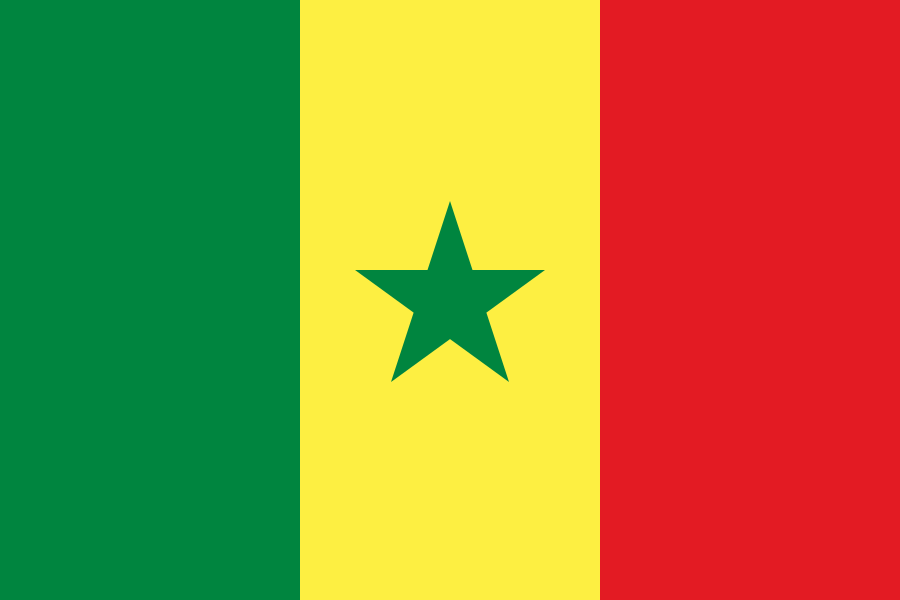
 Senegal
Senegal as a State Party to the World Heritage Convention
State Party since: February 13, 1976
Status: Ratification
Mandates to the World Heritage Committee: 1976-1978, 1978-1985, 1989-1995, 2011-2015, 2023-2027
Total of Mandate Years: 23
Total of Mandates: 5
WHC Electoral Group: V(a) (Africa)
World Heritage Sites in Senegal (7)
Cultural: 5 | Natural: 2 | Mixed: 0
- Bassari Country: Bassari, Fula and Bedik Cultural Landscapes · Cultural
- Djoudj National Bird Sanctuary · Natural
- Island of Gorée · Cultural
- Island of Saint-Louis · Cultural
- Niokolo-Koba National Park · Natural
- Saloum Delta · Cultural
- Stone Circles of Senegambia · Cultural (Transboundary)
Map of World Heritage Sites
This interactive map shows the location of all UNESCO World Heritage Sites in Senegal.
World Heritage Inscription Timeline
Tentative World Heritage Sites (8)
- L'Aéropostale · submitted: November 18, 2005
- L'île de Carabane · submitted: November 18, 2005
- Architecture rurale de Basse-Casamance : Les cases à impluvium du royaume Bandial · submitted: November 18, 2005
- Parc National des îles de la Madeleine · submitted: November 18, 2005
- Les Escales du Fleuve Sénégal · submitted: November 18, 2005
- Les tumulus de Cekeen · submitted: November 18, 2005
- Le Lac Rose · submitted: November 18, 2005
- Le Vieux Rufisque · submitted: November 18, 2005
Country Profile Senegal
Official Name: Republic of Senegal
Continent: Africa
Subregion: Western Africa
UNESCO Region: Africa
Capital: Dakar
Population (2024): 18,501,984
Land Area: 192,530 km²
Currency: West African CFA franc (XOF)
Related Resources
About States Parties
States Parties are countries that have joined the World Heritage Convention. They commit to identifying, nominating, and protecting properties of outstanding cultural or natural value on their territory. States Parties are also expected to monitor and report on the condition of inscribed sites.