
World Heritage Identification Number: 1226
World Heritage since: 2006
Category: Cultural Heritage
WHE Type: Archaeological Sites
Transboundary Heritage: Yes
Endangered Heritage: No
Country: Gambia, Senegal
Continent: Africa
UNESCO World Region: Africa
Map
Exploring the Enigmatic Stone Circles of Senegambia: A Journey Through Time and Culture
The Stone Circles of Senegambia, inscribed as a UNESCO World Heritage Site in 2006, offer a unique glimpse into the rich cultural history of West Africa. Stretching across a vast region encompassing parts of modern-day Senegal and The Gambia, these ancient stone structures form an intricate network in a band approximately 100 km wide, extending roughly 350 kilometers across the region, broadly following the course of the Gambia River.
The UNESCO World Heritage property consists of four main groups: Sine Ngayène and Wanar (in Senegal), and Wassu and Kerbatch (in The Gambia). Together, these groups comprise 93 stone circles and numerous tumuli. While archaeological finds of pottery and iron tools indicate long-term occupation of the region, the construction of the monumental stone circles themselves is dated by scholars to a period between the 3rd century AD and the 16th century AD. This reflects a prosperous and highly organized society that thrived and maintained these traditions for over a millennium.
One of the most striking aspects of the Stone Circles of Senegambia is their sheer scale. With over 1,000 stone circles and thousands of standing stones associated with numerous tumuli, scattered across an area measuring roughly 30,000 square kilometers (12,000 square miles), this collection represents the largest concentration of megalithic monuments in the world. The size and density of these sites suggest that they formed a vast cultural landscape, imbued with deep social and symbolic significance for the communities that built them.
The purpose of the stone circles is now better understood than in the past. Archaeological evidence strongly indicates that they were primarily associated with funerary practices. Excavations have revealed burials within the associated tumuli, often accompanied by grave goods such as pottery, iron objects, and ornaments. While earlier interpretations proposed alternative functions, such as astronomical observation or ceremonial gathering spaces, current research emphasizes their role in burial and commemorative traditions.
Despite the ongoing scholarly discussions, one thing is certain—the Stone Circles of Senegambia stand as testaments to the ingenuity, craftsmanship, and social complexity of the societies that constructed them. Made from carefully shaped laterite pillars, these circular structures range in size from small, intimate arrangements to massive, awe-inspiring formations. The accompanying tumuli, yielding archaeological artifacts, provide valuable insights into the beliefs, customs, social organization, and artistic traditions of the people who inhabited the region.
Although primarily recognized for their cultural significance, these sites are also situated within diverse environments, including savanna landscapes and riverine ecosystems. While their UNESCO inscription is based on cultural criteria, their preservation contributes more broadly to maintaining the integrity of these historical landscapes.
Today, efforts are underway to protect and conserve the Stone Circles of Senegambia, ensuring that future generations can continue to study and appreciate these remarkable relics of our shared human heritage. Through ongoing archaeological research, restoration projects, and educational initiatives, scholars and local stakeholders strive to unravel the mysteries surrounding these enigmatic stone circles, deepening our understanding of the societies that built them and the cultures they represent.
In summary, the Stone Circles of Senegambia offer a captivating window into the rich tapestry of West African history and culture. Their sheer scale, intricate design, and enduring allure make them a vital part of the global archaeological record and an essential part of our collective human story. By continuing to explore, preserve, and celebrate these ancient wonders, we pay tribute to the societies that built them and ensure that their legacy lives on for generations to come.
UNESCO Description of the World Heritage Site
The site consists of four large groups of stone circles that represent an extraordinary concentration of over 1,000 monuments in a band 100 km wide along some 350 km of the River Gambia. The four groups, Sine Ngayène, Wanar, Wassu and Kerbatch, cover 93 stone circles and numerous tumuli, burial mounds, some of which have been excavated to reveal material that suggest dates between 3rd century BC and 16th century AD. Together the stone circles of laterite pillars and their associated burial mounds present a vast sacred landscape created over more than 1,500 years. It reflects a prosperous, highly organized and lasting society.
UNESCO Justification of the World Heritage Site
Criterion (i): Individual stones finely carved bear witness to an exact and experienced technique and contribute to the organized and imposing size of the stone circle groups.
Criterion (iii): The circles of stones proposed for inscription represent the totality of the megalithic area in which the presence of such a large number of circles is a unique manifestation of construction and funerary practices which persisted for over a millennium across a large geographical area and reflecting a sophisticated and productive society.
Encyclopedia Record: Senegambian stone circles
The Senegambian stone circles, or the Wassu stone circles, are groups of megalithic stone circles located in the Gambia north of Janjanbureh and in central Senegal. Spread across a region 30,000 km2 (12,000 sq mi), they are sometimes divided into the Wassu (Gambian) and Sine-Saloum (Senegalese) circles, but this is purely a national division. Containing over 1,000 stone circles and tumuli spread across an area 350 km (220 mi) long and 100 km (62 mi) wide, the Senegambian stone circles are the largest concentration of stone circles seen anywhere in the world, and they are an extensive sacred landscape that was used for more than 1,500 years. The sites were inscribed on the UNESCO World Heritage List in 2006.Additional Site Details
Area: 9.85 hectares
Number of Components: 4
(iii) — Unique or exceptional testimony to a cultural tradition
Coordinates: 13.6911111111 , -15.5225
Image
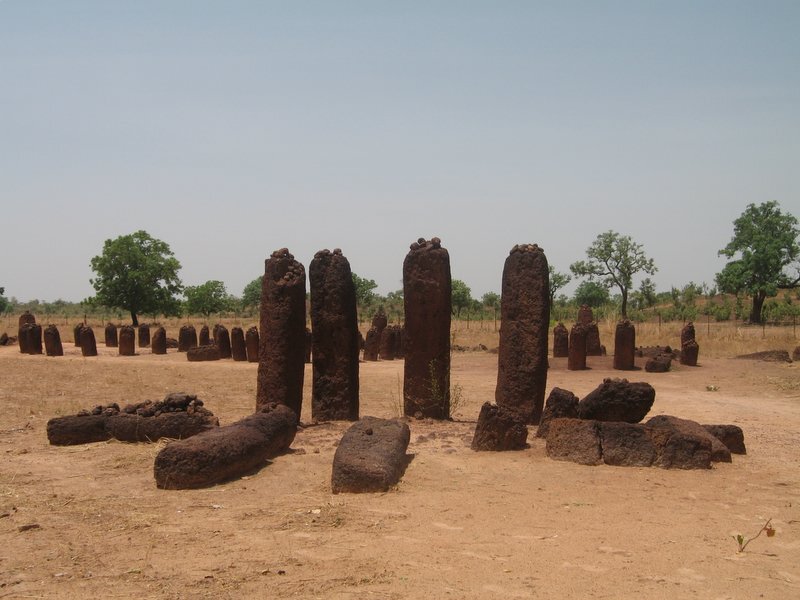
© shaunamullally, CC BY-SA 2.0 Resized from original. (This derivative is under the same CC BY-SA license.)