World Heritage Identification Number: 26
World Heritage since: 1978
Category: Cultural Heritage
WHE Type: Memorial Sites
Transboundary Heritage: No
Endangered Heritage: No
Country: 🇸🇳 Senegal
Continent: Africa
UNESCO World Region: Africa
Map
Historical Significance and Architectural Landscape of the Island of Gorée
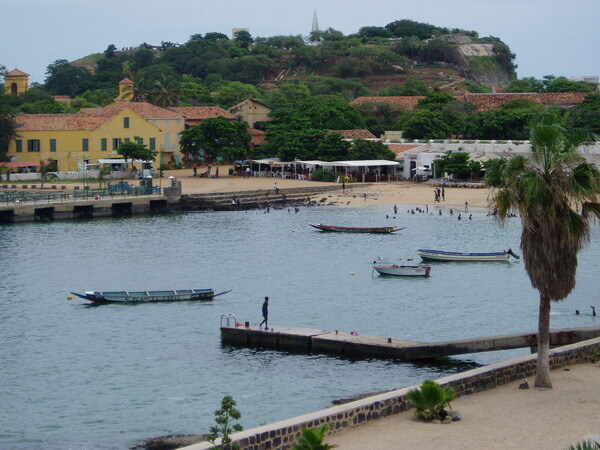
The Island of Gorée, situated approximately two kilometers off the coast of Senegal, serves as a poignant testament to the complex and tumultuous history of the Atlantic slave trade. Inscribed as a UNESCO World Heritage Site in 1978, this 18.2-hectare (45-acre) island offers a unique blend of architectural styles that reflect its multifaceted past.
More to come…UNESCO Description of the World Heritage Site
The island of Gorée lies off the coast of Senegal, opposite Dakar. From the 15th to the 19th century, it was the largest slave-trading centre on the African coast. Ruled in succession by the Portuguese, Dutch, English and French, its architecture is characterized by the contrast between the grim slave-quarters and the elegant houses of the slave traders. Today it continues to serve as a reminder of human exploitation and as a sanctuary for reconciliation.
UNESCO Justification of the World Heritage Site
Criterion (vi): The Island of Goree is an exceptional testimony to one of the greatest tragedies in the history of human societies: the slave trade. The various elements of this “memory island” – fortresses, buildings, streets, squares, etc. – recount, each in its own way, the history of Gorée which, from the 15th to the 19th century, was the largest slave-trading centre of the African coast.
Encyclopedia Record: Gorée
Île de Gorée is one of the 19 communes d'arrondissement of the city of Dakar, Senegal. It is an 18.2-hectare (45-acre) island located two kilometres at sea from the main harbour of Dakar, famous as a destination for people interested in the Atlantic slave trade.Additional Site Details
Area: Not available
Number of Components: 1
Coordinates: 14.66722 , -17.40083
Image
© Unknown, CC BY-SA 3.0 Resized from original. (This derivative is under the same CC BY-SA license.)
World Heritage Research
Discover scientific research and academic studies that deepen our understanding of Island of Gorée from its history and significance to its conservation, management, and contemporary challenges.
-
Contribution to the Systematic Study of the Ornamental Flora of Gorée Island (Dakar-Senegal)
A systematic study of Gorée Island's ornamental flora, conducted in September 2021, identified 55 plant species across three gardens and municipal flowerbeds. This includes 36 species already documented in Senegal and 13 potentially new to the country, with angiosperms dominating the flora. The research highlights a diverse taxonomic, biological, and chorological profile, with pantropical species accounting for over a third of the identified plants. The findings provide critical data for sustainable management and taxon identification tools, addressing gaps in scientific knowledge amidst urban expansion and climate change pressures.
Dieng, B., Gueye, F. K., Sagna, G., Diouf, J., Diouf, N., Gaye, A., Fall, N. F. D., Lo, P., KA, S. L., Diouf, A., Noba, K., & Mbaye, M. S. (2026). Contribution to the Systematic Study of the Ornamental Flora of Gorée Island (Dakar-Senegal). European Scientific Journal, ESJ, 22(6), 87. https://doi.org/10.19044/esj.2026.v22n6p87
View Publication Record | Read Publication -
From cultural heritage to sustainable energy: Africa as a laboratory for the future. The case of Gorée Island in Senegal
Gorée Island, Senegal, demonstrates how integrating UNESCO World Heritage Sites with sustainable energy transitions can yield measurable benefits for human, animal, and environmental health. By replacing diesel generators with grid-connected electricity in 2018, the island achieved reduced greenhouse gas emissions, improved air quality, and economic development. This case highlights a scalable model that aligns heritage preservation with renewable energy innovation, such as Senegal's Taiba N'Diaye Wind Farm, while reinforcing social resilience through cultural dimensions. The study positions Gorée as a replicable example for other African and Mediterranean coastal sites, linking local practices to continental strategies like the African Union’s Agenda 2063 and global frameworks from UNESCO and the IEA.
Rondinella, A. (2025). From cultural heritage to sustainable energy: Africa as a laboratory for the future. The case of Gorée Island in Senegal. Sahelian Journal of Responsible One Health, 1(2). https://doi.org/10.4081/sjroh.2025.556
View Publication Record | Read Publication -
Gorée, la isla de la memoria
Gorée, a small island off the coast of Senegal, stands as a poignant symbol of the transatlantic slave trade's legacy. Each year, it attracts tens of thousands of visitors, including many Afro-descendants from abroad, who engage in commemorative tourism. The island's historical significance and its role in shaping collective memory are central to this phenomenon. This article explores how Gorée has become an emblematic site for reflection on the atrocities of slavery and its enduring impact on global heritage narratives.
. (2024). Gorée, la isla de la memoria. El Correo de La UNESCO, 2024(3), 15–17. https://doi.org/10.18356/22202315-2024-3-5
View Publication Record | Read Publication -
Gorée, l’île mémoire
Gorée, a small island off the coast of Senegal, stands as a powerful symbol of the transatlantic slave trade's tragedy. Today, it attracts tens of thousands of visitors annually, including many Afro-descendants from abroad, cementing its role as a key destination for memorial tourism. The island’s historical significance and its transformation into a site of remembrance reflect broader global efforts to confront and commemorate the legacy of slavery. This article explores Gorée's dual identity—both as a witness to historical atrocities and a beacon of cultural heritage—highlighting its importance in education, tourism, and the preservation of collective memory.
. (2024). Gorée, l’île mémoire. Le Courrier de l’UNESCO, 2024(3), 15–17. https://doi.org/10.18356/22202277-2024-3-5
View Publication Record | Read Publication -
Gorée, island of memory
The Senegalese island of Gorée stands as a powerful symbol of the transatlantic slave trade's legacy. As a leading destination for memorial tourism, it attracts tens of thousands of visitors annually, including Afro-descendants seeking to connect with their heritage. The island's historical significance and its role in shaping global memory make it a unique case study in the intersection of history, tourism, and cultural identity. This publication explores Gorée's transformation into a site of remembrance, highlighting its impact on both local communities and visitors. By analyzing visitor experiences and the island's historical narrative, the study underscores its importance in fostering dialogue around slavery's enduring effects.
. (2024). Gorée, island of memory. The UNESCO Courier, 2024(3), 15–17. https://doi.org/10.18356/22202293-2024-3-5
View Publication Record | Read Publication -
The Gendered Consequences of Abolition and Citizenship on Nineteenth-Century Gorée Island
French abolition of slavery and granting citizenship to adult men in its overseas territories, including Gorée Island (Senegal), in 1848 had paradoxical effects on women. While formally integrated into the Second French Republic, Goréen women faced socioeconomic and political decline due to patriarchal republican laws that excluded them from civic politics and economic prosperity. The study reveals how gender became a more salient factor mediating access to liberty and public participation, creating female colonial subjects despite the republic's ideals of universal equality.
Zimmerman, S. J. (2023). The Gendered Consequences of Abolition and Citizenship on Nineteenth-Century Gorée Island. Journal of Women’s History, 35(3), 19–38. https://doi.org/10.1353/jowh.2023.a905188
View Publication Record | Read Publication -
Who Visited Gorée Island on 27 June 2013?
On Gorée Island, a serene West African destination known for its grilled seafood and sunset views, lies a history of suffering. A 2013 account by one of the descendants of those who endured this dark past sheds light on the island's complex legacy. The narrative captures the stark contrast between Gorée's present-day allure as a summer resort for the affluent and its troubled history, offering a poignant perspective from someone directly connected to that history. This account, published in 2022, serves as a testament to the enduring impact of Gorée’s past on its descendants, blending personal reflection with broader historical context.
(Ed.). (2022). Who Visited Gorée Island on 27 June 2013? Our Long Walk to Economic Freedom, 58–64. https://doi.org/10.1017/9781009228503.012
View Publication Record | Read Publication