
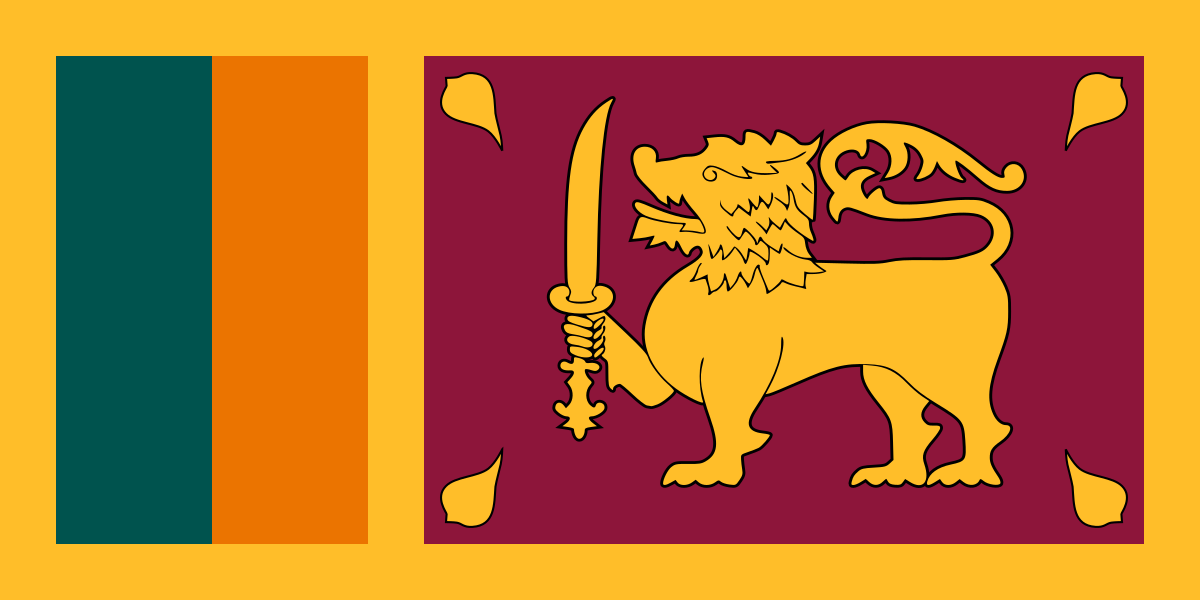
 Sri Lanka
Sri Lanka as a State Party to the World Heritage Convention
State Party since: June 6, 1980
Status: Acceptance
Mandates to the World Heritage Committee: 1983-1989
Total of Mandate Years: 6
Total of Mandates: 1
WHC Electoral Group: IV (Asia/Pacific)
World Heritage Sites in Sri Lanka (8)
Cultural: 6 | Natural: 2 | Mixed: 0
- Ancient City of Polonnaruwa · Cultural
- Ancient City of Sigiriya · Cultural
- Central Highlands of Sri Lanka · Natural
- Old Town of Galle and its Fortifications · Cultural
- Rangiri Dambulla Cave Temple · Cultural
- Sacred City of Anuradhapura · Cultural
- Sacred City of Kandy · Cultural
- Sinharaja Forest Reserve · Natural
Map of World Heritage Sites
This interactive map shows the location of all UNESCO World Heritage Sites in Sri Lanka.
World Heritage Inscription Timeline
Tentative World Heritage Sites (5)
- Sri Lanka’s Tea Cultural Landscape · submitted: August 19, 2025
- Buddhist Meditation Monasteries of Ancient Sri Lanka · submitted: June 4, 2024
- Ancient Ariyakara Viharaya in the Rajagala Archaeological Reserve · submitted: February 27, 2020
- Seruwila to Sri Pada (Sacred Foot Print Shrine), Ancient pilgrim route along the Mahaweli river in Sri Lanka · submitted: April 29, 2010
- Seruwila Mangala Raja Maha Vihara · submitted: October 30, 2006
Country Profile Sri Lanka
Official Name: Democratic Socialist Republic of Sri Lanka
Continent: Asia
Subregion: Southern Asia
UNESCO Region: Asia and the Pacific
Capital: Sri Jayawardenepura Kotte
Population (2024): 21,916,000
Land Area: 61,860 km²
Currency: Sri Lankan rupee (LKR)
Related Resources
About States Parties
States Parties are countries that have joined the World Heritage Convention. They commit to identifying, nominating, and protecting properties of outstanding cultural or natural value on their territory. States Parties are also expected to monitor and report on the condition of inscribed sites.