World Heritage Identification Number: 1203
World Heritage since: 2010
Category: Natural Heritage
WHE Type: Natural Landscapes & Geographic Features
Transboundary Heritage: No
Endangered Heritage: No
Country: 🇱🇰 Sri Lanka
Continent: Asia
UNESCO World Region: Asia and the Pacific
Map
Central Highlands of Sri Lanka: A Biodiverse Haven
The Central Highlands of Sri Lanka, inscribed as a UNESCO World Heritage Site in 2010, are a remarkable testament to the exceptional biodiversity found within this South Asian island nation. Comprising three protected areas—the Peak Wilderness Protected Area, Horton Plains National Park, and the Knuckles Conservation Forest—this mountainous region serves as a refuge for a wide array of endemic and endangered species.
Located in the south-central part of Sri Lanka, the Central Highlands rise to elevations of around 2,500 meters above sea level. This dramatic altitude gradient gives rise to a variety of ecosystems, ranging from lowland rainforests to montane cloud forests, creating ideal conditions for extraordinary levels of plant and animal diversity.
Among the many fascinating creatures that call the Central Highlands home is the montane purple-faced langur (Trachypithecus vetulus monticola). This primate, endemic to Sri Lanka, is characterized by its thick, bear-like fur coat and an exceptionally long tail used for balance while navigating the canopy. The Horton Plains slender loris (Loris tardigradus nycticeboides), another endemic species, is a nocturnal, slow-moving primate, considered critically endangered and extremely rarely observed in the wild.
The Central Highlands are also home to the elusive Sri Lankan leopard (Panthera pardus kotiya). Operating as the island's apex predator, this subspecies is renowned for its large, robust build and its lighter coat, well-adapted to the montane environment. The Sri Lankan elephant (Elephas maximus maximus) is another iconic species of the island, with populations estimated at around 5,000 individuals across Sri Lanka as a whole.
In addition to these charismatic megafauna, the Central Highlands boast a wealth of other wildlife, including the sambar deer (Rusa unicolor) and the Indian muntjac (Muntiacus muntjak), while the island's drier lowlands host the famous Indian star tortoise (Geochelone elegans). The region is also home to over 300 bird species, including the Sri Lanka junglefowl (Gallus lafayettii), the Sri Lanka woodpigeon (Columba torringtoniae), and the Sri Lanka whistling thrush (Myophonus blighi).
The Central Highlands form part of the broader Western Ghats–Sri Lanka biodiversity hotspot, a globally significant region characterized by exceptionally high levels of endemism. This status underscores the importance of preserving the Central Highlands and ensuring the survival of the unique and captivating creatures that inhabit this remarkable landscape.
In summary, the Central Highlands of Sri Lanka stand as a shining example of the incredible biodiversity found within our world. With their unique ecosystems, high levels of endemism, and designation as a UNESCO World Heritage Site, they remain a vital stronghold for biodiversity conservation and a striking reminder of the richness of the natural world.
UNESCO Description of the World Heritage Site
Sri Lanka's highlands are situated in the south-central part of the island. The property comprises the Peak Wilderness Protected Area, the Horton Plains National Park and the Knuckles Conservation Forest. These montane forests, where the land rises to 2,500 metres above sea-level, are home to an extraordinary range of flora and fauna, including several endangered species such as the western-purple-faced langur, the Horton Plains slender loris and the Sri Lankan leopard. The region is considered a super biodiversity hotspot.
UNESCO Justification of the World Heritage Site
Criterion (ix): The property includes the largest and least disturbed remaining areas of the submontane and montane rain forests of Sri Lanka, which are a global conservation priority on many accounts. The component parts stretch across the Ceylonese rainforest and the Ceylonese monsoon forest. In the montane forests represented by the three serial properties, the faunal elements provide strong evidence of geological and biological processes in the evolution and development of taxa. The endemic purple-faced langur of Sri Lanka (Semnopithecus vetulus) has evolved into several morphologically different forms recognizable today. The Sri Lankan leopard, the only representative in the island of the genus Panthera, which diverged from other felids about 1.8 million years ago, is a unique sub-species (Panthera pardus kotiya). All three nominated properties provide habitat to this subspecies of leopard, endemic to Sri Lanka. Long isolation and the concomitant evolutionary processes have also resulted in a Sri Lankan molluscan fauna that is the most distinct in the South Asian region.
Criterion (x): The montane forests in the three serial components contain the only habitats of many threatened plant and animal species and are therefore of prime importance for their in-situ conservation. The property features exceptionally high numbers of threatened species, extraordinary levels of endemism, and high levels of species richness in a number of taxonomic groups. Of the 408 species of vertebrates 83%of indigenous fresh water fishes and 81 % of the amphibians in Peak Wilderness Protected Area are endemic, 91 % of the amphibians and 89% of the reptiles in Horton Plains are endemic, and 64% of the amphibians and 51% of the reptiles in the Knuckles Conservation Forest are endemic.
Encyclopedia Record: Central Highlands of Sri Lanka
Central Highlands of Sri Lanka is a recognised World Heritage Site in Sri Lanka. The site comprises the Peak Wilderness Protected Area, the Horton Plains National Park and the Knuckles Conservation Forest. These are rain forests and montane cloud forests where the elevation reaches 2,500 metres (8,200 ft) above sea level. The region harbors a variety of mammal species including the bear monkey, Trachypithecus vetulus monticola, and the critically endangered [possibly extinct] Horton Plains slender loris, Loris tardigradus nycticeboides,.Additional Site Details
Area: 56,844 hectares
Number of Components: 3
(x) — Contains most important habitats for biodiversity
Coordinates: 7.45245 , 80.8021
IUCN World Heritage Outlook
The 2025 Conservation Outlook on Central Highlands of Sri Lanka reports the following assessment:
Source: International Union for Conservation of Nature (IUCN) · View assessment
Image
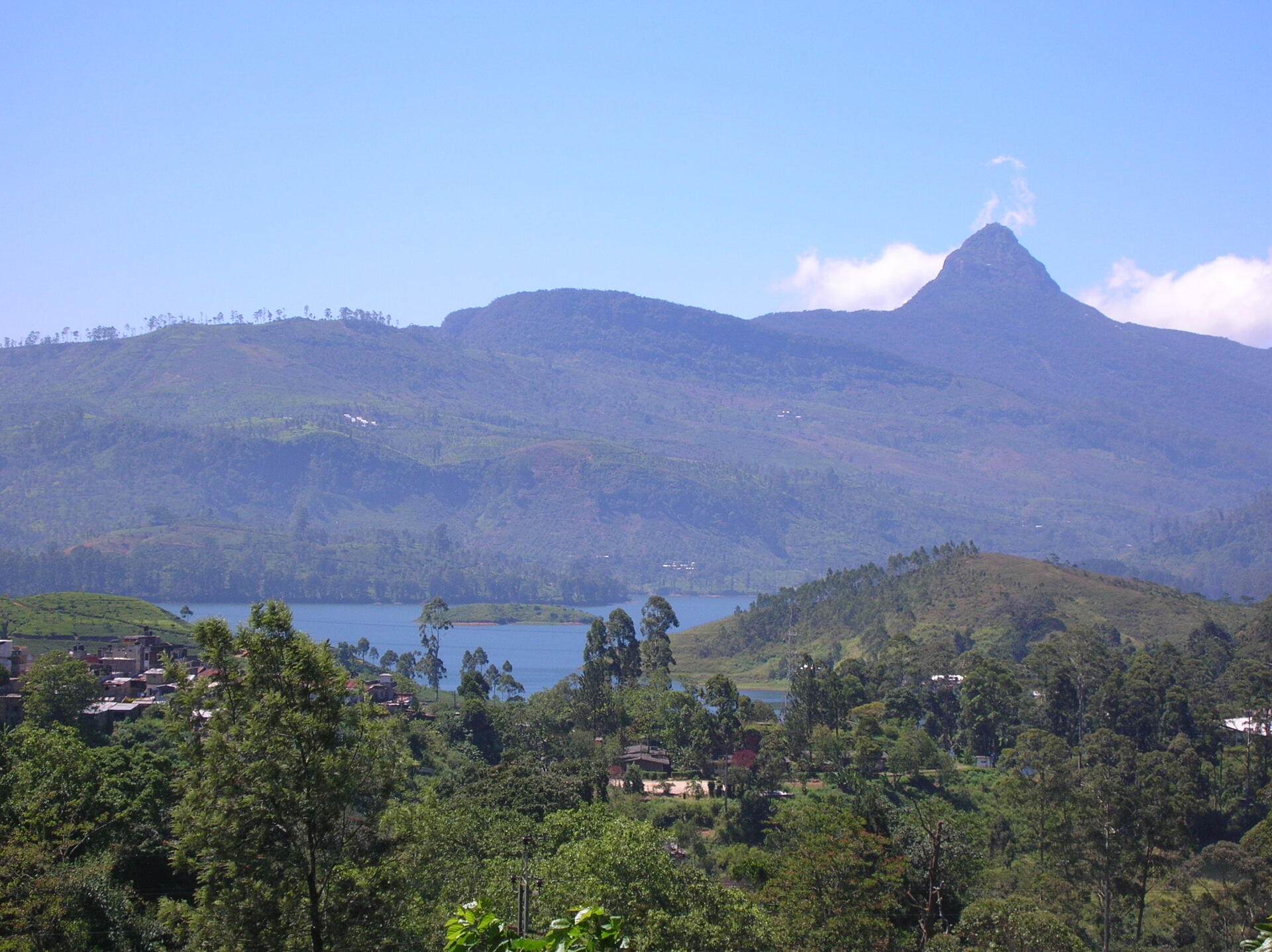
© Bernard Gagnon, CC BY-SA 3.0 Resized from original. (This derivative is under the same CC BY-SA license.)
World Heritage Research
Discover scientific research and academic studies that deepen our understanding of Central Highlands of Sri Lanka from its history and significance to its conservation, management, and contemporary challenges.
-
Leopards Exhibit Nuanced Predation Patterns but Rely on Wild Prey in a Human‐Dominated Agricultural Landscape in the Central Highlands of Sri Lanka
Leopards in Sri Lanka's Central Highlands, despite being generalist and opportunistic predators, show nuanced predation patterns that favor wild prey over domestic species, even in heavily agricultural landscapes. A study analyzing 107 leopard scat samples revealed that while small prey like the black-naped hare were most frequently consumed, medium-sized barking deer and large sambar deer contributed significantly to biomass intake, indicating selective foraging behavior. Domestic dogs, contrary to local perceptions, were moderately avoided, suggesting a positive outcome for human-leopard coexistence. Wild species constituted over 85% of the diet, highlighting the resilience of natural prey bases in anthropogenically transformed environments. The research underscores the importance of preserving wild prey abundance and diversity to facilitate coexistence between leopards and humans.
Kumara, P. H. S. C., Kittle, A. M., Watson, A. C., Perera, S. J., Sanjeewani, N., & Fernando, S. P. (2026). Leopards Exhibit Nuanced Predation Patterns but Rely on Wild Prey in a Human‐Dominated Agricultural Landscape in the Central Highlands of Sri Lanka. Ecology and Evolution, 16(2). Portico. https://doi.org/10.1002/ece3.73027
View Publication Record | Read Publication -
Human‐Caused Leopard Deaths in Sri Lanka Are Concentrated in Central Highlands' Estate Mosaics: Evidence From 17 Years of Mortality Records
A significant increase in human-caused leopard deaths in Sri Lanka has been documented over 17 years, with mortality rates rising and clustering heavily in the Central Highlands' plantation landscapes. The study, analyzing 164 recorded deaths (2008–2024), revealed a male bias (68.4%) and adult dominance (87.3%), with snares being the leading cause (62.3%). Nuwara Eliya district alone accounted for 38.4% of cases, despite covering only 4.4% of Sri Lanka's leopard range. The research highlights critical hotspots and calls for targeted mitigation efforts, particularly in highland plantations, to combat snare-related threats.
Weerakkody, S., Gunasekara, V., Muhandiram, S., Harapan, T. S., Gunasekara, K. R., Jayasena, B., Wilson, J. B., Amugoda, P. M., de Silva, T., Hathurusinghe, C. D., Campos‐Arceiz, A., & Kudavidanage, E. P. (2026). Human‐Caused Leopard Deaths in Sri Lanka Are Concentrated in Central Highlands’ Estate Mosaics: Evidence From 17 Years of Mortality Records. Wildlife Letters, 4(3), 107–117. Portico. https://doi.org/10.1002/wll2.70040
View Publication Record | Read Publication -
First Record of the Critically Endangered Vandeleuria nolthenii from Hakgala Botanical Garden, Central Highlands of Sri Lanka
Researchers document the first record of the Critically Endangered Vandeleuria nolthenii, a montane-endemic rodent, from Hakgala Botanical Garden in Sri Lanka's Central Highlands. This discovery extends the known distribution of the species within human-modified montane habitats, highlighting its ability to utilize exotic vegetation and persist in modified landscapes. The observation involved five small, long-tailed mice emerging from a cavity in a dead Cupressus macrocarpa tree, suggesting a mother accompanied by nearly grown offspring. The study underscores the potential of citizen science in documenting elusive small mammals and advocates for continued collaboration among visitors, naturalists, and researchers to support monitoring and conservation efforts.
Gamage, K.S.N., Galappaththi, S.U., & Kusuminda T.G.T. (2026). First Record of the Critically Endangered Vandeleuria nolthenii from Hakgala Botanical Garden, Central Highlands of Sri Lanka. Proceedings of International Forestry and Environment Symposium, 30. https://doi.org/10.31357/fesympo.v30.8966
View Publication Record | Read Publication -
Assessing the Economic and Ecological Costs of Human–Wildlife Conflict in Nuwara Eliya
Human-wildlife conflict (HWC) in Nuwara Eliya, Sri Lanka, is driven primarily by wild boars, which cause significant agricultural damage, livestock losses, and infrastructure destruction. Spatial analysis identified conflict hotspots near forest and tea plantation boundaries, highlighting the impact of land use on HWC intensity. While farmers employ multiple mitigation strategies with varying effectiveness, the study emphasizes the need for region-specific solutions to foster sustainable coexistence between wildlife and local communities. The research combined field surveys, expert interviews, satellite imagery, and analytical techniques like the Analytical Hierarchy Process (AHP) to quantify economic and ecological costs.
Anuruddha, M. C., Morimoto, T., Gamage, S., & Marikar, F. (2025). Assessing the Economic and Ecological Costs of Human–Wildlife Conflict in Nuwara Eliya. Ecologies, 6(1), 6. https://doi.org/10.3390/ecologies6010006
View Publication Record | Read Publication -
From snared to swimming: Some observations on the rescue, treatment, release and monitoring of an injured Sri Lankan leopard ( Panthera pardus kotiya )
A rescued and translocated Sri Lankan leopard (Panthera pardus kotiya), the island's apex predator, demonstrated remarkable navigational behavior by swimming across open water to return to its original range within three weeks of release. This was the first GPS radio-collared translocated leopard in Sri Lanka, providing novel insights into post-release movement patterns and the effectiveness of translocation as a conservation strategy. The study involved surgical treatment, rehabilitation, and monitoring over four months before release in a protected area, followed by tracking to assess its survival and behavior. Findings suggest that translocation may not be an optimal solution for snared leopards unless absolutely necessary, given their strong homing instincts.
Kittle, A. M., Watson, A. C., Prasad, T., Pinidiya, M. A., Kumarasiri, A. M. K. N., Kumara, M. A. P. R., Weerasinha, W. M. N. K., Vidura, G. M., de Silva, L. N. A., de Silva, D. D. N., Nizanantha, K., & Hewapathirana, H. D. S. (2025). From snared to swimming: Some observations on the rescue, treatment, release and monitoring of an injured Sri Lankan leopard ( Panthera pardus kotiya ). Ecological Solutions and Evidence, 6(2). Portico. https://doi.org/10.1002/2688-8319.70029
View Publication Record | Read Publication -
Factors affecting fuel-wood consumption in the central highlands and conservation drawbacks to the montane forest system in Sri Lanka
Sri Lanka's montane forests, vital for biodiversity and water catchment, face growing threats from unsustainable fuelwood consumption. Research reveals that population growth, low income, traditional cooking methods, and limited access to alternative energy drive high demand, with households sourcing significant portions directly from nearby forests. This extraction exacerbates deforestation, habitat fragmentation, and biodiversity loss while degrading water retention capacity, increasing soil erosion and downstream water scarcity. The study highlights the need for integrated conservation strategies, including energy-efficient technologies and community-based interventions, to balance livelihood needs with forest preservation.
Anuruddha, M. C., Morimoto, T., Gamage, S., & Marikar, F. (2025). Factors affecting fuel-wood consumption in the central highlands and conservation drawbacks to the montane forest system in Sri Lanka. Discover Forests, 1(1). https://doi.org/10.1007/s44415-025-00045-w
View Publication Record | Read Publication -
Conversion of Marginalized Tea Lands into Timber Plantations and its Impact on Soil Organic Carbon Content: A Case Study in Central Highlands of Sri Lanka
Converting marginalized tea lands into timber plantations significantly increases soil organic carbon (SOC) stocks, offering a potential strategy for climate change mitigation. A study in Sri Lanka's Central Highlands found that SOC stocks were 23% higher in converted timber plantations (155.3 ± 10.0 t C ha⁻¹) compared to marginalized tea lands (126.7 ± 5.8 t C ha⁻¹). This increase is attributed to reduced soil disturbance, litter accumulation, and decreased erosion, which enhance organic matter buildup. The research used soil samples from both land types, analyzing SOC via loss on ignition and bulk density estimates, followed by statistical comparisons. These findings suggest that land-use conversion could play a crucial role in sequestering atmospheric CO₂ while addressing economic challenges in tea cultivation.
Rotawewa B., & Lokupitiya E.Y.K. (2024). Conversion of Marginalized Tea Lands into Timber Plantations and its Impact on Soil Organic Carbon Content: A Case Study in Central Highlands of Sri Lanka. Proceedings of International Forestry and Environment Symposium, 27. https://doi.org/10.31357/fesympo.v27.7128
View Publication Record | Read Publication