World Heritage Identification Number: 201
World Heritage since: 1982
Category: Cultural Heritage
WHE Type: Historic Cities & Urban Areas
Transboundary Heritage: No
Endangered Heritage: No
Country: 🇱🇰 Sri Lanka
Continent: Asia
UNESCO World Region: Asia and the Pacific
Map
The Ancient City of Polonnaruwa: A Testament to Sri Lankan History and Architecture
The Ancient City of Polonnaruwa, located in the North Central Province of Sri Lanka, serves as a significant testament to the rich history and architectural prowess of the island nation. Inscribed as a UNESCO World Heritage Site in 1982, this ancient city holds a unique place in the annals of Sri Lankan history, having served as the second capital following the destruction of Anuradhapura in 993 CE.
More to come…UNESCO Description of the World Heritage Site
Polonnaruwa was the second capital of Sri Lanka after the destruction of Anuradhapura in 993. It comprises, besides the Brahmanic monuments built by the Cholas, the monumental ruins of the fabulous garden-city created by Parakramabahu I in the 12th century.
Encyclopedia Record: Polonnaruwa
Poḷonnaruwa, also referred as Pulathisipura and Vijayarajapura in ancient times, is the main town of Polonnaruwa District in North Central Province, Sri Lanka. The modern town of Polonnaruwa is also known as New Town, and the other part of Polonnaruwa remains as the royal ancient city of the Kingdom of Polonnaruwa.Additional Site Details
Area: Not available
Number of Components: 1
(iii) — Unique or exceptional testimony to a cultural tradition
(vi) — Directly associated with events or living traditions
Coordinates: 7.915833333 , 81.00055556
Image
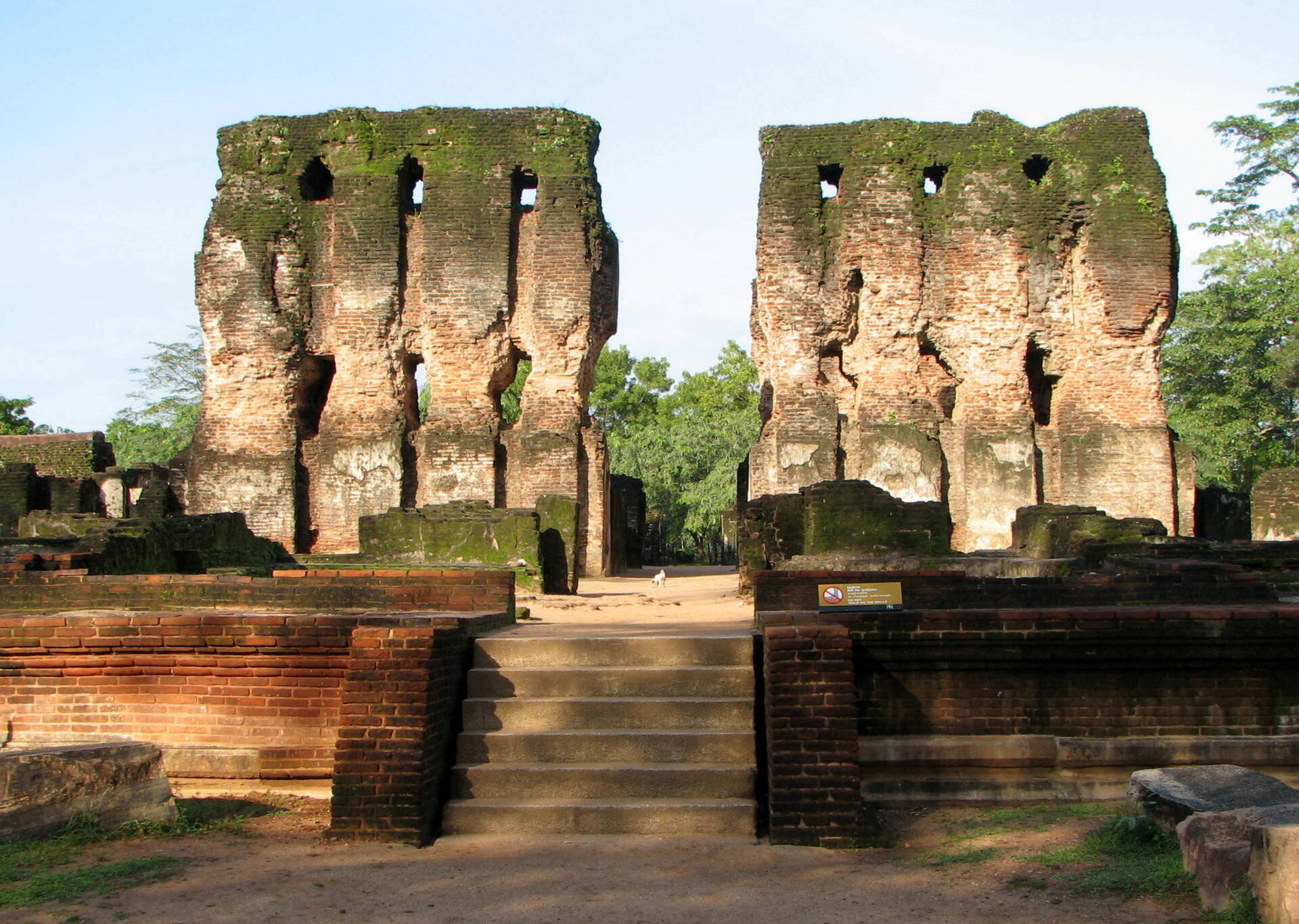
© Bernard Gagnon, CC BY-SA 3.0 Resized from original. (This derivative is under the same CC BY-SA license.)
World Heritage Research
Discover scientific research and academic studies that deepen our understanding of Ancient City of Polonnaruwa from its history and significance to its conservation, management, and contemporary challenges.
-
Cultural exchange and decorative motifs in Polonnaruwa, Sarnath, and Angkor Wat: 12th-century regional traditions and bilateral relations
A pivotal role of the Ancient City of Polonnaruwa as a cultural and artistic bridge between South and Southeast Asia during the 12th century is revealed, demonstrating its significance in fostering shared decorative motifs across Polonnaruwa, Sarnath, and Angkor Wat. The study identifies advanced carving techniques in Polonnaruwa that link the artistic traditions of these regions, despite challenges posed by foreign invasions and environmental changes. Through analysis of historical sources, architectural remnants, and artistic styles, the research highlights how diplomatic interactions and cultural exchange shaped a unified visual language across these ancient centers.
Dissanayaka, G. R. (2025). Cultural exchange and decorative motifs in Polonnaruwa, Sarnath, and Angkor Wat: 12th-century regional traditions and bilateral relations. Arts & Communication, 3(3), 4205. https://doi.org/10.36922/ac.4205
View Publication Record | Read Publication -
Colonial Narratives and the Ruined Cities of Ceylon: Exploring the Earliest Architectural and Archaeological Documentation during the Colonial Period
Colonial-era documentation efforts under British rule (1806–1948) laid the foundation for modern architectural and archaeological study of Sri Lanka’s ancient cities, including Polonnaruwa, Anuradhapura, and Sigiriya. These ruins, rediscovered in the mid-19th century by colonial administrators and professionals, were systematically recorded through archival, cartographical, and iconographical research. This systematic approach culminated in the establishment of the Archaeological Survey of Ceylon, shaping the preservation and recognition of these sites as UNESCO World Heritage Sites.
Jayasinghe, S. (2025). Colonial Narratives and the Ruined Cities of Ceylon: Exploring the Earliest Architectural and Archaeological Documentation during the Colonial Period. ARTis ON, (15). https://doi.org/10.37935/iha.oan2024.007
View Publication Record | Read Publication -
An Investigative Study of the Theories Surrounding the Standing Buddha Statue at the Polonnaruwa Rock Temple
The standing Buddha statue at Polonnaruwa Rock Temple, Sri Lanka, embodies multiple symbolic interpretations rooted in Buddhist iconography. Research reveals that the statue's unique mudra—variously identified as Paradukkha Dukkhitha, Animisa Lochana, Swastika, or Avadhana—represents pivotal moments in Buddha's life, including the second week of his enlightenment and the Great Passing Away (Parinirvana). Additionally, its posture suggests a compassionate gaze toward beings, while theories propose it may depict Ananda Thero. The study analyzes these interpretations through secondary sources, leveraging Buddhist literature to explore their historical and symbolic significance. This approach highlights the statue's cultural and religious importance during the Polonnaruwa period (post-Anuradhapura), cementing its status as a peak in Sri Lankan Buddha statue art.
Medage, M. P. R. (2025). An Investigative Study of the Theories Surrounding the Standing Buddha Statue at the Polonnaruwa Rock Temple. Journal of Desk Research Review and Analysis, 3(1), 11–24. https://doi.org/10.4038/jdrra.v3i1.68
View Publication Record | Read Publication -
Feasibility study of micro-scale wind power generation for rural electrification in Polonnaruwa area
A feasibility study of micro-scale wind power generation for rural electrification in the Polonnaruwa area reveals that installing a 500 W turbine at a 10-meter hub height is optimal, offering superior annual energy production, capacity factor, and carbon savings. The research analyzed wind speed data from two years (2019–2020) using Weibull probability distribution to assess the region's wind power potential. Findings indicate that micro-scale turbines with low cut-in wind speeds (2 m/s) are highly suitable for standalone power generation in this UNESCO World Heritage Site, addressing both energy demand and environmental concerns while avoiding reliance on fossil fuels.
Samaraweera, S. P. P., & Sasikala, R. H. G. (2025). Feasibility study of micro-scale wind power generation for rural electrification in Polonnaruwa area. Book of Abstracts: International Research Conference of the Open University of Sri Lanka, 383–388. https://doi.org/10.65646/3rc20dms1m0383
View Publication Record | Read Publication -
Historical Demaḷa Mahā Sǣya of Polonnaruwa, Sri Lanka: An Archaeological Analysis of its Construction Technology
A recent archaeological analysis of the Demaḷa Mahā Sǣya, the largest stupa in Polonnaruwa, Sri Lanka, reveals sophisticated construction techniques that highlight the advanced masonry and engineering skills of its builders. Excavations uncovered intricate details about the stupa's structure, including the use of precise stonework and innovative architectural methods. This study provides valuable insights into the historical significance and technical mastery of ancient Sinhala craftsmanship, contributing to a deeper understanding of the region's heritage.
Marasinghe, P., & Perera, N. (2024). Historical Demaḷa Mahā Sǣya of Polonnaruwa, Sri Lanka: An Archaeological Analysis of its Construction Technology. Ancient Lanka, 3. https://doi.org/10.29173/anlk838
View Publication Record | Read Publication -
Human-elephant conflict: challenges in agriculture Sector in Polonnaruwa district; A study based on literature review
Human-elephant conflict in the Polonnaruwa district, Sri Lanka, poses significant threats to both elephants and agricultural sectors. The study reveals that such conflicts are a major socio-environmental issue, with 42% of incidents occurring in high-risk areas like the North Central Province. Key challenges include crop damage, property destruction, human fatalities, and elephant deaths, often exacerbated by inadequate compensation methods and limited local mitigation strategies. The research highlights the ineffectiveness of current measures such as bio-fences and electric fences while emphasizing the need for inter-cooperation to minimize conflicts. Through a systematic literature review, the study identifies gaps in conflict resolution and calls for methodological improvements to address these pressing issues.
Sajla, J. S. F., & Famees, M. F. (2022). Human-elephant conflict: challenges in agriculture Sector in Polonnaruwa district; A study based on literature review. Sri Lanka Journal of Social Sciences and Humanities, 2(1), 73–84. https://doi.org/10.4038/sljssh.v2i1.58
View Publication Record | Read Publication -
Shields on Electric Posts Prevent Primate Deaths: A Case Study at Polonnaruwa, Sri Lanka
A case study at the UNESCO World Heritage Site of Polonnaruwa, Sri Lanka, demonstrates that shields mounted on electrical posts significantly reduced electrocution deaths among toque macaques (Macaca sinica). Over a 12-year period post-installation, no electrocutions were recorded, compared to 18 incidents in the preceding 12 years. The study highlights the effectiveness of simple interventions like shields and insulated PVC pipes in mitigating risks for primates and other arboreal mammals near human habitats. While not all electrocution hotspots could be addressed, the findings suggest broader applications for such measures in power distribution planning to protect wildlife.
Dittus, W. P. J. (2020). Shields on Electric Posts Prevent Primate Deaths: A Case Study at Polonnaruwa, Sri Lanka. Folia Primatologica, 91(6), 643–653. https://doi.org/10.1159/000510176
View Publication Record | Read Publication