World Heritage Identification Number: 200
World Heritage since: 1982
Category: Cultural Heritage
WHE Type: Religious Sites & Sacred Architecture
Transboundary Heritage: No
Endangered Heritage: No
Country: 🇱🇰 Sri Lanka
Continent: Asia
UNESCO World Region: Asia and the Pacific
Map
The Sacred City of Anuradhapura: A Historical and Cultural Gem of Sri Lanka
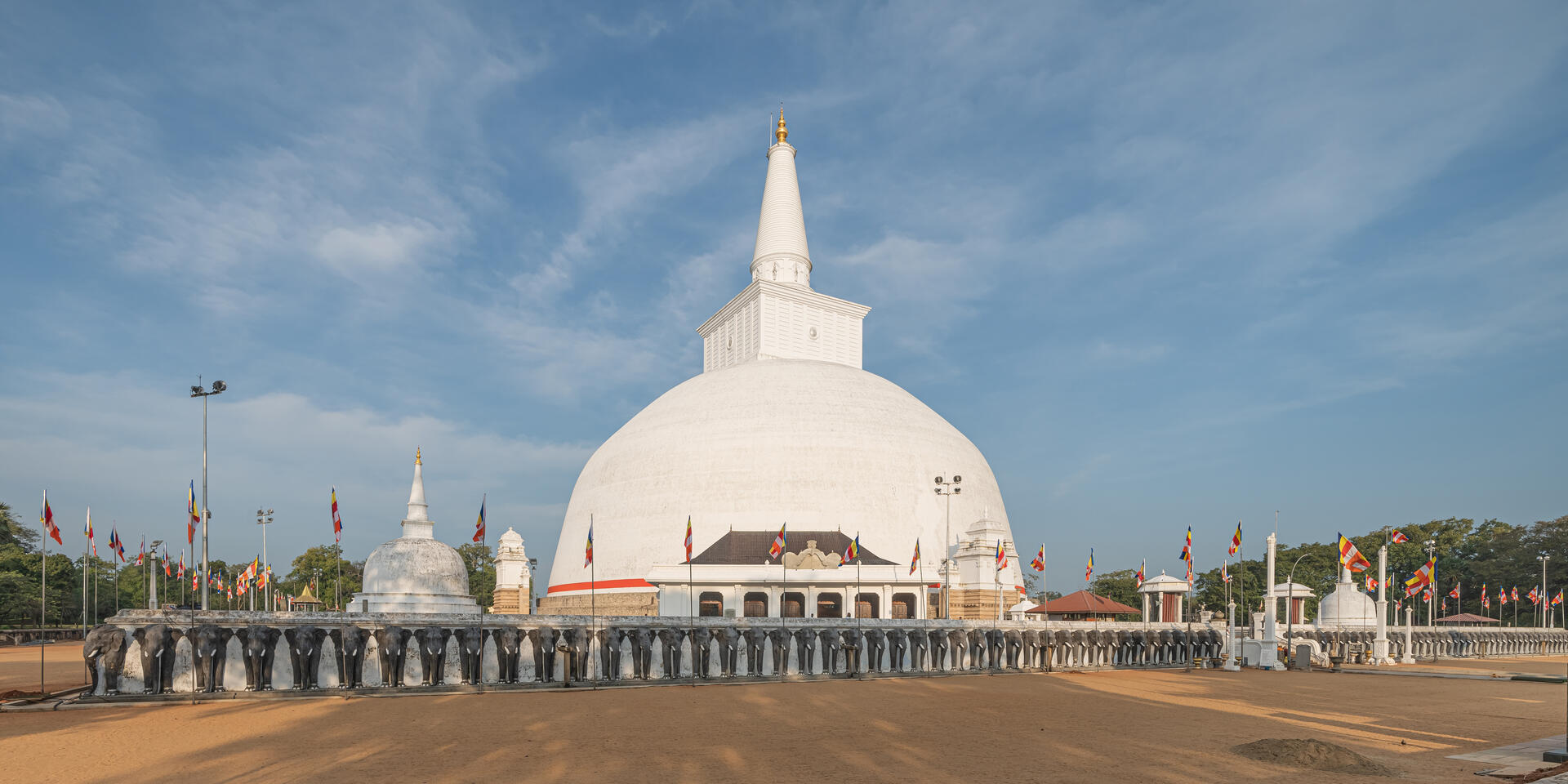
The Sacred City of Anuradhapura, nestled in the heart of Sri Lanka's north central plains, stands as a testament to the rich history and cultural significance of this island nation. Inscribed as a UNESCO World Heritage Site in 1982, this ancient metropolis boasts a remarkable legacy that spans over a millennium.
More to come…UNESCO Description of the World Heritage Site
This sacred city was established around a cutting from the 'tree of enlightenment', the Buddha's fig tree, brought there in the 3rd century B.C. by Sanghamitta, the founder of an order of Buddhist nuns. Anuradhapura, a Ceylonese political and religious capital that flourished for 1,300 years, was abandoned after an invasion in 993. Hidden away in dense jungle for many years, the splendid site, with its palaces, monasteries and monuments, is now accessible once again.
Encyclopedia Record: Anuradhapura
Anuradhapura is a major city located in the north central plain of Sri Lanka. It is the capital city of North Central Province and the capital of Anuradhapura District. The city lies 205 kilometers (127 mi) north of the current capital of Colombo in the North Central Province, on the banks of the historic Malwathu Oya. The city is now a World Heritage Site famous for its well-preserved ruins of the ancient Sinhalese civilisation.Additional Site Details
Area: Not available
Number of Components: 1
(iii) — Unique or exceptional testimony to a cultural tradition
(vi) — Directly associated with events or living traditions
Coordinates: 8.333333333 , 80.38333333
World Heritage Research
Discover scientific research and academic studies that deepen our understanding of Sacred City of Anuradhapura from its history and significance to its conservation, management, and contemporary challenges.
-
A GIS-MCDA Based Evaluation of the Quality of Life Variations in Anuradhapura Municipal Council: A Policy Implication Road Map for Human Well-being
A significant spatial disparity in quality of life (QoL) within Anuradhapura Municipal Council was identified, with only 10.6% of the area classified as having the highest QoL, primarily concentrated in the city center and northern regions. This study, utilizing a GIS-MCDA framework combined with AHP for criteria weighting, revealed that essential socio-economic resources are heavily centralized, leaving 39.7% and 10.4% of areas in low and least QoL categories, respectively. The analysis further showed that the highest QoL zone extends only 1.5 km from the city center, covering just 20% of the land area. These findings provide a critical roadmap for policy-makers to redistribute resources and foster balanced regional development, addressing human well-being disparities in Anuradhapura.
Wijesinghe, W. M. D. C., & Withanage, W. K. N. C. (2025). A GIS-MCDA Based Evaluation of the Quality of Life Variations in Anuradhapura Municipal Council: A Policy Implication Road Map for Human Well-being. Journal of Geospatial Surveying, 5(1), 1–10. https://doi.org/10.4038/jgs.v5i1.62
View Publication Record | Read Publication -
A Virtual Reality Immersive Experience of Sri Lanka's Sacred Heritage: VR Meditation Experience at the Ruwanweli Maha Seya using Heart Rate and HRV Tracking
A five-minute VR meditation session at Sri Lanka's Ruwanweli Maha Seya, part of the UNESCO-listed Sacred City of Anuradhapura, demonstrated measurable physiological benefits: a 5.4 BPM decrease in average heart rate and a 10-point increase in heart rate variability (HRV). This suggests that immersive VR environments can replicate the stress-reducing effects of traditional meditation at sacred sites, regardless of physical location. The study used a Unity-based application to simulate four Atamasthana sites, tracking real-time physiological responses via heart rate and HRV monitoring. Findings highlight the potential of VR to bridge cultural preservation with digital wellness, offering scalable solutions for mental relaxation while advancing research on both religious heritage and biometric feedback in meditation practices.
Herath, S., Hapangama, C., Gamage, U., Soyza, N., Gamage, I., & Nismi, N. (2025). A Virtual Reality Immersive Experience of Sri Lanka’s Sacred Heritage: VR Meditation Experience at the Ruwanweli Maha Seya using Heart Rate and HRV Tracking. 2025 7th International Conference on Advancements in Computing (ICAC), 1–6. https://doi.org/10.1109/icac69156.2025.11361503
View Publication Record | Read Publication -
Heritage and decoloniality: Reflections from Sri Lanka—A conversation
A three-way conversation between Hasini Haputhanthri, Gill Juleff, and Thamotharampillai Sanathanan explores the intersections of heritage and decoloniality in Sri Lanka, highlighting how colonialism and nationalism have shaped perceptions of heritage. The discussion reveals that state-authorized narratives, particularly those centered on Buddhist archaeological sites like Anuradhapura, have marginalized minority communities and silenced diverse historical perspectives. It also examines the ongoing impact of colonial legacies, including the destruction of cultural heritage during the civil war and the current discourse around Chinese influence, which mirrors historical patterns of colonization. The conversation underscores the need for a more inclusive and critical approach to heritage that challenges dominant narratives and centers marginalized voices.
Haputhanthri, H., Juleff, G., & Sanathanan, T. (2024). Heritage and decoloniality: Reflections from Sri Lanka—A conversation. American Anthropologist, 126(2), 349–354. Portico. https://doi.org/10.1111/aman.13949
View Publication Record | Read Publication -
Comprehending genius loci, towards spiritual sustainability: lessons from Buddhist heritage city Anuradhapura
Anuradhapura, Sri Lanka's UNESCO World Heritage Site, embodies 'spiritual sustainability' by integrating natural elements, topography, built structures, and human activities. This study reveals that the city's spiritual orientation, rooted in Buddhist concepts, sustains a dynamic equilibrium between physical and non-physical dimensions, offering deeper insights into heritage value and sustainable development. The research employs an interdisciplinary approach, combining contextual and generalized concepts to explore the 'genius loci'—the unique spirit of place—and its role in shaping cultural and religious views across history.
De Silva, W. (2023). Comprehending genius loci, towards spiritual sustainability: lessons from Buddhist heritage city Anuradhapura. International Journal of Heritage Studies, 29(1-2), 1–20. https://doi.org/10.1080/13527258.2023.2169333
View Publication Record | Read Publication -
Concentration and Distribution of Toxic and Essential Elements in Traditional Rice Varieties of Sri Lanka Grown on an Anuradhapura District Farm
Traditional Sri Lankan rice varieties, often favored for their perceived health benefits, exhibit significant variability in cadmium concentrations, with one store-bought sample (Suwadel) containing potentially unsafe levels (113±13 μg kg−1). Elemental imaging revealed that lead is primarily stored in the rice bran, which is removed during polishing, while cadmium is distributed in the edible portion of the grain. Essential elements were generally higher in traditional varieties compared to non-traditional ones, suggesting a potential nutritional advantage for nutrient-deficient communities. However, selenium levels were too low to meet minimum recommended intake, despite its protective role in kidney health. This study provides a one-time cross-sectional dataset on elemental concentrations in eleven rice samples from Anuradhapura district, a hotspot for chronic kidney disease of unknown etiology (CKDu), using methods that could be applied to more comprehensive research under controlled conditions.
Lockwood, T. E., Banati, R. B., Nikagolla, C., Violi, J. P., & Bishop, D. P. (2023). Concentration and Distribution of Toxic and Essential Elements in Traditional Rice Varieties of Sri Lanka Grown on an Anuradhapura District Farm. Biological Trace Element Research, 202(6), 2891–2899. https://doi.org/10.1007/s12011-023-03847-1
View Publication Record | Read Publication -
Spatializing Nationalism and Religion: The Production of Sinhala-Buddhist Imagination and the Centrality of Anuradhapura
Anuradhapura, Sri Lanka's ancient and revered Buddhist city, emerged as the focal point of Sinhala-Buddhist identity at the turn of the 20th century. This transformation was driven by local leaders who resisted colonial attempts to archeologize and museumize the site while asserting its centrality in religious and nationalist discourse. They sought to eliminate non-Buddhist activities and challenge the dominance of the Kandy-based Buddhist order, reshaping the spatiality of Sinhala-Buddhist imagination. The study analyzes this complex interplay through a lens of nationalism, religion, and colonialism, highlighting local agency's role in redefining Anuradhapura's significance amid shifting political power dynamics.
Sangapala, P., & Perera, N. (2023). Spatializing Nationalism and Religion: The Production of Sinhala-Buddhist Imagination and the Centrality of Anuradhapura. Space and Culture, 28(4), 465–479. https://doi.org/10.1177/12063312231210152
View Publication Record | Read Publication -
Distribution of Phlebotomus argentipes Annandale & Brunetti, 1908 in the Anuradhapura district, North Central Sri Lanka
A study on the distribution of Phlebotomus argentipes in Anuradhapura, Sri Lanka, revealed that its abundance is strongly influenced by temperature and humidity. The sandfly, a potential vector for cutaneous leishmaniasis, thrives at mean temperatures of 24.7–27.3°C and high humidity levels (72–88%). Key microhabitats included shrubs, uncultivated areas, gardening zones, wet soil with leaf litter, and termite hills. Using CDC light traps and yellow sticky traps over 12 months, researchers analyzed environmental factors to predict temporal variations in vector populations. Regression analysis showed significant correlations (P = 0.00), with temperature explaining 68% of abundance variability and humidity 91.6%. These findings could inform targeted vector management strategies by leveraging ecological behavior patterns.
Nayakarathna, N., Gunathilaka, R., & Ganehiarachchi, G. (2023). Distribution of Phlebotomus argentipes Annandale & Brunetti, 1908 in the Anuradhapura district, North Central Sri Lanka. Journal of Vector Borne Diseases, 60(4), 427–431. https://doi.org/10.4103/0972-9062.383638
View Publication Record | Read Publication