
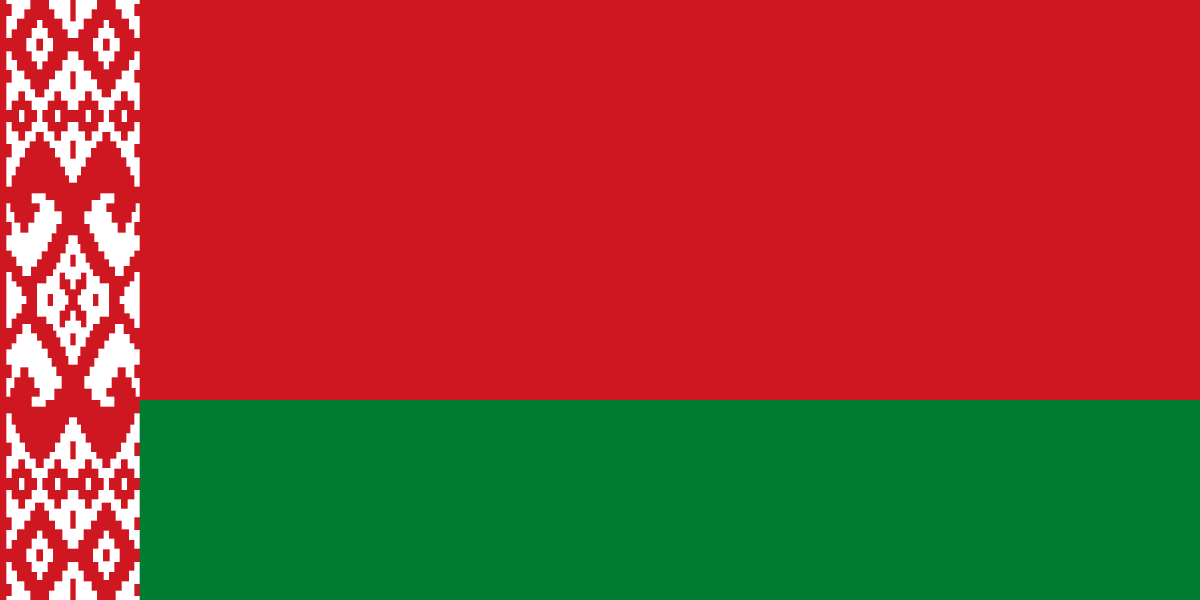
 Belarus
Belarus as a State Party to the World Heritage Convention
State Party since: October 12, 1988
Status: Ratification
Mandates to the World Heritage Committee: None
Total of Mandate Years: 0
Total of Mandates: 0
WHC Electoral Group: II (Eastern Europe)
World Heritage Sites in Belarus (4)
Cultural: 3 | Natural: 1 | Mixed: 0
- Architectural, Residential and Cultural Complex of the Radziwill Family at Nesvizh · Cultural
- Białowieża Forest · Natural (Transboundary)
- Mir Castle Complex · Cultural
- Struve Geodetic Arc · Cultural (Transboundary)
Map of World Heritage Sites
This interactive map shows the location of all UNESCO World Heritage Sites in Belarus.
World Heritage Inscription Timeline
Tentative World Heritage Sites (6)
- Memorials to the Heroes of the Great Patriotic War: Brest Fortress and Mamayev Kurgan · submitted: May 30, 2024
- Augustow Canal · submitted: January 30, 2004
- Saviour Transfiguration Church and St. Sophia Cathedral in the town of Polatsk · submitted: January 30, 2004
- SS. Boris and Gleb (Kalozha) Church in the city of Hrodna · submitted: January 30, 2004
- Edifices for Worship of Fortress Type in Belarus, Poland and Lithuania · submitted: January 30, 2004
- Worship wooden architecture (17th -18th centuries) in Polesye · submitted: January 30, 2004
Country Profile Belarus
Official Name: Republic of Belarus
Continent: Europe
Subregion: Eastern Europe
UNESCO Region: Europe and North America
Capital: Minsk
Population (2024): 9,133,712
Land Area: 202,950 km²
Currency: Belarusian ruble (BYN)
About States Parties
States Parties are countries that have joined the World Heritage Convention. They commit to identifying, nominating, and protecting properties of outstanding cultural or natural value on their territory. States Parties are also expected to monitor and report on the condition of inscribed sites.