
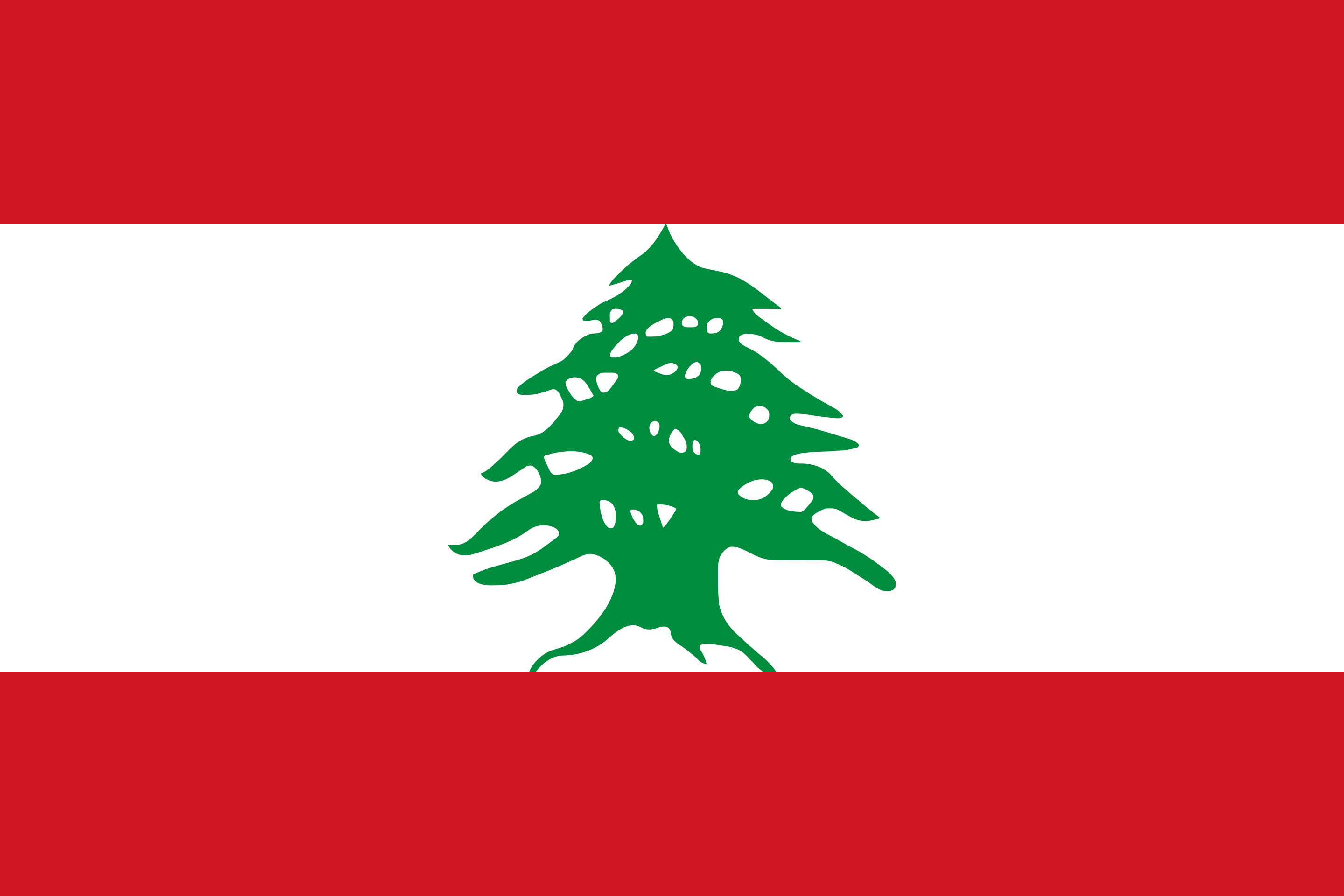
 Lebanon
Lebanon as a State Party to the World Heritage Convention
State Party since: February 3, 1983
Status: Ratification
Mandates to the World Heritage Committee: 1983-1989, 1993-1999, 2001-2005, 2013-2017, 2023-2027
Total of Mandate Years: 24
Total of Mandates: 5
WHC Electoral Group: V(b) (Arab States)
World Heritage Sites in Lebanon (7)
Cultural: 7 | Natural: 0 | Mixed: 0
- Anjar · Cultural
- Baalbek · Cultural
- Byblos · Cultural
- Mount Amel Castles · Cultural
- Ouadi Qadisha (the Holy Valley) and the Forest of the Cedars of God (Horsh Arz el-Rab) · Cultural
- Rachid Karami International Fair-Tripoli · Cultural
- Tyre · Cultural
Map of World Heritage Sites
This interactive map shows the location of all UNESCO World Heritage Sites in Lebanon.
World Heritage Inscription Timeline
Tentative World Heritage Sites (9)
- The castles of Mount Amel: Qalaat Al Chakif (Beaufoert castle), Qalaat Tibnin (Toron castle), Qalaat Chakra (Dubieh castle), Qalaat Deir kifa (Maron castle) and Qalaat Chama’ · submitted: September 11, 2025
- Le centre historique de la ville de Batroun · submitted: July 11, 2019
- Temple d’Echmoun · submitted: July 11, 2019
- Ensemble des monuments historiques et des sites naturels du village de Menjez · submitted: July 11, 2019
- Sacred Mount Hermon and its associated cultural monuments · submitted: July 11, 2019
- Le site archeologique de Nahr el-Kalb · submitted: July 11, 2019
- Centre historique de Saida · submitted: July 11, 2019
- L’ancienne ville de Tripoli · submitted: July 11, 2019
- Ras al-Qalaat promontory / Ras Al Natour promontory / Ras el-Mlelih Promontory · submitted: July 11, 2019
Country Profile Lebanon
Official Name: Lebanese Republic
Continent: Asia
Subregion: Western Asia
UNESCO Region: Arab States
Capital: Beirut
Population (2024): 5,805,962
Land Area: 10,230 km²
Currency: Lebanese pound (LBP)
Related Resources
About States Parties
States Parties are countries that have joined the World Heritage Convention. They commit to identifying, nominating, and protecting properties of outstanding cultural or natural value on their territory. States Parties are also expected to monitor and report on the condition of inscribed sites.