
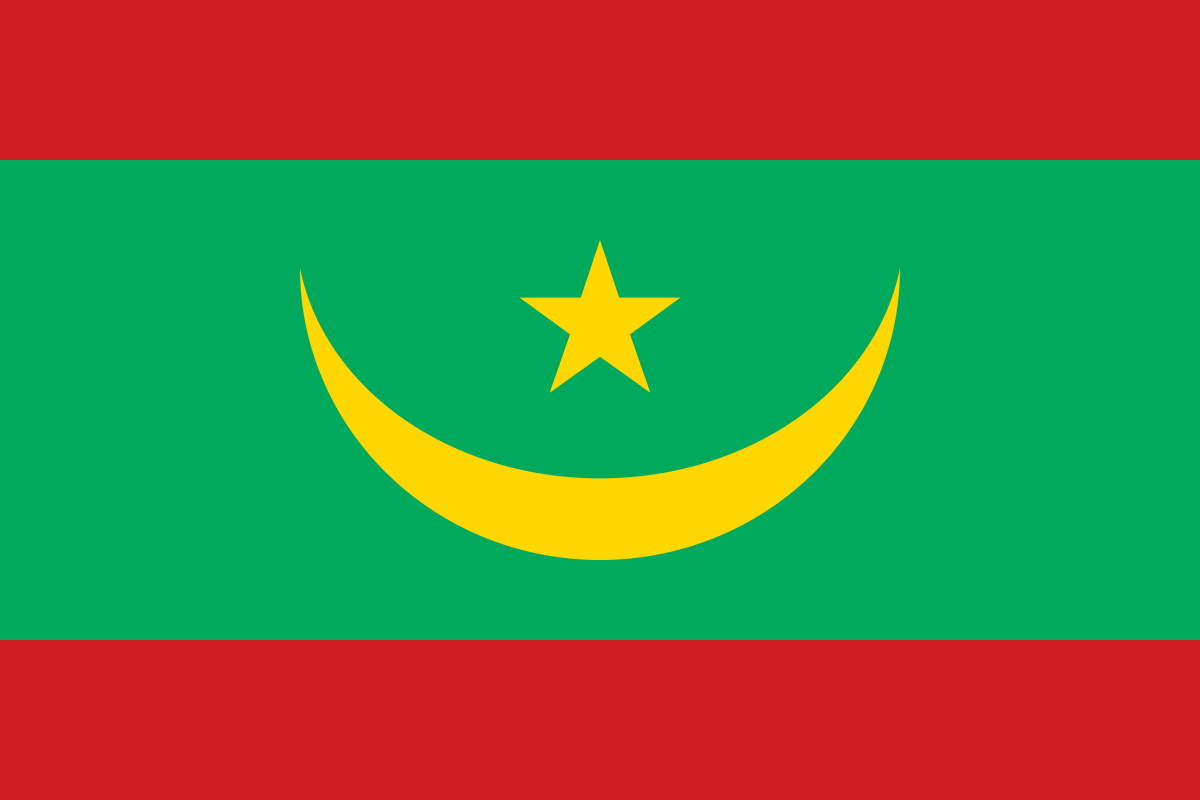
 Mauritania
Mauritania as a State Party to the World Heritage Convention
State Party since: March 2, 1981
Status: Ratification
Mandates to the World Heritage Committee: None
Total of Mandate Years: 0
Total of Mandates: 0
WHC Electoral Group: V(b) (Arab States)
World Heritage Sites in Mauritania (2)
Cultural: 1 | Natural: 1 | Mixed: 0
- Ancient Ksour of Ouadane, Chinguetti, Tichitt and Oualata · Cultural
- Banc d'Arguin National Park · Natural
Map of World Heritage Sites
This interactive map shows the location of all UNESCO World Heritage Sites in Mauritania.
World Heritage Inscription Timeline
Tentative World Heritage Sites (3)
- Paysage culturel d'Azougui · submitted: June 14, 2001
- Site archéologique de Kumbi Saleh · submitted: June 14, 2001
- Site archéologique de Tegdaoust · submitted: June 14, 2001
Country Profile Mauritania
Official Name: Islamic Republic of Mauritania
Continent: Africa
Subregion: Western Africa
UNESCO Region: Arab States
Capital: Nouakchott
Population (2024): 5,169,395
Land Area: 1,030,700 km²
Currency: Mauritanian ouguiya (MRU)
Related Resources
About States Parties
States Parties are countries that have joined the World Heritage Convention. They commit to identifying, nominating, and protecting properties of outstanding cultural or natural value on their territory. States Parties are also expected to monitor and report on the condition of inscribed sites.