
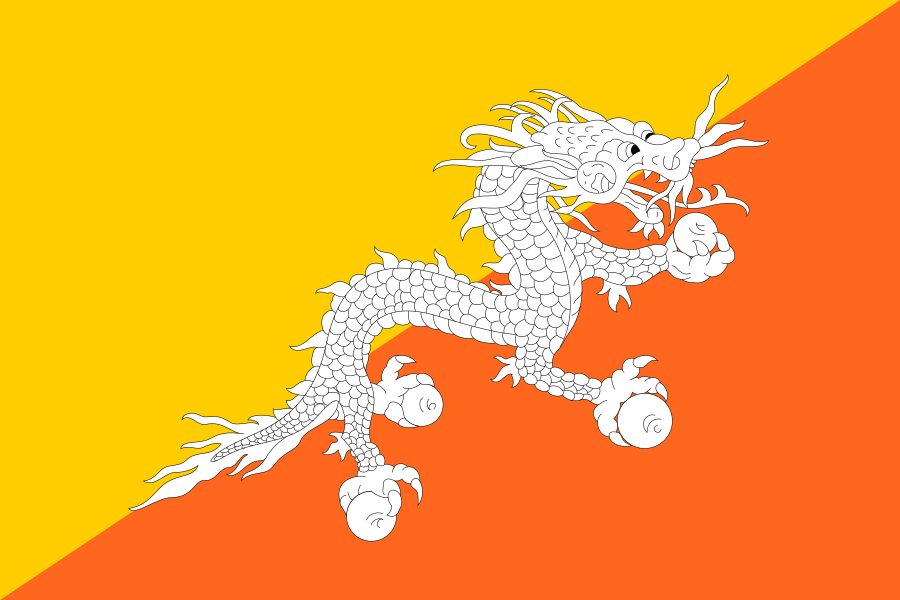
 Bhutan
Bhutan as a State Party to the World Heritage Convention
State Party since: October 22, 2001
Status: Ratification
Mandates to the World Heritage Committee: None
Total of Mandate Years: 0
Total of Mandates: 0
WHC Electoral Group: IV (Asia/Pacific)
World Heritage Sites
No sites inscribed yet.
Map
No sites to display on the map.
World Heritage Inscription Timeline
No sites inscribed yet.
Tentative World Heritage Sites (8)
- Ancient Ruin of Drukgyel Dzong · submitted: March 8, 2012
- Dzongs: the centre of temporal and religious authorities (Punakha Dzong, Wangdue Phodrang Dzong, Paro Dzong, Trongsa Dzong and Dagana Dzong) · submitted: March 8, 2012
- Sacred Sites associated with Phajo Drugom Zhigpo and his descendants · submitted: March 8, 2012
- Tamzhing Monastery · submitted: March 8, 2012
- Royal Manas National Park (RMNP) · submitted: March 8, 2012
- Jigme Dorji National Park (JDNP) · submitted: March 8, 2012
- Bumdeling Wildlife Sanctuary · submitted: March 8, 2012
- Sakteng Wildlife Sanctuary (SWS) · submitted: March 8, 2012
Country Profile Bhutan
Official Name: Kingdom of Bhutan
Continent: Asia
Subregion: Southern Asia
UNESCO Region: Asia and the Pacific
Capital: Thimphu
Population (2024): 791,524
Land Area: 38,140 km²
Currency: Bhutanese ngultrum (BTN;INR)
Related Resources
About States Parties
States Parties are countries that have joined the World Heritage Convention. They commit to identifying, nominating, and protecting properties of outstanding cultural or natural value on their territory. States Parties are also expected to monitor and report on the condition of inscribed sites.