
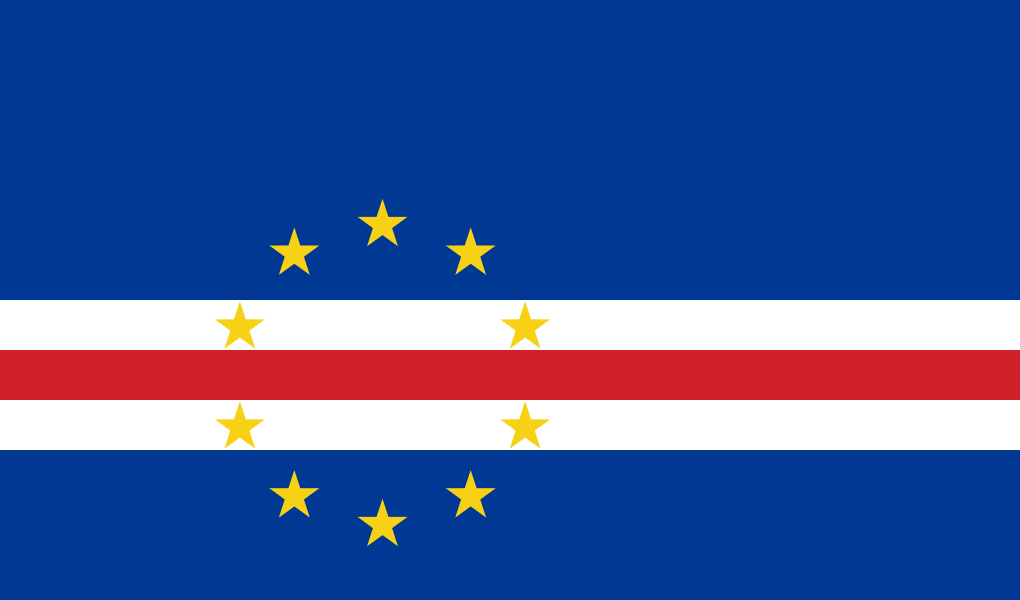
 Cabo Verde
Cabo Verde as a State Party to the World Heritage Convention
State Party since: April 28, 1988
Status: Acceptance
Mandates to the World Heritage Committee: None
Total of Mandate Years: 0
Total of Mandates: 0
WHC Electoral Group: V(a) (Africa)
World Heritage Sites in Cabo Verde (1)
Cultural: 1 | Natural: 0 | Mixed: 0
Map of World Heritage Sites
This interactive map shows the location of all UNESCO World Heritage Sites in Cabo Verde.
World Heritage Inscription Timeline
Tentative World Heritage Sites (8)
- Centre historique de Nova Sintra · submitted: March 15, 2016
- Parc Naturel de Fogo – Chã das Caldeiras · submitted: March 15, 2016
- Complexe d’aires Protégées de l’île de Santa Luzia et des Ilots Branco et Raso · submitted: March 15, 2016
- Camp de concentration du Tarrafal · submitted: March 15, 2016
- Centre historique de Praia · submitted: March 15, 2016
- Centre historique de São Filipe · submitted: March 15, 2016
- Parc Naturel Cova, Paúl et Ribeira da Torre · submitted: March 15, 2016
- Salines de Pedra de Lume · submitted: March 15, 2016
Country Profile Cabo Verde
Official Name: Republic of Cabo Verde
Continent: Africa
Subregion: Western Africa
UNESCO Region: Africa
Capital: Praia
Population (2024): 524,877
Land Area: 4,030 km²
Currency: Cape Verdean escudo (CVE)
Related Resources
About States Parties
States Parties are countries that have joined the World Heritage Convention. They commit to identifying, nominating, and protecting properties of outstanding cultural or natural value on their territory. States Parties are also expected to monitor and report on the condition of inscribed sites.