
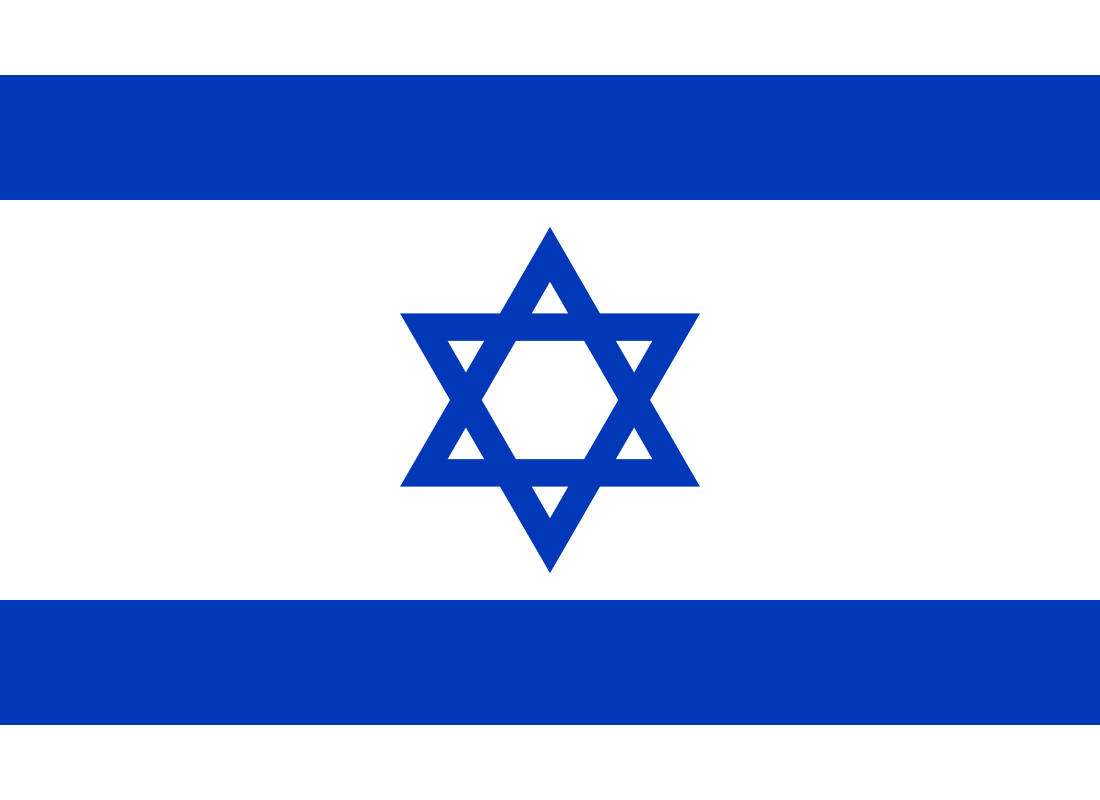
 Israel
Israel as a State Party to the World Heritage Convention
State Party since: October 6, 1999
Status: Acceptance
Mandates to the World Heritage Committee: 2005-2009
Total of Mandate Years: 4
Total of Mandates: 1
WHC Electoral Group: I (Western Europe/North America)
World Heritage Sites in Israel (9)
Cultural: 9 | Natural: 0 | Mixed: 0
- Bahá’i Holy Places in Haifa and the Western Galilee · Cultural
- Biblical Tels - Megiddo, Hazor, Beer Sheba · Cultural
- Caves of Maresha and Bet-Guvrin in the Judean Lowlands as a Microcosm of the Land of the Caves · Cultural
- Incense Route - Desert Cities in the Negev · Cultural
- Masada · Cultural
- Necropolis of Bet She’arim: A Landmark of Jewish Renewal · Cultural
- Old City of Acre · Cultural
- Sites of Human Evolution at Mount Carmel: The Nahal Me’arot / Wadi el-Mughara Caves · Cultural
- White City of Tel-Aviv – the Modern Movement · Cultural
Map of World Heritage Sites
This interactive map shows the location of all UNESCO World Heritage Sites in Israel.
World Heritage Inscription Timeline
Tentative World Heritage Sites (18)
- Liftah (Mey Naftoah) – Traditional mountain village · submitted: February 5, 2015
- Ein Karem, a village and its cultural landscape · submitted: February 5, 2015
- The Great Rift Valley - migratory routes - The Hula · submitted: April 15, 2004
- Makhteshim Country · submitted: September 30, 2001
- Triple-arch Gate at Dan & Sources of the Jordan · submitted: June 30, 2000
- Early Synagogues in the Galilee · submitted: June 30, 2000
- The Galilee Journeys of Jesus & the Apostles · submitted: June 30, 2000
- Sea of Galilee & its Ancient Sites · submitted: June 30, 2000
- Horvat Minnim · submitted: June 30, 2000
- Arbel (arbel, nebe shueb, horns of hittim) · submitted: June 30, 2000
- Degania & Nahalal · submitted: June 30, 2000
- Bet She'an · submitted: June 30, 2000
- Caesarea · submitted: June 30, 2000
- White Mosque in Ramle · submitted: June 30, 2000
- Jerusalem* · submitted: June 30, 2000
- Mount Karkom · submitted: June 30, 2000
- Timna · submitted: June 30, 2000
- The Crusader Fortresses · submitted: June 30, 2000
Country Profile Israel
Official Name: State of Israel
Continent: Asia
Subregion: Western Asia
UNESCO Region: Europe and North America
Capital: Jerusalem
Population (2024): 9,974,400
Land Area: 21,640 km²
Currency: Israeli new shekel (ILS)
About States Parties
States Parties are countries that have joined the World Heritage Convention. They commit to identifying, nominating, and protecting properties of outstanding cultural or natural value on their territory. States Parties are also expected to monitor and report on the condition of inscribed sites.