World Heritage Identification Number: 1040
World Heritage since: 2001
Category: Cultural Heritage
WHE Type: Buildings & Architectural Ensembles
Transboundary Heritage: No
Endangered Heritage: No
Country: 🇮🇱 Israel
Continent: Asia
UNESCO World Region: Europe and North America
Map
Masada: A Symbol of Resistance and Ancient Architecture
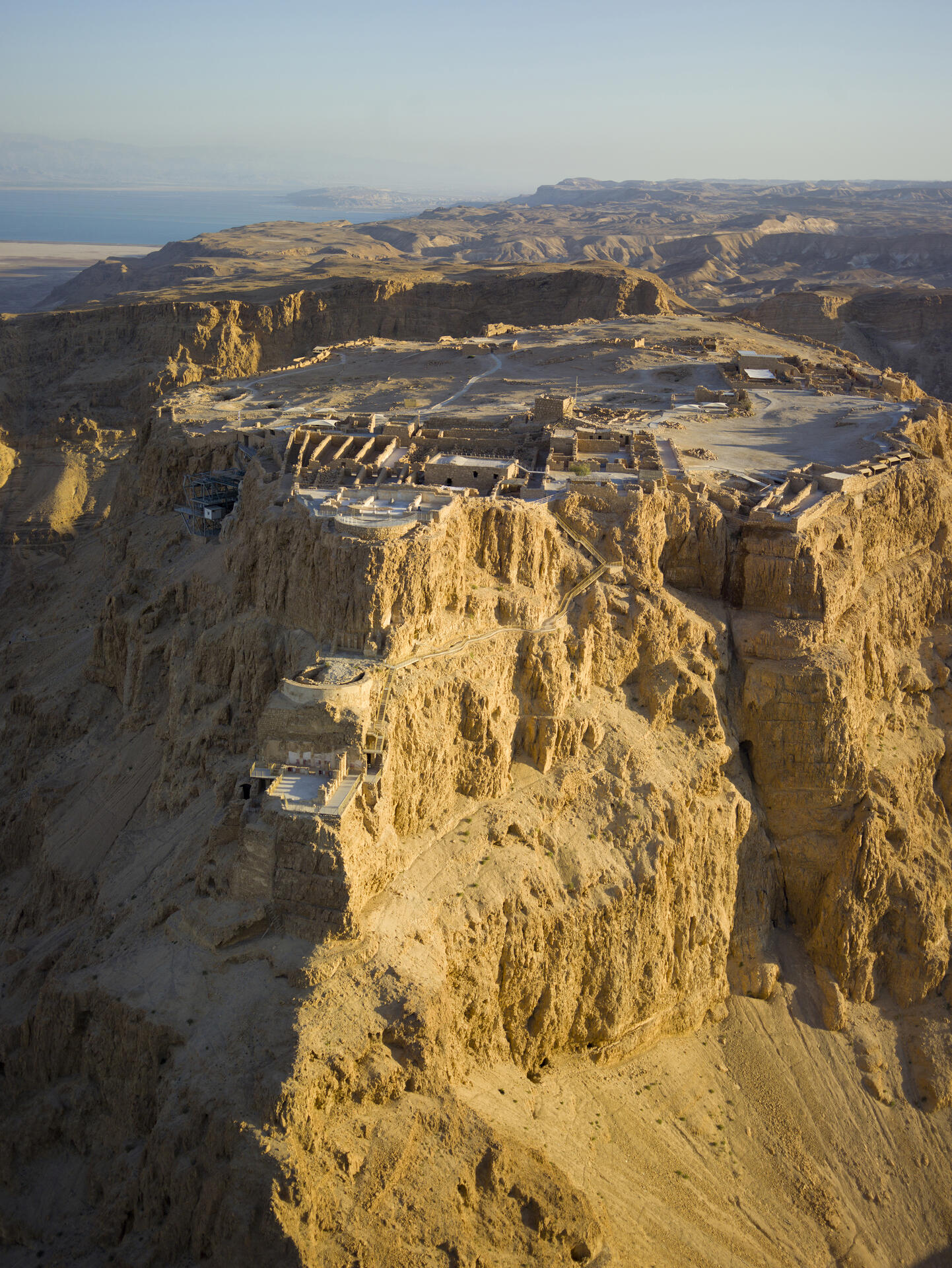
Masada, located in the Judaean Desert overlooking the Dead Sea in southeastern Israel, is a significant historical site that serves as a powerful symbol of resistance and a testament to the ingenuity of ancient architecture. Inscribed as a UNESCO World Heritage Site in 2001, this mountain-top fortress complex offers a unique insight into the history of the ancient kingdom of Israel, its eventual destruction, and the last stand of Jewish patriots against the Roman army in 73 AD.
More to come…UNESCO Description of the World Heritage Site
Masada is a rugged natural fortress, of majestic beauty, in the Judaean Desert overlooking the Dead Sea. It is a symbol of the ancient kingdom of Israel, its violent destruction and the last stand of Jewish patriots in the face of the Roman army, in 73 A.D. It was built as a palace complex, in the classic style of the early Roman Empire, by Herod the Great, King of Judaea, (reigned 37 – 4 B.C.). The camps, fortifications and attack ramp that encircle the monument constitute the most complete Roman siege works surviving to the present day.
UNESCO Justification of the World Heritage Site
Criterion (iii): Masada is a symbol of the ancient Jewish Kingdom of Israel, of its violent destruction in the later 1st century CE, and of the subsequent Diaspora.
Criterion (iv): The Palace of Herod the Great at Masada is an outstanding example of a luxurious villa of the Early Roman Empire, whilst the camps and other fortifications that encircle the monument constitute the finest and most complete Roman siege works to have survived to the present day.
Criterion (vi): The tragic events during the last days of the Jewish refugees who occupied the fortress and palace of Masada make it a symbol both of Jewish cultural identity and, more universally, of the continuing human struggle between oppression and liberty.
Encyclopedia Record: Masada
Masada is a mountain-top fortress complex in the Judaean Desert, overlooking the western shore of the Dead Sea in southeastern Israel. The fort, built in the first century BC, was constructed atop a natural plateau rising over 400 m (1,300 ft) above the surrounding terrain, 20 km (12 mi) east of modern Arad.Additional Site Details
Area: 276 hectares
Number of Components: 1
(iv) — Outstanding example of a type of building or landscape
(vi) — Directly associated with events or living traditions
Coordinates: 31.3155555556 , 35.3536111111
Image
© Godot13, CC BY-SA 4.0 Resized from original. (This derivative is under the same CC BY-SA license.)