World Heritage Identification Number: 1565
World Heritage since: 2017
Category: Cultural Heritage
WHE Type: Historic Cities & Urban Areas
Transboundary Heritage: No
Endangered Heritage: Yes
Country: 🇵🇸 State of Palestine
Continent: Asia
UNESCO World Region: Arab States
Map
Hebron/Al-Khalil Old Town: A Crossroads of History and Religion
Hebron/Al-Khalil Old Town, inscribed as a UNESCO World Heritage Site in 2017, offers a unique blend of history, culture, and religion that has made it a significant destination for travelers and scholars alike. Situated in the southern West Bank, this ancient city has been a focal point for various civilizations throughout history due to its strategic location at the crossroads of trade routes connecting southern Palestine, Sinai, Eastern Jordan, and the northern Arabian Peninsula.
More to come…UNESCO Description of the World Heritage Site
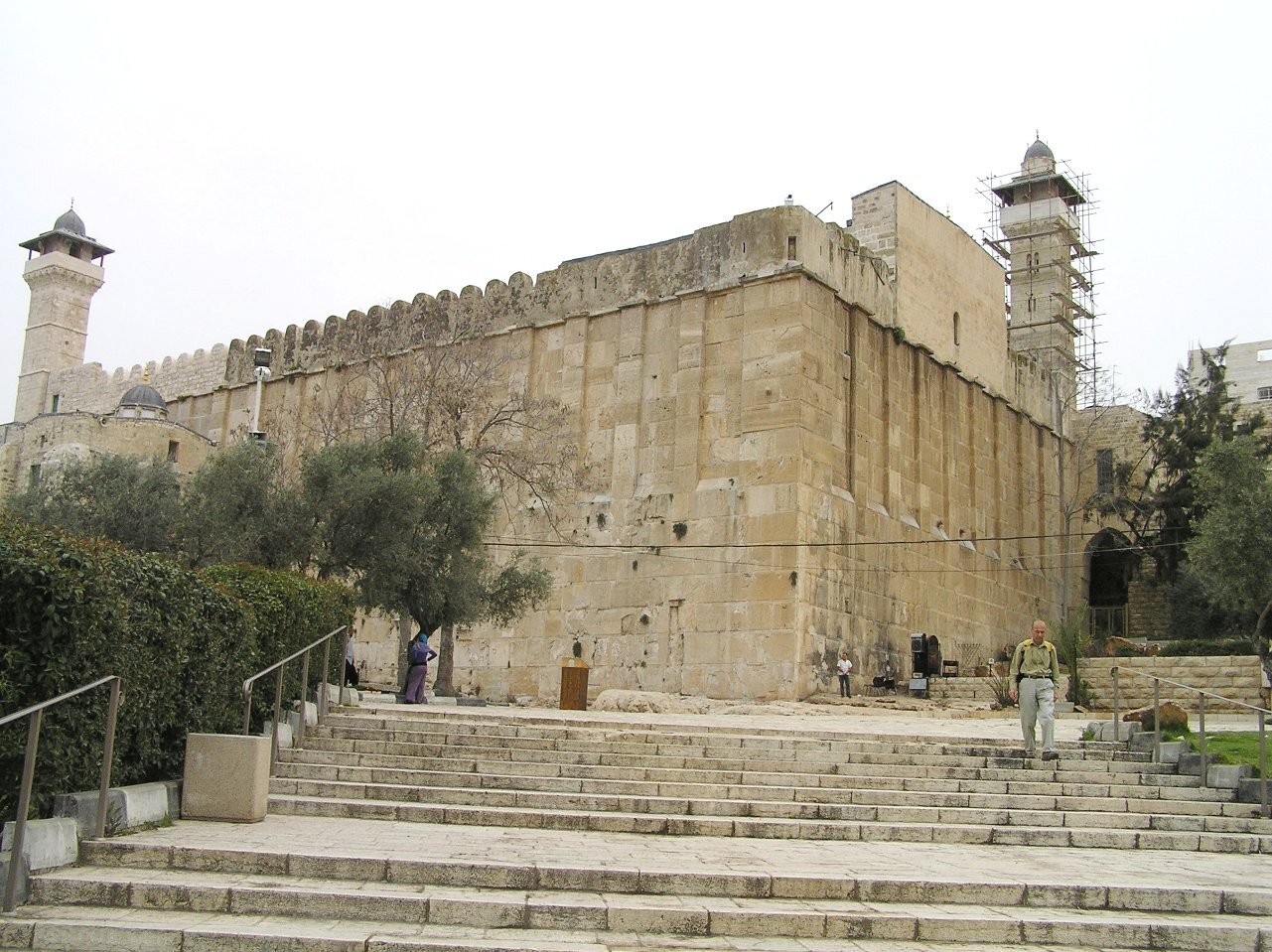
The use of a local limestone shaped the construction of the old town of Hebron/Al-Khalil during the Mamluk period between 1250 and 1517. The centre of interest of the town was the site of Al-Ibrahimi Mosque/The tomb of the Patriarchs whose buildings are in a compound built in the 1st century AD to protect the tombs of the patriarch Abraham/Ibrahim and his family. This place became a site of pilgrimage for the three monotheistic religions: Judaism, Christianity and Islam. The town was sited at the crossroads of trade routes for caravans travelling between southern Palestine, Sinai, Eastern Jordan and the north of the Arabian Peninsula. Although the subsequent Ottoman Period (1517-1917) heralded an extension of the town to the surrounding areas and brought numerous architectural additions, particularly the raising of the roof level of houses to provide more upper stories, the overall Mamluk morphology of the town is seen to have persisted with its hierarchy of areas, quarters based on ethnic, religious or professional groupings, and houses with groups of rooms organized according to a tree-shaped system.
UNESCO Justification of the World Heritage Site
Criterion (ii): Hebron/Al-Khalil Old Town represents an outstanding example of a community built around the interchange of human values. Since its creation, the Al-Ibrahimi Mosque/The Tomb of Patriarchs monumental complex has been a source of great inspiration to surrounding communities and to their social, religious, and spiritual values. The site has been in continuous religious use since the early Roman Period to this day. Herod, a Roman Client King of the region probably built a monumental enclosure “Temenos” around the sacred Cave of Machpelah (al-Ghar al-Sharif). The main roads of the town connect the different quarters in Hebron/Al-Khalil to Al-Ibrahimi Mosque/The Tomb of Patriarchs monumental complex. The relation with the prophet Ibrahim and the presence of Al-Ibrahimi Mosque/The Tomb of Patriarchs monumental complex has attracted pilgrims from around the world, making Hebron/Al-Khalil a meeting place for a great variety of faiths, ethnicities, and cultural backgrounds. This intermixing has led to a high degree of socio-economic and cultural exchange throughout the centuries reflected in the many public buildings of the property and beyond, including Suqs, Khans, Zawiyas, Maqams, Hammams, and the Takiyya. In the Ayyubid and Mamluk periods, Hebron/Al-Khalil became a significant centre of Sufism. Sufis, who came from different cultural backgrounds, found a promising environment in the vicinity of Al-Haram Al-Ibrahimi, and subsequently Sufi zawaya (sing. zawiya) were built throughout the city’s quarters and become one of their distinguishing features. For more than a millennium, the Takiyya’s tradition (Hospice- free kitchen) of the Hebron/Al–Khalil influenced the whole region as evidenced in early historic accounts from the 9th century AD presented in the Takiyya of this day. Similar charitable institutions were later established in Jerusalem, Istanbul, Damascus, and Cairo.
Criterion (iv): Hebron/Al-Khalil Old Town is an outstanding example of an urban district which has remarkably preserved historical fabric. It has also preserved the morphology and residential typologies dating back to the Mamluk period, all of which contribute to the visual and structural integrity of the cityscape. The residential neighbourhoods of the old town were built in a hosh system. The hosh system is a congregation of separate room units or groups of rooms clustered around several small courtyards. They are found in different locations and levels, which have organically evolved into distinctive tree-shaped residential structures. The continuity of buildings on the outer edges of the town made it difficult to access the town and created an effective defence system of “rampart houses”. These included hidden nooks and circuitous alleyways that played a protective role against intrusions. This system can still be observed clearly within the old town in the road system and urban structures, which are perfectly preserved to this day.
Criterion (vi): The Hebron/Al-Khalil’s Old Town is one of the holiest cities in the world for three monotheistic religions. For centuries, Hebron/Al-Khalil was a town in which prophets visited, lived, and were buried. Traditions and religious beliefs for the three monotheistic religions, have been its cultural foundation and the source of enduring values carried from one generation to the next. Furthermore, the prophet Ibrahim/Abraham’s spirit of generosity and hospitality has been and continues to be deeply ingrained into the traditions of Hebron/Al-Khalil. A key attribute of these traditions is the prophet Ibrahim/Abraham’s Takiyya (Hospice), established before the 9th century AD, which has continued until today to offer meals to the poor and visitors. In the Mamluk period, 13th century AD, Hebron/Al-Khalil became a significant centre of Sufism. Sufis found a promising environment in the vicinity of Al-Haram Al-Ibrahimi and, subsequently, sufi zawaya (sing. zawiya) were built throughout the city and have become one of its distinguishing features.
Encyclopedia Record: Old City of Hebron
The Old City of Hebron is the historic city centre of Hebron. The Hebron of antiquity is thought by archaeologists to have originally started elsewhere, at Tel Rumeida, which is approximately 200 meters (660 ft) west of today's Old City, and thought to have originally been a Canaanite city. Today's Old City was settled in Greek or Roman times. It became the center of the overall Hebron site during the Abbasid Caliphate.Additional Site Details
Area: 20.6 hectares
Number of Components: 1
(iv) — Outstanding example of a type of building or landscape
(vi) — Directly associated with events or living traditions
Coordinates: 31.5244444444 , 35.1083333333
World Heritage Research
Discover scientific research and academic studies that deepen our understanding of Hebron/Al-Khalil Old Town from its history and significance to its conservation, management, and contemporary challenges.
-
Tactics of Resistance: Palestinian Women and the Reclamation of Space in the Old City of Hebron, Palestine
Palestinian women in Hebron's Old City employ everyday resistance tactics to reclaim and revitalize urban space despite severe spatial fragmentation imposed by Israeli occupation. This study highlights their pivotal role in challenging urbicide through professional initiatives and daily practices, asserting their right to the city. The research combines situated knowledge with archival data, site observations, social media analysis, and reports from organizations like the Hebron Rehabilitation Committee and UN-OCHA, offering a nuanced understanding of resilience in oppressive socio-spatial conditions.
Abughannam, R., & Dandis, N. (2026). Tactics of Resistance: Palestinian Women and the Reclamation of Space in the Old City of Hebron, Palestine. International Journal of Islamic Architecture, 15(2), 287–314. https://doi.org/10.1386/ijia_00201_1
View Publication Record | Read Publication -
From counter-maps to counter-evidence: Hebron Rehabilitation Committee's documentation as counter-archive
The Hebron Rehabilitation Committee (HRC) has developed a 'counter-archive' that challenges Israeli settler control and documents the built heritage of Hebron’s old city, Palestine. This archive functions as a dynamic tool—serving as counter-maps in engineering contexts, counter-heritage when digitized for advocacy, and counter-evidence in legal proceedings—to assert Palestinian presence and ownership. The study highlights how the HRC's documentation adapts to different uses, defying the boundaries of traditional 'imperial archives' and playing a critical role in preserving heritage under militarization. By examining the archive’s multifaceted functions, the research underscores its potential as a bottom-up architectural media that resists hegemonic settler narratives.
Abughannam, R. (2026). From counter-maps to counter-evidence: Hebron Rehabilitation Committee’s documentation as counter-archive. Perspectives in Architecture and Urbanism, 100101. https://doi.org/10.1016/j.pau.2026.100101
View Publication Record | Read Publication -
‘Who Is David and Who Is – the Son of Jesse?’ The Interpretation of the Figure of King David in the Development of Old Testament Theology
Research suggests that the figure of King David in the Old Testament may have been based on a real historical warrior from Ziklag, a Philistine city, who conquered Hebron and laid the foundation for the statehood of Judah. By analyzing inconsistencies in the 'David cycle' (1 Sam 14 – 1 Kings 2), the study proposes that while legends about David likely originated from different sources, they may have been rooted in the actions of a single historical figure. This challenges traditional views that attribute these narratives to purely mythological or legendary origins.
Komarnytskyy, V. (2025). ‘Who Is David and Who Is – the Son of Jesse?’ The Interpretation of the Figure of King David in the Development of Old Testament Theology. The Biblical Annals. https://doi.org/10.31743/ba.17464
View Publication Record | Read Publication -
Groundwater contamination with heavy metals: A case study in Hebron, Palestine
Groundwater in Hebron's Wadi Al-Samen exhibits significant heavy metal contamination, with 17 samples exceeding selenium limits during the dry season and 15 in the wet season. Four samples surpassed barium and lithium permissible levels year-round, while three exceeded zinc limits. The study, analyzing 20 wells for 16 trace elements using atomic absorption spectrometry, found spatial variations in heavy metal pollution index (HPI) values—17.2 in the dry season and 11.99 in the wet season—both below the critical threshold of 100 but indicating poor to very poor water quality. Mean metal index (MI) values suggested moderate contamination. The research underscores urgent mitigation needs to address health risks for local residents, highlighting critical deviations from World Health Organization standards.
Al-Tamimi, W., Hamzaoui-Azaza, F., Ghanem, M., & Bouhlila, R. (2025). Groundwater contamination with heavy metals: A case study in Hebron, Palestine. Asian Journal of Water, Environment and Pollution, 22(2), 51. https://doi.org/10.36922/ajwep025040020
View Publication Record | Read Publication -
Urban Morphology and Energy Performance: Spatial-Simulation Assessment from Hebron, Palestine
A study on Hebron, Palestine, reveals that medium-density urban layouts with mid-rise buildings significantly reduce energy demands by balancing cooling and heating needs. Research found that increasing the Floor Space Index (FSI) from 0.7 to 1.2 reduces cooling demand by 34%, but doubles heating demand under identical conditions. The Zeitoun district, characterized by an FSI of approximately 1.0 and an Open Space Ratio (OSR) of 1.6, achieved the lowest combined energy use, outperforming both compact and sprawling configurations. This suggests that medium-density urban forms are optimal for semi-arid climates, offering a pathway for climate-responsive urban planning in the Middle East.
Aburmalah, A. E. A., & Üzümcüoğlu, D. (2025). Urban Morphology and Energy Performance: Spatial-Simulation Assessment from Hebron, Palestine. Journal of Contemporary Urban Affairs, 9(1). https://doi.org/10.25034/ijcua.2025.v9n1-8
View Publication Record | Read Publication -
Adaptive Reuse of Historic Dwellings into Cafés: Design Challenges and Planning Issues in Hebron
Adaptive reuse of historic dwellings into cafés in Hebron’s Old Town preserves cultural heritage while enhancing functionality. The study found that integrating traditional architectural features—such as niches and cabinets—with sustainable solutions effectively addresses challenges like humidity and outdated infrastructure, reducing costs without compromising historical integrity. This approach not only maintains aesthetic value but also strengthens local identity. The research analyzed multiple dwelling models using a scientific analytical methodology, combining literature reviews, interviews, and surveys to assess the success of transformations. It underscores the importance of thoughtful interventions that balance preservation with modern needs, offering a model for similar contexts.
Shaded, W. (2025). Adaptive Reuse of Historic Dwellings into Cafés: Design Challenges and Planning Issues in Hebron. ARCHive-SR, 9(3), 60–83. https://doi.org/10.21625/archive-sr.v9i3.1189
View Publication Record | Read Publication -
Furniture Design in Historic Residences: Balancing Modernity and Cultural Heritage Respect (Case Study: Old Town of Hebron).
A harmonious balance between modernity and heritage preservation is achievable through thoughtful furniture design in historic residences, as demonstrated by case studies from Hebron's Old Town. The research reveals that modern functional requirements—such as ergonomics and technological integration—can be met without compromising architectural authenticity or cultural identity. Findings highlight the importance of material sustainability, user-centric perspectives (ranging from minimal intervention to broader modifications), and careful restoration practices to maintain historical integrity while improving living standards. This study provides a practical framework for integrating contemporary needs with heritage conservation, offering insights that could inspire sustainable urban development in similar World Heritage Sites.
Shaded, W. (2025). Furniture Design in Historic Residences: Balancing Modernity and Cultural Heritage Respect (Case Study: Old Town of Hebron). ARCHive-SR, 9(3), 39–59. https://doi.org/10.21625/archive-sr.v9i3.1179
View Publication Record | Read Publication