World Heritage Identification Number: 795
World Heritage since: 1997
Category: Cultural Heritage
WHE Type: Buildings & Architectural Ensembles
Transboundary Heritage: No
Endangered Heritage: No
Country: 🇬🇧 United Kingdom of Great Britain and Northern Ireland
Continent: Europe
UNESCO World Region: Europe and North America
Map
Maritime Greenwich: A Unesco World Heritage Site in South-East London
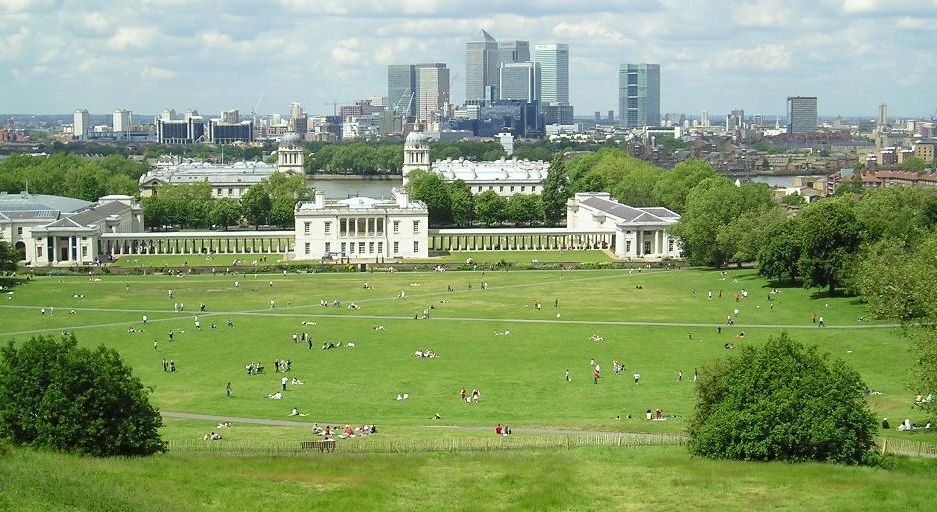
Maritime Greenwich, located in the southeastern part of London, is a significant historical and cultural landmark that has been recognized as a UNESCO World Heritage Site since 1997. This designation acknowledges its role in symbolizing English artistic and scientific endeavor during the 17th and 18th centuries.
The heart of Maritime Greenwich lies in the ensemble of buildings that include the Queen's House, the Royal Naval College, and the Old Royal Observatory. The Queen's House, built between 1616 and 1622, is considered the first Palladian building in England. Its architect, Inigo Jones, was instrumental in introducing the principles of Renaissance architecture to Britain. The Queen's House is a prime example of this style, featuring symmetrical facades, classical orders, and a central portico.
Following the Queen's House, the Royal Naval College, designed by Sir Christopher Wren in collaboration with Nicholas Hawksmoor and John Vanbrugh, stands as another architectural marvel. Completed in 1757, the complex was originally built as the Royal Hospital for Seamen, providing a home for retired and injured sailors, and later became a center for naval education. The ensemble consists of several buildings, including King William Court, Queen Mary Court, and the Painted Hall. The Painted Hall, in particular, boasts one of the most impressive Baroque interiors in Europe, adorned with monumental painted decorations celebrating monarchy, state power, and national identity.
Adjacent to the Royal Naval College lies the Old Royal Observatory, a testament to the scientific achievements of the time. Designed by Wren with contributions from Robert Hooke, the observatory was established in 1675 to advance astronomical research essential for navigation. It was here that the Prime Meridian of the world was defined in 1884, marking the basis for Greenwich Mean Time (GMT). Today, visitors can stand on the exact spot where the Prime Meridian is marked, making it a popular tourist attraction.
In addition to these iconic structures, Maritime Greenwich also features a beautiful park, influenced by formal continental landscape traditions and later developed into one of London’s great royal parks. The park offers tranquil green spaces, stunning views of the River Thames, and important cultural institutions such as the National Maritime Museum, while nearby landmarks include the Cutty Sark, a preserved 19th-century clipper ship closely associated with Greenwich’s maritime heritage.
In summary, Maritime Greenwich is a rich tapestry of history, art, and science that showcases England's cultural and intellectual development during the 17th and 18th centuries. Its designation as a UNESCO World Heritage Site underscores its significance not only to the people of London but to the global community as well. Visitors to Maritime Greenwich are invited to explore the fascinating stories hidden within its historic buildings, parks, and museums, gaining a deeper appreciation for the past and its lasting impact on our present.
UNESCO Description of the World Heritage Site
The ensemble of buildings at Greenwich, an outlying district of London, and the park in which they are set, symbolize English artistic and scientific endeavour in the 17th and 18th centuries. The Queen's House (by Inigo Jones) was the first Palladian building in England, while the complex that was until recently the Royal Naval College was designed by Christopher Wren. The park, laid out on the basis of an original design by André Le Nôtre, contains the Old Royal Observatory, the work of Wren and the scientist Robert Hooke.
UNESCO Justification of the World Heritage Site
Criterion (i): The public and private buildings and the Royal Park at Greenwich form an exceptional ensemble that bears witness to human artistic and creative endeavour of the highest quality.
Criterion (ii): Maritime Greenwich bears witness to European architecture at an important stage of its evolution, exemplified by the work of great architects such as Inigo Jones and Christopher Wren who, inspired by developments on the continent of Europe, each shaped the architectural development of subsequent generations, while the Park exemplifies the interaction of people and nature over two centuries.
Criterion (iv): The Palace, Royal Naval College and Royal Park demonstrate the power, patronage and influence of the Crown in the 17th and 18th centuries and its illustration through the ability to plan and integrate culture and nature into a harmonious whole.
Criterion (vi): Greenwich is associated with outstanding architectural and artistic achievements as well as with scientific endeavour of the highest quality through the development of navigation and astronomy at the Royal Observatory, leading to the establishment of the Greenwich Meridian and Greenwich Mean Time as world standards.
Encyclopedia Record: Greenwich
Greenwich is an affluent area in south-east London, England, within the Royal Borough of Greenwich and the ceremonial county of Greater London, 5.5 miles (8.9 km) east-south-east of Charing Cross. It contains the UNESCO World Heritage Site of Maritime Greenwich.Additional Site Details
Area: 109.5 hectares
Number of Components: 1
(ii) — Significant interchange of human values
(iv) — Outstanding example of a type of building or landscape
(vi) — Directly associated with events or living traditions
Coordinates: 51.4811666667 , -0.0037777778
World Heritage Research
Discover scientific research and academic studies that deepen our understanding of Maritime Greenwich from its history and significance to its conservation, management, and contemporary challenges.
-
Career Pathway Interview: Aimee Mook, Curator of Contemporary Maritime at the National Maritime Museum—Connecting People, Collections, and Ocean Science
Aimee Mook, Curator of Contemporary Maritime at the National Maritime Museum (a UNESCO World Heritage Site), bridges ocean science and public engagement to foster ocean literacy. Her role involves integrating scientific research—such as studies on ocean physics or biofouling—with storytelling to inspire broader understanding and appreciation of marine environments. This approach combines traditional maritime curation with modern ocean science, leveraging museum collections and interactive exhibits like 'The Ocean Map' to illustrate complex concepts in accessible ways. Mook's career transition from academic research to science communication underscores the value of interdisciplinary expertise in public engagement, challenging the notion that communicating science is less significant than primary research.
Falkenberg, L. J. (2026). Career Pathway Interview: Aimee Mook, Curator of Contemporary Maritime at the National Maritime Museum—Connecting People, Collections, and Ocean Science. Limnology and Oceanography Bulletin, 35(2), 83–84. Portico. https://doi.org/10.1002/lob.70035
View Publication Record | Read Publication -
Heritage Impact Assessment concerning Meridian House, Royal Hill, Greenwich, London, SE10 8RD
A Heritage Impact Assessment for Meridian House, Royal Hill, Greenwich, concludes that proposed telecommunications antennae installations will have minimal visual impact on the surrounding World Heritage Site and designated heritage assets. The study finds that while the Clock Tower of Meridian House—a Grade II-listed Art Deco landmark—holds high significance as a 1930s civic complex, its setting within Maritime Greenwich and Greenwich Park (a Conservation Area) will experience only slight changes due to the lightweight, camouflaged design of the equipment. Similarly, impacts on nearby Grade I-listed Flamsteed House and the Church of St Alfege are deemed negligible, preserving key views from riverside and park vantage points. The assessment cross-references asset significance with impact magnitude, confirming that the proposed works will not compromise the integrity of these internationally important heritage sites.
Priestley, S. (2025). Heritage Impact Assessment concerning Meridian House, Royal Hill, Greenwich, London, SE10 8RD. Archaeology Data Service. https://doi.org/10.5284/1144081
View Publication Record | Read Publication -
To sjøfartsnasjoner, to sjøfartsmuseer: Norsk Sjøfartsmuseum og National Maritime Museum i sammenligning
A comparative analysis of the establishment of Norsk Sjøfartsmuseum (Norwegian Maritime Museum) and National Maritime Museum, Greenwich, reveals divergent paths in achieving national museum status despite shared historical contexts. While the National Maritime Museum secured its status through state legislation in 1934, reflecting strong institutional support and stateliness, the Norwegian counterpart remained outside formal recognition as a national maritime institution, despite persistent advocacy efforts. This discrepancy is attributed to differences in national identity narratives, international influences, and the political prioritization of maritime heritage. The study, based on historical documents from 1914–1939, employs qualitative methods to dissect how these factors shaped the museological trajectories of both institutions.
Pedersen, S. S. (2025). To sjøfartsnasjoner, to sjøfartsmuseer: Norsk Sjøfartsmuseum og National Maritime Museum i sammenligning. Maritime Perspektiver, 2(1), 103–109. https://doi.org/10.18261/mp.2.1.9
View Publication Record | Read Publication -
Maritime Animals: Ships, species, stories
The book 'Maritime Animals: Ships, species, stories' offers a unique exploration of the intersection between maritime history and biodiversity, drawing from talks presented at the Maritime Animals Conference held at the National Maritime Museum in Greenwich. It provides insights into how ships have influenced marine ecosystems and vice versa, blending historical narratives with scientific perspectives on species interactions in maritime environments.
Sullivan, P. C. (2024). Maritime Animals: Ships, species, stories. The Mariner’s Mirror, 110(3), 379–380. https://doi.org/10.1080/00253359.2024.2371228
View Publication Record | Read Publication -
Solos com influência ornitogênica na Ilha Greenwich, Antártica
Soils on Greenwich Island, Antarctica, show distinct chemical and mineralogical properties influenced by giant petrel activity, even though their guano input is less significant compared to penguins. The study found that soils currently under ornithogenic influence exhibit higher concentrations of phosphorus, nitrogen, and organic carbon, while those without recent bird activity contain elevated levels of calcium and magnesium. Researchers analyzed eight soil profiles and topsoil samples using physical, chemical, and mineralogical techniques, revealing that giant petrels modify soil properties sufficiently to contribute to the formation of weakly ornithogenic soils. This research highlights the nuanced impact of different seabird species on Antarctic ecosystems.
Koch, V. Solos com influência ornitogênica na Ilha Greenwich, Antártica. https://doi.org/10.14393/ufu.di.2024.535
View Publication Record | Read Publication -
Sustainable Practices Applied to the Environmental Management of Archival Collection Storage Spaces at the Southwest Wing in the National Maritime Museum in London, UK
A collaborative strategy implemented at the National Maritime Museum, part of Maritime Greenwich, successfully reduced energy consumption and carbon emissions in archival storage spaces without compromising collection stability. By adopting a programmed shutdown of the mechanical system during off-hours, researchers found that collections maintained environmental stability even when the HVAC was inactive overnight. This approach, validated using a methodology from the Image Permanence Institute, demonstrates a sustainable alternative to rigid temperature and humidity controls, offering a practical model for other cultural heritage institutions aiming to balance preservation needs with energy efficiency.
Bastidas-Spence, M. F. (2023). Sustainable Practices Applied to the Environmental Management of Archival Collection Storage Spaces at the Southwest Wing in the National Maritime Museum in London, UK. Journal of the American Institute for Conservation, 64(1), 46–61. https://doi.org/10.1080/01971360.2023.2197106
View Publication Record | Read Publication -
"It’s the colonisation of the mind": How the legacy of the British Empire has impacted the University of Greenwich.
Colonial legacies persistently shape UK universities, including the University of Greenwich, with its maritime heritage rooted in imperialism. This study reveals how colonial ideologies remain embedded in academic institutions, influencing thought and perpetuating Western dominance. Through semi-structured interviews with staff and students, thematic analysis exposed ongoing psychological impacts and suggested pathways for addressing these legacies. The findings underscore the need for universities to confront their colonial pasts, not just symbolically but structurally, to foster equitable and decolonized academic environments.
Imadojemun, M. (2023). “It’s the colonisation of the mind”: How the legacy of the British Empire has impacted the University of Greenwich. Compass: Journal of Learning and Teaching in Higher Education, 16(2), 91–120. https://doi.org/10.21100/compass.v16i2.1386
View Publication Record | Read Publication