World Heritage Identification Number: 426
World Heritage since: 1987
Category: Cultural Heritage
WHE Type: Buildings & Architectural Ensembles
Transboundary Heritage: No
Endangered Heritage: No
Country: 🇬🇧 United Kingdom of Great Britain and Northern Ireland
Continent: Europe
UNESCO World Region: Europe and North America
Map
The Palace of Westminster, Westminster Abbey, and St. Margaret's Church: A Unique Blend of History and Architecture
The Palace of Westminster, Westminster Abbey, and St. Margaret's Church form a remarkable ensemble that stands as a testament to the rich history and architectural prowess of England. Inscribed as a UNESCO World Heritage Site in 1987, this significant complex is not only a symbol of the British political system but also a masterpiece of neo-Gothic architecture.
The Palace of Westminster, colloquially known as the Houses of Parliament, after the House of Commons and the House of Lords, the two legislative chambers which occupy the building, serves as the meeting place for the Parliament of the United Kingdom. This iconic structure, located in the heart of London, is synonymous with the UK Parliament and the British Government. The Westminster System of government, named after the palace, reflects its central role in the political life of the nation.
The Elizabeth Tower, a prominent feature of the palace, is popularly known as Big Ben, although the name technically refers to the clock inside the tower. This 315-foot (96-meter) tall structure is a landmark of London and a symbol of British precision and ingenuity. The tower was completed in 1859, making it a relatively recent addition to the historical complex.
Adjacent to the Palace of Westminster lies Westminster Abbey, a Gothic abbey church that has been the coronation site for all English and British monarchs since William the Conqueror in 1066. With its striking blend of architectural styles, ranging from Norman to Perpendicular Gothic, Westminster Abbey is a veritable treasure trove of British history. Notable features include the Coronation Chair, the Poet's Corner, and the burial sites of numerous monarchs, statesmen, and literary giants.
Completing the triad is the tiny Church of St. Margaret, nestled within the grounds of the Abbey. Built in the Perpendicular Gothic style during the late Middle Ages (late 15th–early 16th century), St. Margaret's Church is a charming and historically significant chapel. It has served as the parish church for the Abbey's staff since the 16th century.
To sum it up, the Palace of Westminster, Westminster Abbey, and St. Margaret's Church constitute a unique blend of history, architecture, and national identity. Each component offers a glimpse into different aspects of British heritage, providing visitors with an unparalleled experience that transcends time and captivates the senses. Whether it be the political intrigue of the Houses of Parliament, the regal grandeur of Westminster Abbey, or the peaceful tranquility of St. Margaret's Church, this UNESCO World Heritage Site offers something for everyone.
UNESCO Description of the World Heritage Site
Westminster Palace, rebuilt from the year 1840 on the site of important medieval remains, is a fine example of neo-Gothic architecture. The site – which also comprises the small medieval Church of Saint Margaret, built in Perpendicular Gothic style, and Westminster Abbey, where all the sovereigns since the 11th century have been crowned – is of great historic and symbolic significance.
UNESCO Justification of the World Heritage Site
Criterion (i): Westminster Abbey is a unique artistic construction representing a striking sequence of the successive phases of English Gothic art.
Criterion (ii): Other than its influence on English architecture during the Middle Ages, the Abbey has played another leading role by influencing the work of Charles Barry and Augustus Welby Pugin in Westminster Palace, in the Gothic Revival of the 19th century.
Criterion (iv): The Abbey, the Palace, and St Margaret's illustrate in a concrete way the specificities of parliamentary monarchy over a period of time as long as nine centuries. Whether one looks at the royal tombs, the Chapter House, the remarkable vastness of Westminster Hall, of the House of Lords, or of the House of Commons, art is everywhere present and harmonious, making a veritable museum of the history of the United Kingdom.
Encyclopedia Record: Palace of Westminster
The Palace of Westminster is the meeting place of the Parliament of the United Kingdom and is located in London, England. It is colloquially known as the Houses of Parliament after the House of Commons and the House of Lords, the two legislative chambers which occupy the building. The palace is one of the centres of political life in the United Kingdom; "Westminster" has become a metonym for the UK Parliament and the British Government, and the Westminster system of government commemorates the name of the palace. The Elizabeth Tower of the palace houses the bell nicknamed Big Ben and is a landmark of London and the United Kingdom in general. The palace has been a Grade I listed building since 1970 and part of a UNESCO World Heritage Site since 1987.Additional Site Details
Area: 10.26 hectares
Number of Components: 1
(ii) — Significant interchange of human values
(iv) — Outstanding example of a type of building or landscape
Coordinates: 51.499 , -0.127
Image
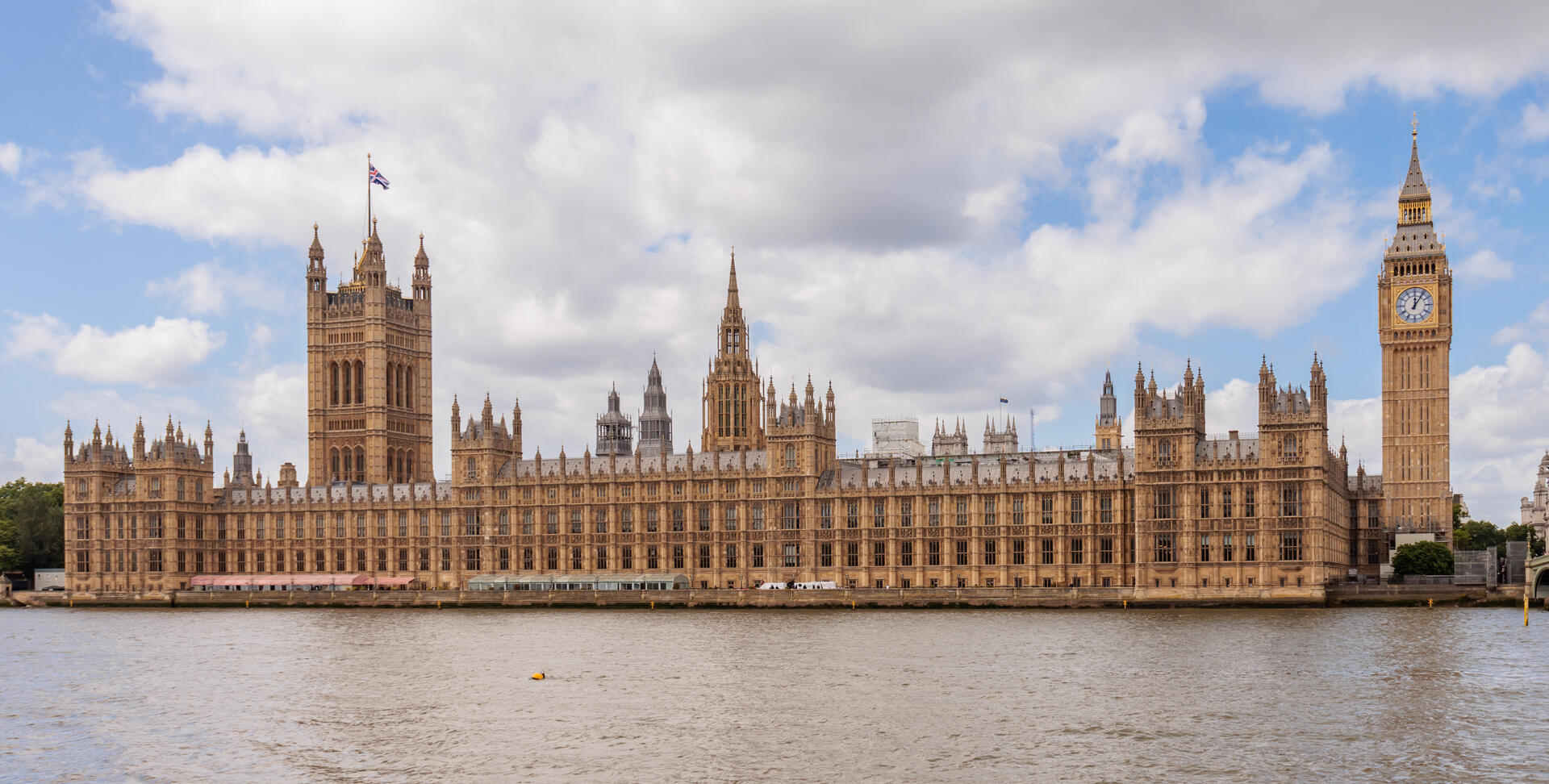
© Terry Ott from Washington, DC Metro Area, United States of America, CC BY 2.0 Resized from original.
World Heritage Research
Discover scientific research and academic studies that deepen our understanding of Palace of Westminster and Westminster Abbey including Saint Margaret’s Church from its history and significance to its conservation, management, and contemporary challenges.
-
The Monuments of Westminster Abbey
Westminster Abbey's transformation into a premier site of commemoration during the sixteenth and seventeenth centuries, driven by the Reformation and civil wars, is revealed through a critical history of its monuments. The study highlights how tourism shaped the Abbey's response, including the use of signs, guides, and publications to facilitate visits, making monument viewing a popular London pastime. This work provides a methodology for studying memory in British culture, offering insights into the habits of commemoration in premodern society through an analysis of royal tombs, Poets' Corner, and military monuments. The inclusion of 32 illustrations, including early modern reproductions, underscores the vibrancy and significance of these commemorative practices.
Sherlock, P. (2025). The Monuments of Westminster Abbey. https://doi.org/10.4324/9781003344506
View Publication Record | Read Publication -
Halls of Power: Changing Political and Administrative Culture at the Palace of Westminster in the Sixteenth Century
A significant shift in political and administrative culture occurred at the Palace of Westminster during the sixteenth century, transforming it from a primary royal residence into the exclusive domain of law-courts, Parliament, and state offices. This transition, marked by the English monarch's increasing absence, led to the repurposing of spaces like the Exchequer to accommodate growing financial demands and public interactions with the Crown. The study reveals how this change fostered distinct relationships between the Crown and the public, granting institutions within the palace greater legitimacy through their representation of the realm's community. The research employs a detailed examination of administrative practices and historical records to illuminate these evolving dynamics.
Biggs, E. (2024). Halls of Power: Changing Political and Administrative Culture at the Palace of Westminster in the Sixteenth Century. Journal of British Studies, 63(2), 390–410. https://doi.org/10.1017/jbr.2023.112
View Publication Record | Read Publication -
The Ideology and Propaganda of the Ruling Ideas as Painted by an Irishman in the Victorian Era: A Study on the Daniel Maclise Murals in the Royal Gallery of the Palace of Westminster
Daniel Maclise's murals in the Royal Gallery of the Palace of Westminster, commissioned during Queen Victoria's early reign, serve as a dual symbol of British national pride and Irish artistic resistance. While intended to glorify British military triumphs like the Battle of Trafalgar and Waterloo—highlighting monarchy and parliamentary power—Maclise subverted this narrative by centering marginalized figures, including Irish soldiers, women, children, and people of color. This deliberate inclusion challenges the dominant Victorian ideology, offering a layered interpretation that critiques colonial narratives while celebrating universal human values. The study reveals how Maclise's use of waterglass paint, an innovation to combat London's humid conditions, further underscores his technical ingenuity. Though initially overlooked, these murals now stand as a pioneering example of artistic advocacy for inclusivity and social justice in 19th-century Britain.
Rhi, M. (2024). The Ideology and Propaganda of the Ruling Ideas as Painted by an Irishman in the Victorian Era: A Study on the Daniel Maclise Murals in the Royal Gallery of the Palace of Westminster. Misulsa Yeongu : Journal of Art History, 46, 181–205. https://doi.org/10.52799/jah.2024.06.46.181
View Publication Record | Read Publication -
St Stephen's Chapel and the Palace of Westminster
St Stephen's Chapel, a cornerstone of late medieval art and architecture, played a pivotal role in shaping British political culture. Originally the principal royal chapel for the Plantagenets, it became the meeting place for the House of Commons after the Reformation, influencing its design for 300 years. The 1834 Palace fire led to its reconstruction as St Stephen's Hall, which later served as a site for Suffragette activism and is now marked by the monumental artwork 'New Dawn.' This publication traces the chapel's history from the 13th century to the present, exploring its religious significance, political impact, and architectural evolution. It highlights interactions between visual and political culture, the contexts of kingship, and the adaptation of St Mary Undercroft. The study combines historical analysis with antiquarian rediscovery, offering insights into the enduring legacy of this landmark.
Ayers, T., Cooper, J. P. D., Smith, E. H., Shenton, C., Ayers, T., Biggs, E., Binski, P., Collins, M., Cooper, J. P. D., Smith, E. H., Harper, J., Hill, R., Hillson, J., Moore, R., Ormrod, W. M., Seaward, P., Shenton, C., Spooner, J., Tremellen, M., et al. (Eds.). (2024). St Stephen’s Chapel and the Palace of Westminster. https://doi.org/10.1515/9781805434153
View Publication Record | Read Publication -
The Beginning of Victorian Murals: A Study on the Cartoons Competition Held in the Palace of Westminster in 1843
A landmark competition held in 1843 to adorn the Palace of Westminster with murals marked the inception of Victorian mural painting, despite its hasty organization. Analysis of archival reports from the Palace of Westminster reveals that while the event aimed to promote pure British art, it lacked adequate preparation for a nation-scale initiative. The competition's constraints—limiting subjects to British history and literature by Milton, Spencer, and Shakespeare—highlighted both the ambition and shortcomings of early Victorian efforts to elevate national artistic standards. This study underscores the significance of such competitions in shaping Victorian mural history, distinct from broader art narratives, while also exposing the foundational gaps in British art that motivated these state-led endeavors.
Rhi, M. K. (2024). The Beginning of Victorian Murals: A Study on the Cartoons Competition Held in the Palace of Westminster in 1843. The Journal of Art Theory & Practice, 38, 1–20. https://doi.org/10.15597/jksmi.25083538.2024.38.001
View Publication Record | Read Publication -
Custodians of the Palace of Westminster
The concept of custodianship at the Palace of Westminster, a UNESCO World Heritage Site and home to the UK Parliament, is complex and multifaceted. Research reveals that decisions regarding its preservation are not solely focused on maintaining historical integrity but also aim to improve current working conditions and ensure the building's future sustainability. This study draws from two research projects to analyze differing interpretations of custodianship, questioning whether the restoration efforts prioritize the past, present, or future. The findings highlight the tension between preserving heritage and adapting to modern needs, offering insights into the challenges faced in managing such iconic institutions.
Meakin, A., & Siebert, S. (2023). Custodians of the Palace of Westminster. Parliamentary Affairs, 77(2), 240–261. https://doi.org/10.1093/pa/gsad001
View Publication Record | Read Publication -
Shakespeare and the New Palace of Westminster (1834–1927)
The New Palace of Westminster, home to the UK's Houses of Parliament, embodies 'Shakespearean' aesthetics that theatricalize political and artistic goals while projecting a unified sense of British national history. Through three case studies spanning 1840s–1920s, this study reveals how artists leveraged Shakespeare—both explicitly and implicitly—to shape constitutional expressions of British identity during a pivotal imperial era. By integrating print, theatrical, art history, architecture, and archival analysis, the research offers an interdisciplinary lens to understand Shakespeare's evolving role in national conception at the seat of parliamentary power.
Davies, C. (2023). Shakespeare and the New Palace of Westminster (1834–1927). Shakespeare, 21(1), 49–73. https://doi.org/10.1080/17450918.2023.2246441
View Publication Record | Read Publication