World Heritage Identification Number: 488
World Heritage since: 1988
Category: Cultural Heritage
WHE Type: Buildings & Architectural Ensembles
Transboundary Heritage: No
Endangered Heritage: No
Country: 🇬🇧 United Kingdom of Great Britain and Northern Ireland
Continent: Europe
UNESCO World Region: Europe and North America
Map
The Tower of London: A Symbol of Power and History
The Tower of London, officially recognized as His Majesty's Royal Palace and Fortress of the Tower of London, stands as a testament to the rich history and architectural prowess of medieval England. Situated on the north bank of the River Thames in London, this historic citadel and castle has been a significant part of the city's landscape since its construction in the late 11th century.
The foundation of the Tower of London was laid by William the Conqueror towards the end of 1066, marking the culmination of the Norman Conquest. While construction of the White Tower, the central structure of the castle, began around 1078, it was not completed until approximately 1100. Initially, the tower, who serves as a resolute symbol of Norman rule over London, was met with resentment by the local populace, who saw it as a symbol of oppression imposed by the newly established Norman ruling class.
The Tower of London was designed primarily as a fortress, with the White Tower being a typical example of Norman military architecture. Its influence can be seen throughout the kingdom, setting a precedent for future castle designs. The tower's strategic location on Tower Hill provided excellent defense against potential invaders, while also offering control over the Thames, a vital trade route at the time.
Over the centuries, the Tower of London underwent various phases of expansion, most notably during the reigns of Kings Richard I, Henry III, and Edward I in the 12th and 13th centuries. These expansions resulted in the complex layout we see today, consisting of several buildings set within two concentric rings of defensive walls and a moat. Despite subsequent alterations and additions, the general layout established by the late 13th century remains largely intact.
In addition to its role as a formidable fortress, the Tower of London also served as a royal residence and a prison. Notable prisoners include Anne Boleyn, Thomas More, and Rudolf Hess. However, imprisonment was not the primary purpose of the Tower; it was more often used as a place of detention before trial or execution. The last state prisoner to be held within its walls was Rudolf Hess, who was imprisoned during World War II.
Throughout its long history, the Tower of London has played a crucial role in the coronation ceremonies of English monarchs. The Coronation Regalia, including the Crown Jewels, have been housed within the Tower since the 14th century. Today, these priceless artifacts continue to draw visitors from around the world, providing a glimpse into the opulence and power of the British monarchy.
In conclusion, the Tower of London stands as a symbol of power, history, and resilience. Its enduring presence serves as a reminder of England's past, offering insights into the country's political, social, and cultural evolution. Inscribed as a UNESCO World Heritage Site in 1988, the Tower of London continues to captivate visitors with its rich tapestry of stories, legends, and architectural marvels.
UNESCO Description of the World Heritage Site
The massive White Tower is a typical example of Norman military architecture, whose influence was felt throughout the kingdom. It was built on the Thames by William the Conqueror to protect London and assert his power. The Tower of London – an imposing fortress with many layers of history, which has become one of the symbols of royalty – was built around the White Tower.
UNESCO Justification of the World Heritage Site
Criterion (ii): A monument symbolic of royal power since the time of William the Conqueror, the Tower of London has served as an outstanding model throughout the kingdom since the end of the 11th century. Like it, many keeps were built in stone, e.g. Colchester, Rochester, Hedingham, Norwich or Carisbrooke Castle on the Isle of Wight.
Criterion (iv): The White Tower is the example par excellence of the royal Norman castle from the late 11th century. The ensemble of the Tower of London is a major reference for the history of medieval military architecture.
Encyclopedia Record: Tower of London
The Tower of London, officially His Majesty's Royal Palace and Fortress of the Tower of London, is a historic citadel and castle on the north bank of the River Thames in London, England. It lies within the London Borough of Tower Hamlets, which is separated from the eastern edge of the square mile of the City of London by the open space known as Tower Hill. It was founded toward the end of 1066 as part of the Norman Conquest. The White Tower, which gives the entire castle its name, was built by William the Conqueror in 1078 and was initially a resented symbol of oppression, inflicted upon London by the new Norman ruling class. The castle was also used as a prison from 1100 until 1952, although that was not its primary purpose. A grand palace early in its history, it served as a royal residence. As a whole, the Tower is a complex of several buildings set within two concentric rings of defensive walls and a moat. There were several phases of expansion, mainly under kings Richard I, Henry III, and Edward I in the 12th and 13th centuries. The general layout established by the late 13th century remains despite later activity on the site.Additional Site Details
Area: Not available
Number of Components: 1
(iv) — Outstanding example of a type of building or landscape
Coordinates: 51.50805556 , -0.076111111
Image
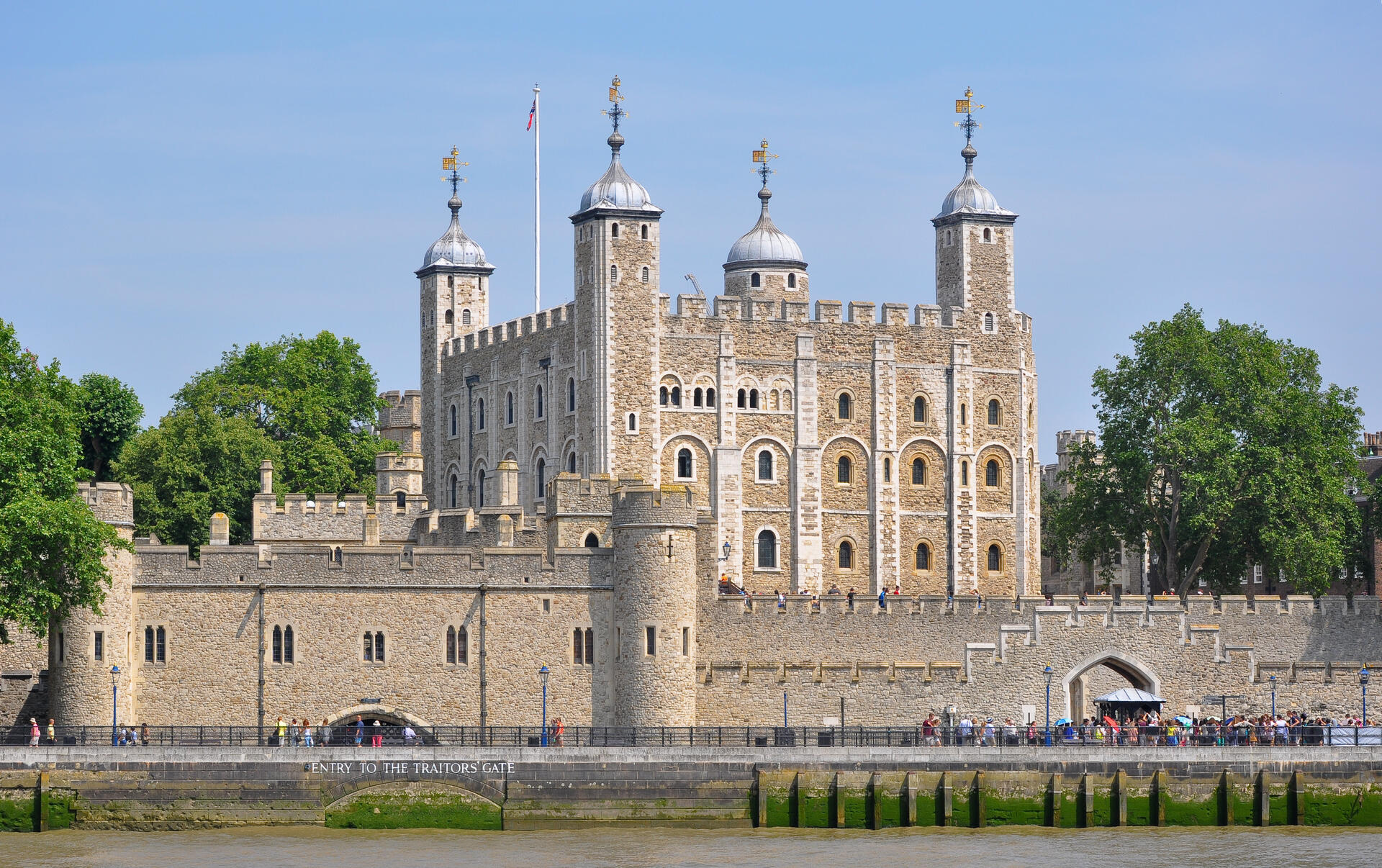
© Bob Collowan, CC BY-SA 3.0 Resized from original. (This derivative is under the same CC BY-SA license.)