World Heritage Identification Number: 1379
World Heritage since: 2012
Category: Cultural Heritage
WHE Type: Buildings & Architectural Ensembles
Transboundary Heritage: No
Endangered Heritage: No
Country: 🇩🇪 Germany
Continent: Europe
UNESCO World Region: Europe and North America
Map
Masterpiece of Baroque Theatre Architecture: The Margravial Opera House Bayreuth
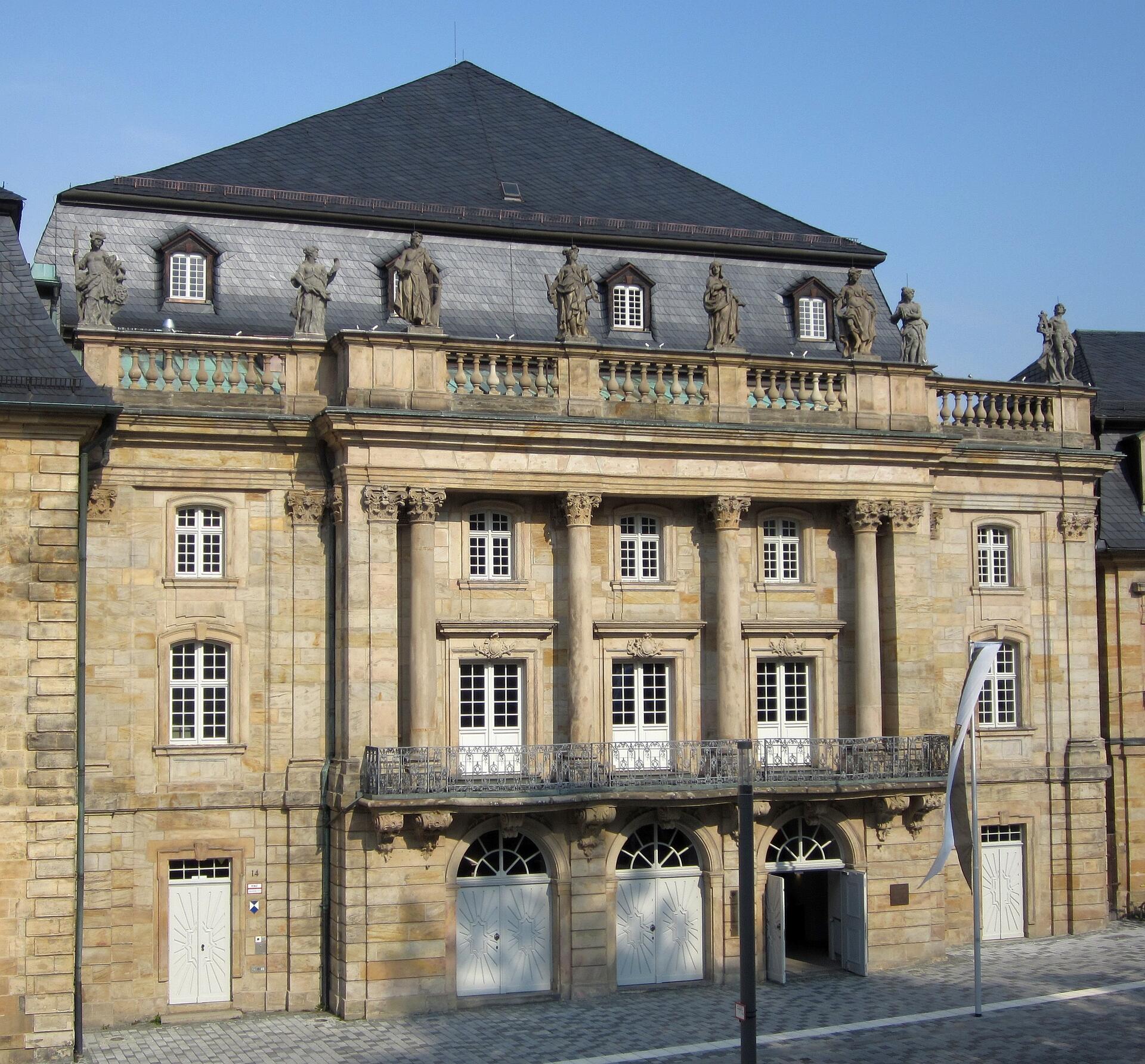
The Margravial Opera House Bayreuth, located in the picturesque town of Bayreuth, Germany, stands as a testament to the grandeur and artistic prowess of the Baroque era. Inscribed as a UNESCO World Heritage Site in 2012, this opera house is a unique and well-preserved example of Baroque court opera culture and acoustics.
More to come…UNESCO Description of the World Heritage Site
A masterpiece of Baroque theatre architecture, built between 1745 and 1750, the Opera House is the only entirely preserved example of its type where an audience of 500 can experience Baroque court opera culture and acoustics authentically, as its auditorium retains its original materials, i.e. wood and canvas. Commissioned by Margravine Wilhelmine, wife of Frederick, Margrave of Brandenburg–Bayreuth, it was designed by the renowned theatre architect Giuseppe Galli Bibiena. As a court opera house in a public space, it foreshadowed the large public theatres of the 19th century. The highly decorated theatre’s tiered loge structure of wood with illusionistic painted canvas represents the ephemeral ceremonial architectural tradition that was employed in pageants and celebrations for princely self-representation.
UNESCO Justification of the World Heritage Site
Criterion (i): The Margravial Opera House is a masterwork of Baroque court theatre architecture by Giuseppe Galli Bibiena in terms of its tiered loge form and acoustic, decorative and iconological properties.
Criterion (iv): The Margravial Opera House is an outstanding example of a Baroque court theatre. It marks a specific point in the development of opera houses, being a court opera house located not within a palace but as an urban element in the public space, foreshadowing the great public opera houses of the 19th century.
Encyclopedia Record: Margravial Opera House
The Margravial Opera House is a Baroque opera house in the town of Bayreuth, Germany. Built between 1745 and 1750, it is one of Europe's few surviving theatres of the period and has been extensively restored. On 30 June 2012, the opera house was added to the UNESCO World Heritage List because of its exceptional Baroque architecture.Additional Site Details
Area: 0.19 hectares
Number of Components: 1
(iv) — Outstanding example of a type of building or landscape
Coordinates: 49.9443931107 , 11.5784979437
World Heritage Research
Discover scientific research and academic studies that deepen our understanding of Margravial Opera House Bayreuth from its history and significance to its conservation, management, and contemporary challenges.
-
Welche Praktiken? Welche Forschung? Perspektiven auf praxisgeleitete Forschung zum (Musik)Theater der Frühen Neuzeit
Practice-led research in opera and theatre studies of the Early modern period can benefit from leveraging the distinct approaches of music and theatre studies, particularly through 'historically informed performance.' A recent study demonstrated that integrating scholarly work with artistic practice—such as a 2024 performance of L’Huomo (1754) by Wilhelmine von Bayreuth at the Margravial Opera House in Bayreuth—enhances understanding of musico-theatrical works while navigating economic and institutional constraints. The research highlights the value of feedback loops between academic and artistic endeavors, offering a model for future practice-led studies that balance historical simulation with contemporary feasibility.
Knaus, K. (2026). Welche Praktiken? Welche Forschung? Perspektiven auf praxisgeleitete Forschung zum (Musik)Theater der Frühen Neuzeit. Artes, 5(1), 136–150. https://doi.org/10.30965/27727629-20260008
View Publication Record | Read Publication -
The orchestra pit of Bayreuth: Myths and facts
The orchestra pit of the Bayreuth Festspielhaus, inaugurated in 1876, revolutionized architectural acoustics by addressing key challenges in performance spaces. This study reveals that while the pit effectively balanced the sound of a large orchestra and enhanced soloist intelligibility, it also introduced limitations such as restricted communication between the pit and stage and suboptimal listening conditions for the conductor. Through objective measurements and analysis of non-technical literature, the research highlights how Wagner's innovative design solved acoustic challenges but was gradually refined in subsequent performance spaces. The findings underscore both the brilliance and constraints of this groundbreaking solution.
D’Orazio, D. (2025). The orchestra pit of Bayreuth: Myths and facts. The Journal of the Acoustical Society of America, 157(5), 3436–3449. https://doi.org/10.1121/10.0036503
View Publication Record | Read Publication -
From Wagner to Wagner: reminiscences of the Bayreuth Festspielhaus in the reconstruction of the Carlo Felice Opera House in Genoa
Aldo Rossi's reconstruction of Genoa's Carlo Felice Opera House (1991) drew on Richard Wagner's Festspielhaus in Bayreuth, blending Wagnerian architectural principles with a renewed urban integration. This study identifies the enduring and omitted elements of Wagner's design in later opera houses, analyzing their evolution from mid-19th-century reforms to Rossi's project. By contrasting these structures, it reveals how Wagner's vision—initially detached from its urban context—was reinterpreted to restore architectural harmony with the city.
Delledonne, N. (2022). From Wagner to Wagner: reminiscences of the Bayreuth Festspielhaus in the reconstruction of the Carlo Felice Opera House in Genoa. Frontiers of Architectural Research, 11(5), 917–933. https://doi.org/10.1016/j.foar.2022.04.001
View Publication Record | Read Publication -
Degenerate Religion and Masculinity in Parsifal Reception
The Margravial Opera House Bayreuth, often associated with Wagnerian traditions, exhibits a profound religious symbolism that transcends its role as a cultural institution. This study reveals how the festival's reception has been steeped in religious rhetoric, from pilgrimage-like attendance to the excommunication of 'heretics.' Even after significant moral and ideological scandals in the 20th century, the site retained its sacred aura, with succession disputes being metaphorically linked to papal elections. The research employs a critical analysis of historical and contemporary discourse surrounding the festival, drawing on Nietzsche's observations and other scholarly works to dissect the intersection of religion, masculinity, and cultural identity in Wagnerian reception.
Kennaway, J. (2009). Degenerate Religion and Masculinity in Parsifal Reception. Current Musicology, No 88 (2009): Current Musicology. https://doi.org/10.7916/CM.V0I88.5163
View Publication Record | Read Publication -
Towards the curation of opera
A new perspective on opera curation emerges from the study of Bayreuth's Margravial Opera House, challenging traditional views of operatic works as static compositions. The research proposes that an opera is not merely a musical score but a dynamic entity designed for performance and socialization, evolving as it travels across different theaters rather than remaining preserved in isolation. This insight shifts focus from abstract notation to the performative and dramatic aspects of opera, emphasizing music's role as the primary constituent of operatic drama. The study examines processes that maintain the opera repertoire in a performative state, offering a framework for understanding how opera curation manifests within an opera house.
Mould, S. (2021). Towards the curation of opera. Curating Opera, 23–32. https://doi.org/10.4324/9781003031017-4
View Publication Record | Read Publication -
Acoustics of Margravial Opera House Bayreuth
The Margravial Opera House Bayreuth, a well-preserved 18th-century Baroque court theatre, offers unique acoustic insights into historical opera house design. Recent measurements reveal its reverberation time (RT), early decay time (EDT), and clarity factor, providing a benchmark for comparison with contemporary Italian theatres of similar age. Using balloons and hand-claps as sound sources, researchers characterized the auditorium's impulse response post-renovation, highlighting its intact bell-shaped design and decoratively painted canvas. This study contributes to understanding the acoustic evolution of opera houses, bridging historical preservation and modern acoustical analysis.
Krauss, S., Völkel, S., Dobner, C., Völkel, A., & Huang, K. (2019). Acoustics of Margravial Opera House Bayreuth. ArXiv. https://doi.org/10.48550/ARXIV.1905.13578
View Publication Record | Read Publication -
The Inhabitants of Kharkov and the Wagnerian Festival in Bayreuth: Cultural Contacts
A unique study reveals previously unknown aspects of cultural exchanges between Kharkiv and Bayreuth, particularly focusing on the complex relationship between Kharkiv musician Joseph Rubinstein and Richard Wagner. Through historical and comparative analysis of archival materials, the research uncovers the tragic dimensions of Rubinstein's creative path, contrasting with existing mythologized narratives. It also highlights the significant contributions of Kharkiv figures to the Wagner Opera Festival in Bayreuth, including the role of M. Baag-Popova in its post-World War II revival. The study underscores the enduring impact of these cultural contacts, evidenced by the 20-year activity of the Wagner Society in Kharkiv, which fostered scientific, educational, and concert initiatives dedicated to Wagner's legacy.
Serdiuk, O. V. (2018). The Inhabitants of Kharkov and the Wagnerian Festival in Bayreuth: Cultural Contacts. Часопис Національної Музичної Академії України Ім.П.І.Чайковського, 0(1(38)), 18–29. https://doi.org/10.31318/2414-052x.1(38).2018.135884
View Publication Record | Read Publication