
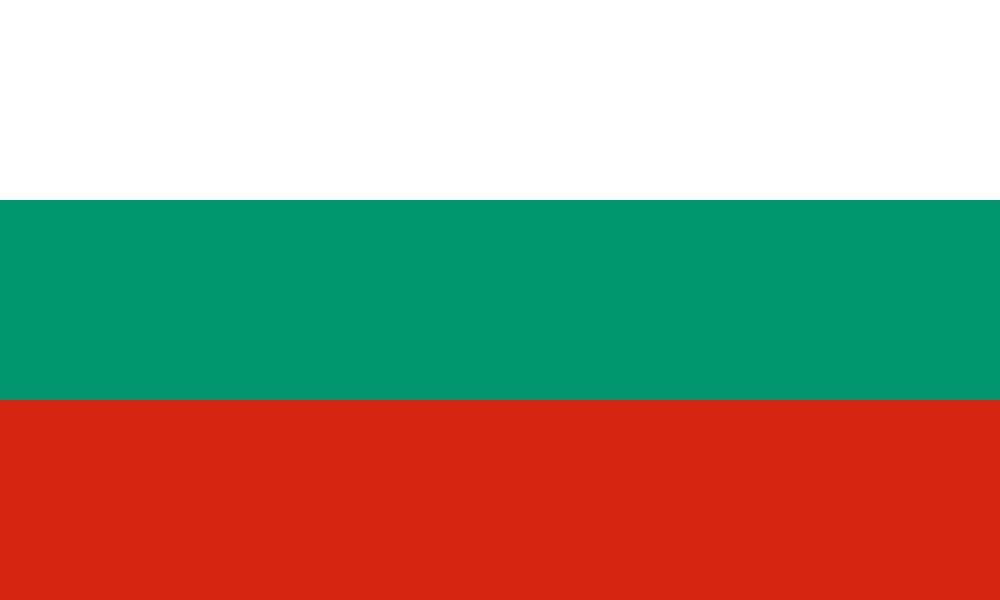
 Bulgaria
Bulgaria as a State Party to the World Heritage Convention
State Party since: March 7, 1974
Status: Acceptance
Mandates to the World Heritage Committee: 1978-1983, 1985-1991, 2021-2025
Total of Mandate Years: 15
Total of Mandates: 3
WHC Electoral Group: II (Eastern Europe)
World Heritage Sites in Bulgaria (10)
Cultural: 7 | Natural: 3 | Mixed: 0
- Ancient City of Nessebar · Cultural
- Ancient and Primeval Beech Forests of the Carpathians and Other Regions of Europe · Natural (Transboundary)
- Boyana Church · Cultural
- Madara Rider · Cultural
- Pirin National Park · Natural
- Rila Monastery · Cultural
- Rock-Hewn Churches of Ivanovo · Cultural
- Srebarna Nature Reserve · Natural
- Thracian Tomb of Kazanlak · Cultural
- Thracian Tomb of Sveshtari · Cultural
Map of World Heritage Sites
This interactive map shows the location of all UNESCO World Heritage Sites in Bulgaria.
World Heritage Inscription Timeline
Tentative World Heritage Sites (16)
- Frontiers of the Roman Empire – The Danube Limes · submitted: January 31, 2020
- Bishop's Basilica and Late-Antique Mosaics of Philippopolis, Roman Province of Thrace · submitted: January 29, 2018
- The royal necropolis of the Thracian city of Seuthopolis – a serial site, extension of the Kazanlak Thracian tomb · submitted: February 26, 2016
- Vratsa Karst Nature Reserve · submitted: October 10, 2011
- Rocks of Belogradchik · submitted: October 10, 2011
- Central Balkan National Park · submitted: October 10, 2011
- Pobiti Kamani Natural Monument · submitted: October 10, 2011
- The Ancient Plovdiv · submitted: September 14, 2004
- Thracian Tomb with Wall Paintings beside Alexandrovo village · submitted: September 14, 2004
- Two neolithic dwellings with their interior and household furnishings and utensils completely preserved · submitted: October 1, 1984
- The Magoura cave with drawings from the bronze age · submitted: October 1, 1984
- The ancient town of Nicopolis ad Istrum · submitted: October 1, 1984
- The late ancient tomb of Silistra · submitted: October 1, 1984
- The Bachkovo Monastery · submitted: October 1, 1984
- The town of Melnik and the Rozhen Monastery · submitted: October 1, 1984
- The Roussensky Lom National Park · submitted: October 1, 1984
Country Profile Bulgaria
Official Name: Republic of Bulgaria
Continent: Europe
Subregion: Southeast Europe
UNESCO Region: Europe and North America
Capital: Sofia
Population (2024): 6,444,366
Land Area: 108,560 km²
Currency: Bulgarian lev (BGN)
Related Resources
About States Parties
States Parties are countries that have joined the World Heritage Convention. They commit to identifying, nominating, and protecting properties of outstanding cultural or natural value on their territory. States Parties are also expected to monitor and report on the condition of inscribed sites.