World Heritage Identification Number: 42
World Heritage since: 1979
Category: Cultural Heritage
WHE Type: Religious Sites & Sacred Architecture
Transboundary Heritage: No
Endangered Heritage: No
Country: 🇧🇬 Bulgaria
Continent: Europe
UNESCO World Region: Europe and North America
Map
Boyana Church: A Masterpiece of Medieval Art
The Boyana Church, located on the outskirts of Sofia, Bulgaria, stands as a testament to the rich cultural heritage of the region. This remarkable structure, inscribed onto the UNESCO World Heritage List in 1979, comprises three distinct buildings that span over a thousand years of history.
More to come…UNESCO Description of the World Heritage Site
Located on the outskirts of Sofia, Boyana Church consists of three buildings. The eastern church was built in the 10th century, then enlarged at the beginning of the 13th century by Sebastocrator Kaloyan, who ordered a second two storey building to be erected next to it. The frescoes in this second church, painted in 1259, make it one of the most important collections of medieval paintings. The ensemble is completed by a third church, built at the beginning of the 19th century. This site is one of the most complete and perfectly preserved monuments of east European medieval art.
UNESCO Justification of the World Heritage Site
Criterion (ii): From an architectural point of view, Boyana Church is a pure example of a church with a Greek cross ground-plan with dome, richly decorated facades and decoration of ceramic elements. It is one of the most remarkable medieval monuments with especially fine wall paintings.
Criterion (iii): The Boyana Church is composed of three parts, each built at a different period - 10 century, 13th century and 19th century which constitute a homogenous whole.
Encyclopedia Record: Boyana Church
The Boyana Church is a medieval Bulgarian Orthodox church situated on the outskirts of Sofia, the capital of Bulgaria, in the Boyana quarter. In 1979, the building was added to the UNESCO World Heritage List.Additional Site Details
Area: 0.68 hectares
Number of Components: 1
(iii) — Unique or exceptional testimony to a cultural tradition
Coordinates: 42.6446319444 , 23.2661827778
Image
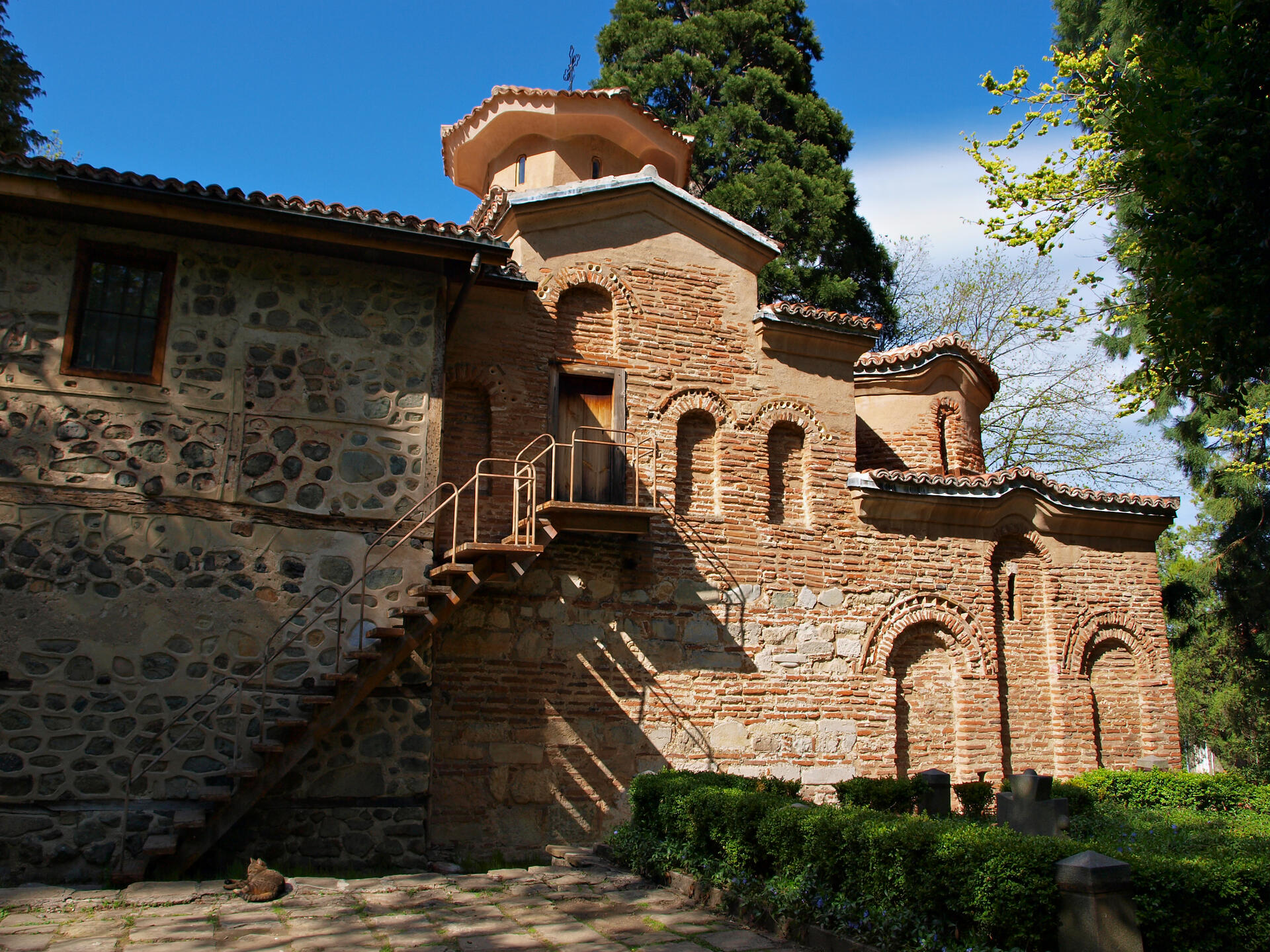
© Todor Bozhinov / Тодор Божинов, CC BY-SA 3.0 Resized from original. (This derivative is under the same CC BY-SA license.)
World Heritage Research
Discover scientific research and academic studies that deepen our understanding of Boyana Church from its history and significance to its conservation, management, and contemporary challenges.
-
Women’s evangelical activities and church growth in Romani communities
Women played a pivotal role in the religious mobilization and church growth within Romani communities in Bulgaria during the interwar period, yet their contributions have been understudied. This study reveals that female evangelists, such as Puncheva (Boyana), Anka Minkova, and Keva Stefanova, were instrumental in advancing religious change, particularly through women's associations and collaborative efforts with male evangelists. Their activities targeted children and women within Romani communities, aiming to correct perceived moral laxity and integrate Roma into mainstream society. The research employs a combined ethnological approach, drawing from open-ended interviews, archival sources, and periodicals to provide a detailed account of these female agents of change in the village of Golintsi. This work sheds light on the often-overlooked gender dynamics in religious mobilization during this period.
SLAVKOVA, M. (2023). Women’s evangelical activities and church growth in Romani communities. Romani Studies, 33(1), 79–105. https://doi.org/10.3828/rost.2023.5
View Publication Record | Read Publication -
Helen Nemanjić (1250–1314)
Queen Helen Nemanjić (1250–1314), also known as Helen of Anjou, stands out as a significant figure in Serbian medieval history and art. A founder of monasteries and abbeys, including the renowned Gradac monastery and four Franciscan abbeys, she was also instrumental in renovating the Benedictine abbey of Sts. Sergius and Bacchus near Shkodër on the Boyana river. Her legacy extends beyond her religious contributions; she ruled Zeta and Travunija after her husband's death and was recognized for her religious tolerance, charitable work, and educational initiatives. Elevated to sainthood by the Serbian Orthodox Church, Queen Helen is also notable as one of the most frequently depicted women in Serbian medieval art, with six portraits found in significant monastic painting ensembles. Her life and contributions were chronicled in Archbishop Danilo II's 'Lives of Serbian Kings and Archbishops,' making her a unique figure among female Serbian medieval rulers.
Marinković, Č. (2021). Helen Nemanjić (1250–1314). Encyclopedia, 2(1), 14–25. https://doi.org/10.3390/encyclopedia2010002
View Publication Record | Read Publication -
Religious tourism and religious tourism resources
Religious tourism, one of the oldest forms of travel, thrives in regions with rich religious heritage. Bulgaria stands out for its abundant religious tourism resources, including UNESCO World Heritage Sites such as Rila Monastery, Boyana Church, and Ivanovo Rock Monasteries. These sites not only cater to spiritual needs but also offer cultural and historical value, making them pivotal in the development of religious tourism. The study highlights the significance of preserving and leveraging these heritage sites for sustainable tourism growth.
Dimitrov, S. (2019). Religious tourism and religious tourism resources. The Overarching Issues of the European Space = Grandes Problemáticas Do Espaço Europeu : A Strategic (Re)positioning of Environmental and Socio-Cultural Problems? Um (Re)posicionamento Estratégico Das Questões Ambientais E Socioculturais?, 79–89. https://doi.org/10.21747/9789898969149/reli
View Publication Record | Read Publication