
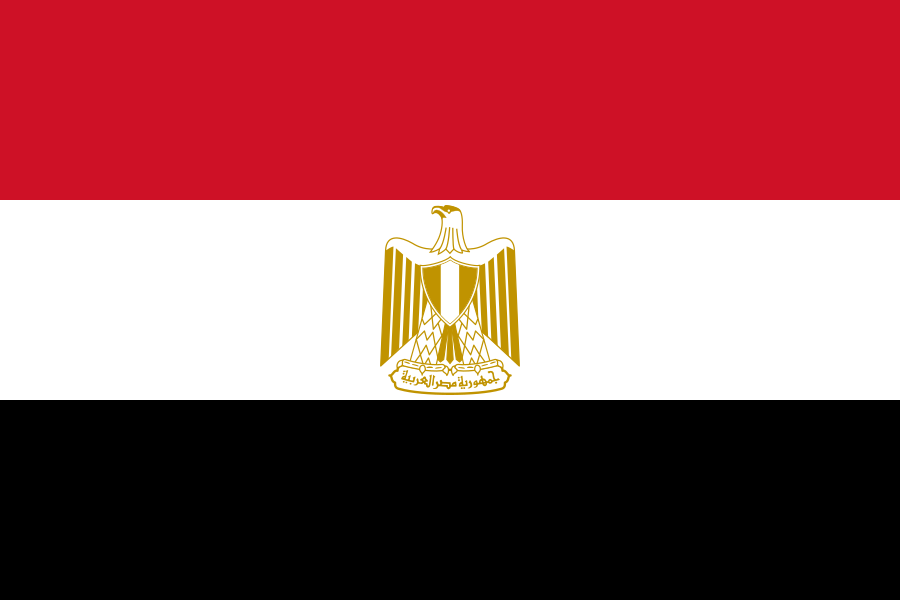
 Egypt
EgyptEgypt as a State Party to the World Heritage Convention
State Party since: February 7, 1974
Status: Ratification
Mandates to the World Heritage Committee: 1976-1983, 1991-1997, 1999-2005, 2007-2011, 2019-2023
Total of Mandate Years: 27
Total of Mandates: 5
WHC Electoral Group: V(b) (Arab States)
World Heritage Sites in Egypt (7)
Cultural: 6 | Natural: 1 | Mixed: 0
- Abu Mena · Cultural
- Ancient Thebes with its Necropolis · Cultural
- Historic Cairo · Cultural
- Memphis and its Necropolis – the Pyramid Fields from Giza to Dahshur · Cultural
- Nubian Monuments from Abu Simbel to Philae · Cultural
- Saint Catherine Area · Cultural
- Wadi Al-Hitan (Whale Valley) · Natural
Map of World Heritage Sites
This interactive map shows the location of all UNESCO World Heritage Sites in Egypt.
World Heritage Inscription Timeline
Tentative World Heritage Sites (34)
- Egyptian Museum in Cairo · submitted: February 1, 2021
- Kharga Oasis and the Small Southern Oases · submitted: September 3, 2015
- Helwan Observatory · submitted: November 3, 2010
- Dababiya · submitted: July 24, 2008
- Alexandria, ancient remains and the new library · submitted: July 28, 2003
- Abydos, city of pilgrimage of the Pharaohs · submitted: July 28, 2003
- Pharaonic temples in Upper Egypt from the Ptolemaic and Roman periods · submitted: July 28, 2003
- Necropolises of Middle Egypt, from the Middle Empire to the Roman period · submitted: July 28, 2003
- Raoudha nilometre in Cairo · submitted: July 28, 2003
- The monasteries of the Arab Desert and Wadi Natrun · submitted: July 28, 2003
- Two citadels in Sinai from the Saladin period (Al-Gundi and Phataoh's island) · submitted: July 28, 2003
- The An-Nakhl fortress, a stage on the pilgrimage route to Mecca · submitted: July 28, 2003
- Oasis of Fayoum, hydraulic remains and ancient cultural landscapes · submitted: July 28, 2003
- Historic quarters and monuments of Rosetta/Rachid · submitted: July 28, 2003
- Southern and Smaller Oases, the Western Desert · submitted: June 12, 2003
- Bird Migration Routes · submitted: June 12, 2003
- Desert Wadis · submitted: June 12, 2003
- Mountain Chains · submitted: June 12, 2003
- Great Desert Landscapes · submitted: June 12, 2003
- Gebel Qatrani Area, Lake Qaroun Nature Reserve · submitted: February 10, 2003
- Ras Mohammed · submitted: January 22, 2002
- Siwa archaeological area · submitted: November 1, 1994
- Temple of Serabit Khadem · submitted: November 1, 1994
- North Sinai archaeological Sites Zone · submitted: November 1, 1994
- Temple of Hator built by Ramses III · submitted: November 1, 1994
- Dahshour archaeological area · submitted: November 1, 1994
- El Fayoum: Kom Aushim (Karanis), Dimai (Soknopaiounesos), Qasr Qarun (Dionysias), Batn I hrit (Theadelphia), Byahma-Medinet el Fayoum….. · submitted: November 1, 1994
- El-Gendi Fortress · submitted: November 1, 1994
- Rutho Monastery · submitted: November 1, 1994
- Wadi Feiran · submitted: November 1, 1994
- Pharaon Island · submitted: November 1, 1994
- Dahab · submitted: November 1, 1994
- Minia · submitted: November 1, 1994
- Newibah castle · submitted: November 1, 1994
Country Profile Egypt
Official Name: Arab Republic of Egypt
Continent: Africa
Subregion: Northern Africa
UNESCO Region: Arab States
Capital: Cairo
Population (2024): 116,538,258
Land Area: 995,450 km²
Currency: Egyptian pound (EGP)
About States Parties
States Parties are countries that have joined the World Heritage Convention. They commit to identifying, nominating, and protecting properties of outstanding cultural or natural value on their territory. States Parties are also expected to monitor and report on the condition of inscribed sites.