World Heritage Identification Number: 88
World Heritage since: 1979
Category: Cultural Heritage
WHE Type: Buildings & Architectural Ensembles
Transboundary Heritage: No
Endangered Heritage: No
Country: 🇪🇬 Egypt
Continent: Africa
UNESCO World Region: Arab States
Map
Nubian Monuments from Abu Simbel to Philae: A Testament to Ancient Civilization
The Nubian Monuments from Abu Simbel to Philae, inscribed as a UNESCO World Heritage Site in 1979, stand as a testament to the grandeur and enduring legacy of ancient civilizations. This archaeological area spans over 700 kilometers along the Nile River, encompassing a collection of remarkable temples, sanctuaries, and rock carvings that offer insights into the rich cultural heritage of Egypt and Sudan.
More to come…UNESCO Description of the World Heritage Site
This outstanding archaeological area contains such magnificent monuments as the Temples of Ramses II at Abu Simbel and the Sanctuary of Isis at Philae, which were saved from the rising waters of the Nile thanks to the International Campaign launched by UNESCO, in 1960 to 1980.
UNESCO Justification of the World Heritage Site
Criterion (i): Several of the monuments included in property are unanimously recognised as masterpieces of the human creative spirit, such as the temples of Abu Simbel, carved out of the rocks by order of Ramses II; and, above the first cataract, the great sanctuary of the Goddess Isis at Philae, built in the Ptolemaic period and renowned since Greco-Roman antiquity for its temples and their annexes, where the last Pharaohs and Roman emperors (up to Hadrian) have left their names, the jewel of which is the very elegant and very famous Trajan’s kiosk.
Criterion (iii): Other than Abu Simbel and Philae, the property embraces the temples of Amada, constructed by Tuthmosis III and Amenophis II, of Derr (also at Amada), those of Wadi Sebua, Dakka and Maharraqa (at Wadi Sebua), the temple of Talmis (removed to Kalabsha), the kiosk of Kartassi, the temple of Beit el Wali. This unique series of prestigious monuments, dating from the 15th century BCE to the second century CE, are, at once, both rare and ancient. To these must be added the astonishing granite quarries of Aswan, exploited by the pharaohs from early antiquity, with unfinished monuments, colossi and obelisks.
Criterion (vi): The Nubian Monuments from Abu Simbel to Philae bring together cultural properties closely associated with the unfolding of a long sequence of Ancient Egyptian history.
Encyclopedia Record: International Campaign to Save the Monuments of Nubia
The International Campaign to Save the Monuments of Nubia was the effort to relocate 22 monuments in Lower Nubia, in Southern Egypt and northern Sudan, between 1960 and 1980. This was done in order to make way for the building of the Aswan Dam, at the Nile's first cataract, a project launched following the 1952 Egyptian revolution. This project was undertaken under UNESCO leadership and a coalition of fifty countries. This process led to the creation of the World Heritage Convention in 1972, and thus the system of UNESCO World Heritage Sites.Additional Site Details
Area: 374.48 hectares
Number of Components: 10
(iii) — Unique or exceptional testimony to a cultural tradition
(vi) — Directly associated with events or living traditions
Coordinates: 22.3372222222 , 31.6258055556
Image
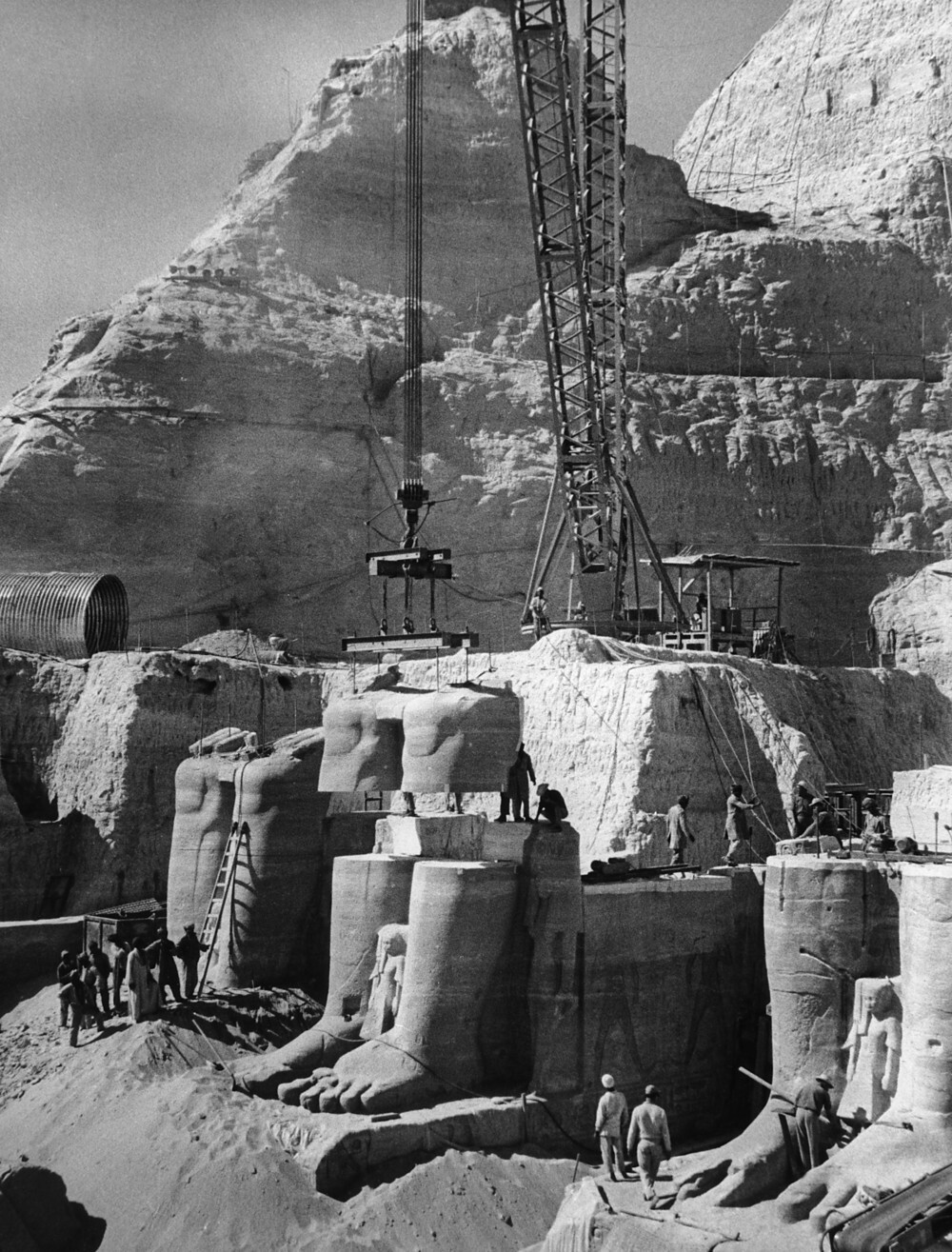
© UNESCO, CC BY-SA 3.0 igo Resized from original. (This derivative is under the same CC BY-SA license.)