
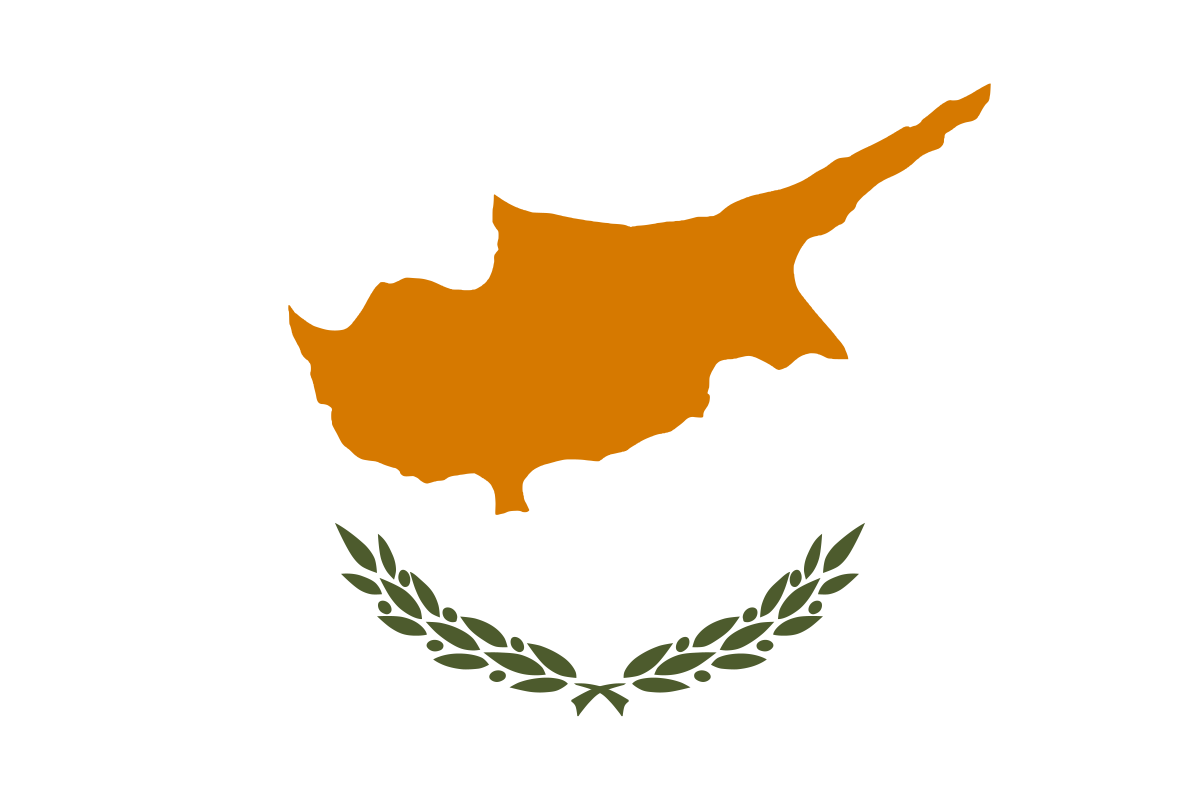
 Cyprus
Cyprus as a State Party to the World Heritage Convention
State Party since: August 14, 1975
Status: Acceptance
Mandates to the World Heritage Committee: 1980-1987, 1991-1997
Total of Mandate Years: 13
Total of Mandates: 2
WHC Electoral Group: I (Western Europe/North America)
World Heritage Sites in Cyprus (3)
Cultural: 3 | Natural: 0 | Mixed: 0
- Choirokoitia · Cultural
- Painted Churches in the Troodos Region · Cultural
- Paphos · Cultural
Map of World Heritage Sites
This interactive map shows the location of all UNESCO World Heritage Sites in Cyprus.
World Heritage Inscription Timeline
Tentative World Heritage Sites (11)
- Hala Sultan Tekke and the Larnaka Salt Lake Complex · submitted: February 8, 2016
- Church of Panagia Aggeloktisti · submitted: February 9, 2015
- Agioi Varnavas and Ilarion at Peristerona (Five-domed churches) · submitted: February 2, 2004
- Church of Panayia Chrysokourdaliotissa, Kourdali (extension to "Painted Churches in the Troodos Region") · submitted: February 4, 2002
- The rural settlement of Fikardou · submitted: February 4, 2002
- Mathiatis South · submitted: February 4, 2002
- Kionia · submitted: February 4, 2002
- Khandria · submitted: February 4, 2002
- Troodos, Mt. Olympus · submitted: February 4, 2002
- Malounta Bridge · submitted: February 4, 2002
- Klirou Bridge · submitted: February 4, 2002
Country Profile Cyprus
Official Name: Republic of Cyprus
Continent: Asia
Subregion: Southern Europe
UNESCO Region: Europe and North America
Capital: Nicosia
Population (2024): 1,358,282
Land Area: 9,240 km²
Currency: Euro (EUR)
Related Resources
About States Parties
States Parties are countries that have joined the World Heritage Convention. They commit to identifying, nominating, and protecting properties of outstanding cultural or natural value on their territory. States Parties are also expected to monitor and report on the condition of inscribed sites.