World Heritage Identification Number: 351
World Heritage since: 1985
Category: Cultural Heritage
WHE Type: Religious Sites & Sacred Architecture
Transboundary Heritage: No
Endangered Heritage: No
Country: 🇨🇾 Cyprus
Continent: Asia
UNESCO World Region: Europe and North America
Map
Exploring the Richly Decorated Painted Churches in the Troodos Region, Cyprus
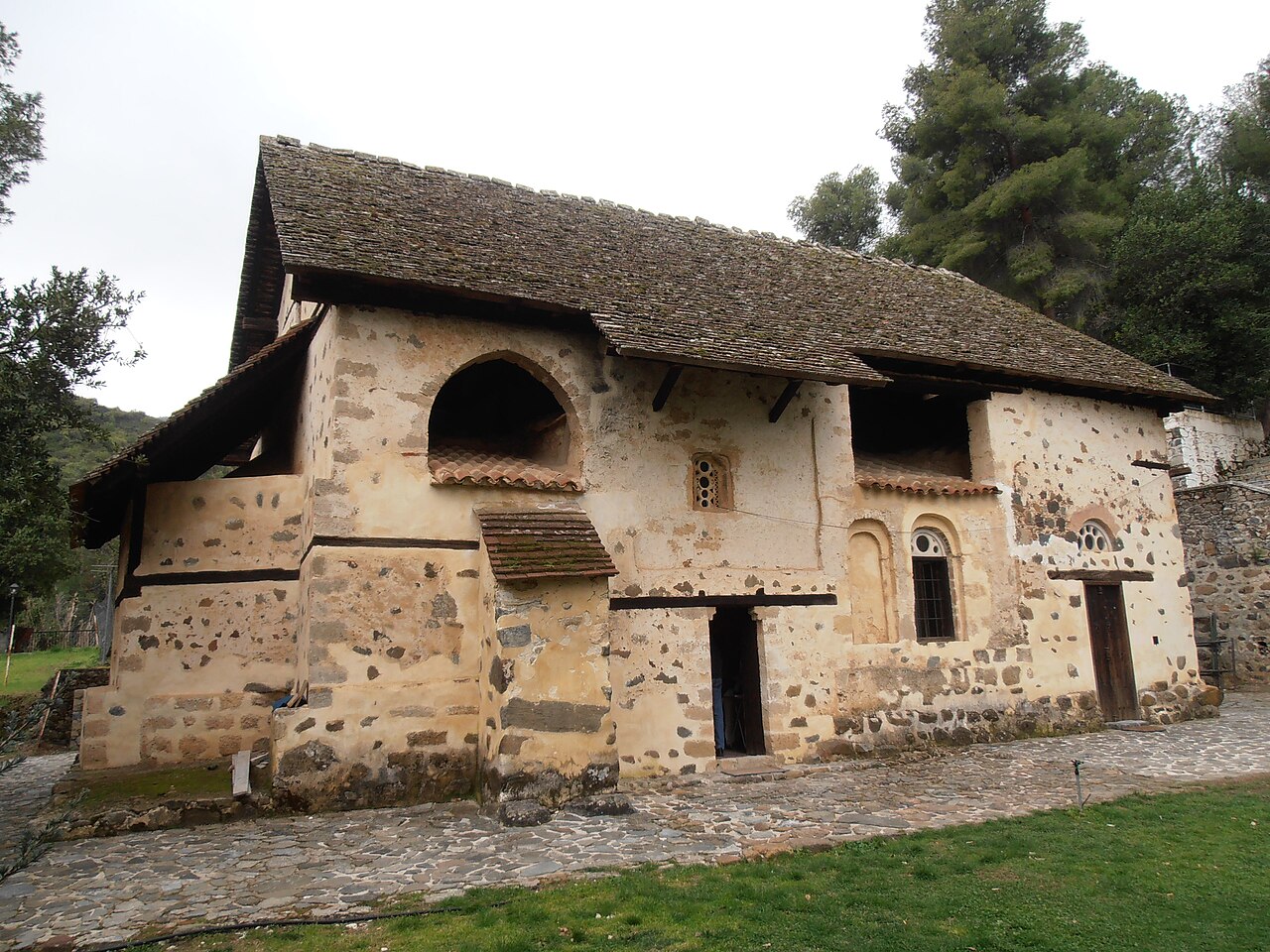
The Painted Churches in the Troodos Region, inscribed as a UNESCO World Heritage Site in 1985, offer a captivating glimpse into the artistic and religious history of Cyprus. Located in the picturesque Troodos Mountains, this collection of ten Byzantine churches and monasteries showcases some of the most remarkable examples of Byzantine and post-Byzantine painting found anywhere.
More to come…UNESCO Description of the World Heritage Site
This region is characterized by one of the largest groups of churches and monasteries of the former Byzantine Empire. The complex of 10 monuments included on the World Heritage List, all richly decorated with murals, provides an overview of Byzantine and post-Byzantine painting in Cyprus. They range from small churches whose rural architectural style is in stark contrast to their highly refined decoration, to monasteries such as that of St John Lampadistis.
UNESCO Justification of the World Heritage Site
Criterion (ii): Although the existence of any direct influence cannot be confirmed, very close relationships existed, during the 12th century, between painting in Cyprus and Western Christian art (stylistic relationships in the case of Nikitari paintings; iconographical relationships in the case of the paintings of Lagoudera). Thus, there do exist some answers to the very complex question of ties between the two Christianities. These answers take the form of Cypriot monuments, which precede the constitution of the Frankish Lusignan Kingdom, which was a fundamental link in the chain of East-West artistic exchanges.
Criterion (iii): The paintings of the Troodos Region bear an outstanding testimony to the Byzantine civilization at the time of the Comnenes, thanks to the Nikitari and Lagoudera ensembles. It should be noted that the former, where the name Alexis Comnene is mentioned in a dedication, was probably executed by artists from Constantinople and the latter was painted at the very time of the fall of Isaac Comnene and the sale of Cyprus to Guy de Lusignan.
Criterion (iv): The churches of the Troodos Region are a well conserved example of rural religious architecture during the Byzantine period. The refinement of their décor provides a contrast with their simple structure. The latest post-Byzantine painters alone, with their “rustic” style, are at times in harmony with this vernacular architecture.
Encyclopedia Record: Painted Churches in the Troodos Region
The Painted Churches in the Troödos Region is a UNESCO World Heritage Site in the Troödos Mountains of central Cyprus. The complex comprises ten Byzantine churches and monasteries richly decorated with Byzantine and post-Byzantine murals:Church of Agios Nikolaos tis Stegis in Kakopetria: An 11th-century monastery and the oldest surviving katholikon in Cyprus Agios Ioannis Lampadistis Monastery in Kalopanagiotis: A 13th-century monastery Church of Panagia Phorviotissa (Asinou) in Nikitari: A 12th-century church Church of Panagia tou Arakou in Lagoudhera: A 12th century church Church of Panagia in Moutoullas: A 13th-century chapel and the earliest example of steep-pitched wooden roofs Church of Archangelos Michael in Pedoulas: A late 15th-century church Church of Timios Stavros in Pelendri: A church containing unique 14th-century wall paintings Church of Panagia Podithou in Galata: An early-16th century church Church of Stavros Agiasmati in Platanistasa: A 14th-century church Church of Agia Sotira tou Soteros in Palaichori Oreinis: A 16th-century church.Additional Site Details
Area: 3.693 hectares
Number of Components: 10
(iii) — Unique or exceptional testimony to a cultural tradition
(iv) — Outstanding example of a type of building or landscape
Coordinates: 34.92027778 , 33.09583333
World Heritage Research
Discover scientific research and academic studies that deepen our understanding of Painted Churches in the Troodos Region from its history and significance to its conservation, management, and contemporary challenges.
-
Ground Penetrating Radar Survey of the UNESCO Painted Churches in the Troodos Region (Cyprus)
Ground Penetrating Radar (GPR) surveys of the UNESCO-listed Painted Churches in Cyprus's Troodos region have uncovered preliminary evidence of buried monastic complexes and surrounding buildings, shedding light on lost architectural structures that once accompanied these 11th to 16th-century churches. The study, part of the IH-AT project, employed non-destructive techniques (NDT), including geophysical surveys, topographic mapping, 3D modeling, and art-historical analysis, to investigate subsurface features without excavation. While findings are still preliminary, they suggest the presence of buried structures that could significantly alter our understanding of these World Heritage Sites' historical context. Future excavations may validate these discoveries, offering new insights into the monastic life and urban planning of medieval Cyprus.
Mitchell, W. L., Abate, D., Colls, K. S., Faka, M., Sturdy Colls, C., & Bakirtzis, N. (2022). Ground Penetrating Radar Survey of the UNESCO Painted Churches in the Troodos Region (Cyprus). Heritage, 5(1), 260–285. https://doi.org/10.3390/heritage5010014
View Publication Record | Read Publication -
Multi-Modal Digital Documentation and Visualization of the UNESCO Painted Churches in Troodos (Cyprus)
A groundbreaking multi-modal digital documentation and visualization study of the UNESCO World Heritage Site 'Painted Churches in the Troodos Region' (Cyprus) has revealed new insights into the architectural features of these Byzantine and Post-Byzantine churches. Using non-destructive techniques such as image-based and range-based methodologies, along with Ground Penetrating Radar (GPR), researchers confirmed the presence or absence of buried structures surrounding the religious sites, aligning with historical records. This comprehensive approach, part of the IH-AT project, not only advanced understanding of the churches' humble architecture but also developed a user-friendly web portal for heritage professionals and the public to interact with 3D models, customizable even by those with minimal programming skills.
Abate, D., Faka, M., Toumbas, K., Bakirtzis, N., Mitchell, W., Colls, K., & Sturdy-Colls, C. (2022). MULTI-MODAL DIGITAL DOCUMENTATION AND VISUALIZATION OF THE UNESCO PAINTED CHURCHES IN TROODOS (CYPRUS). The International Archives of the Photogrammetry, Remote Sensing and Spatial Information Sciences, XLVI-2/W1-2022, 1–8. https://doi.org/10.5194/isprs-archives-xlvi-2-w1-2022-1-2022
View Publication Record | Read Publication -
The 1st EUHeritageTOURGUIDE "Basic"
The EUHeritageTOUR Guide introduces six innovative thematic itineraries linking UNESCO World Heritage Sites across Europe, offering unique narrative perspectives on cultural diversity. This 'basic release' version presents a structured approach to exploring sites like the painted churches in Troodos (Cyprus), fortifications in Elvas (Portugal), and urban centers such as Amsterdam and Brussels. The guide emphasizes the beauty of multiplicity by connecting lesser-known traditions—such as Porto wine production in Alto Douro (Portugal) or trappist beer brewing in Belgium—to broader European heritage narratives. By leveraging unconventional storytelling, it aims to deepen visitors' engagement with cultural identity, blending history, art, and local craftsmanship. The project exemplifies how digital tools can enhance the interpretation of World Heritage Sites for both academic and general audiences.
Laquidara, G., M. Mazzi Boém, M. Colombani, F. Marano, Cousins, J., N. Emmenegger, M. Ioannides, J. Portugal, E. Perez Babo, J. Santos, G. Ablasser, P. König, & M. Socratous. (2014). The 1st EUHeritageTOURGUIDE "basic". Figshare. https://doi.org/10.6084/M9.FIGSHARE.1094034.V1
View Publication Record | Read Publication