
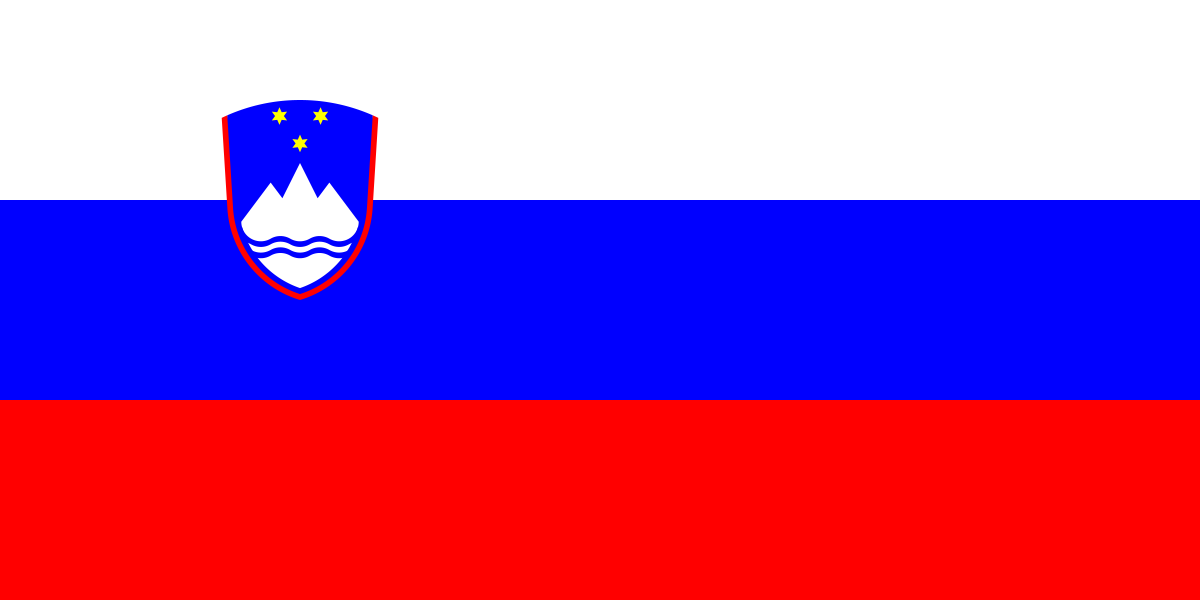
 Slovenia
Slovenia as a State Party to the World Heritage Convention
State Party since: November 5, 1992
Status: Succession
Mandates to the World Heritage Committee: None
Total of Mandate Years: 0
Total of Mandates: 0
WHC Electoral Group: II (Eastern Europe)
World Heritage Sites in Slovenia (5)
Cultural: 3 | Natural: 2 | Mixed: 0
- Ancient and Primeval Beech Forests of the Carpathians and Other Regions of Europe · Natural (Transboundary)
- Heritage of Mercury. Almadén and Idrija · Cultural (Transboundary)
- Prehistoric Pile Dwellings around the Alps · Cultural (Transboundary)
- The works of Jože Plečnik in Ljubljana – Human Centred Urban Design · Cultural
- Škocjan Caves · Natural
Map of World Heritage Sites
This interactive map shows the location of all UNESCO World Heritage Sites in Slovenia.
World Heritage Inscription Timeline
Tentative World Heritage Sites (4)
- The Walk of Peace from the Alps to the Adriatic – Heritage of the First World War · submitted: January 29, 2016
- Classical Karst (in Slovene language: Klasicni kras) · submitted: November 25, 2015
- Franja Partisan Hospital · submitted: June 16, 2000
- Fuzina Hills in Bohinj · submitted: December 9, 1994
Country Profile Slovenia
Official Name: Republic of Slovenia
Continent: Europe
Subregion: Central Europe
UNESCO Region: Europe and North America
Capital: Ljubljana
Population (2024): 2,126,324
Land Area: 20,140 km²
Currency: Euro (EUR)
Related Resources
About States Parties
States Parties are countries that have joined the World Heritage Convention. They commit to identifying, nominating, and protecting properties of outstanding cultural or natural value on their territory. States Parties are also expected to monitor and report on the condition of inscribed sites.