World Heritage Identification Number: 390
World Heritage since: 1986
Category: Natural Heritage
WHE Type: Natural Landscapes & Geographic Features
Transboundary Heritage: No
Endangered Heritage: No
Country: 🇸🇮 Slovenia
Continent: Europe
UNESCO World Region: Europe and North America
Map
Exploring the Breathtaking Škocjan Caves: A Journey Through Slovenian Karst Landscape
The Škocjan Caves, nestled within the heart of Slovenia's captivating Karst region, offer an extraordinary glimpse into the intricate and mesmerizing world beneath our feet. Inscribed as a UNESCO World Heritage Site in 1986, these extensive subterranean caverns have long been a source of fascination for scientists, explorers, and visitors alike.
More to come…UNESCO Description of the World Heritage Site
This exceptional system of limestone caves comprises collapsed dolines, some 6 km of underground passages with a total depth of more than 200 m, many waterfalls and one of the largest known underground chambers. The site, located in the Kras region (literally meaning Karst), is one of the most famous in the world for the study of karstic phenomena.
UNESCO Justification of the World Heritage Site
Criterion (vii): The Škocjan cave system and its surroundings are eminent and well-conserved manifestations of Karst topography. It reveals a broad range of karst features with its exceptional scale and aesthetic quality. Some outstanding landscape highlights include the vast, roughly two-kilometre long underground canyon, up to some 150 metres high and in places more than 120 metres wide. An underground torrent runs through it along series of cascades, turning it into a major visual and auditory spectacle. Higher up in the drier ceilings and walls of the canyon, limestone deposition from dripping water has been shaping astonishing stalagmites and stalactites, such as the so-called Giants in Velika Dvorana (or Great Chamber). The magnificent rimstone pools in Dvorana Ponvic (or Chamber of Rimstone Pools) are equally impressive manifestations of calcite deposits. The famous pools have been attracting scientists and artists ever since their formal discovery in 1888, and their representations came to epitomize the otherworldly beauty of the Škocjan Caves. The main channel of the celebrated underground river resurfaces in two picturesque collapsed dolines named Velika and Mala. The breath-taking view of these two collapsed dolines is depicted in the drawings of the pioneering explorer Valvasor that date back as early as 1689, and has never ceased to fascinate visitors, artists and scientists.
Criterion (viii): The Škocjan Caves and their surroundings are the major localities for karst topography and are the place where fundamental terms such as karst and doline, have their origin. This is not only a strong indication of the property's importance for science, but more specifically of its importance for the history of earth sciences. An impressive array of exceptional karst manifestations, the result of past and present geological, geomorphological, speleological and hydrological processes, are clearly at display for scientists and visitors alike within a relatively small area. The heart of the site, the main cave system with the underground stretches of the Reka River, has been formed in a thick layer of cretaceous limestone. The constantly dynamic system is an outstanding textbook example of contact Karst with well-developed features, such as a blind valley, collapsed dolines, openings, chasms and caves. Remarkably, this geological diversity supports an equally fascinating biological diversity which has important implications for land and water management.
Encyclopedia Record: Škocjan Caves
Škocjan Caves is a cave system located in Slovenia. Škocjan Caves was included on UNESCO’s list of natural and cultural World Heritage Sites in 1986. Škocjan Caves is a significant underground phenomenon on the Karst Plateau and in Slovenia. After gaining independence from Yugoslavia in 1991, Slovenia made a commitment to actively protect the Škocjan Caves area. To fulfill this commitment, Škocjan Caves Regional Park was established, along with its managing authority, the Škocjan Caves Park Public Service Agency.Additional Site Details
Area: 413 hectares
Number of Components: 1
(viii) — Outstanding example representing major earth stages
Coordinates: 45.66667 , 14
IUCN World Heritage Outlook
The 2025 Conservation Outlook on Škocjan Caves reports the following assessment:
Source: International Union for Conservation of Nature (IUCN) · View assessment
Image
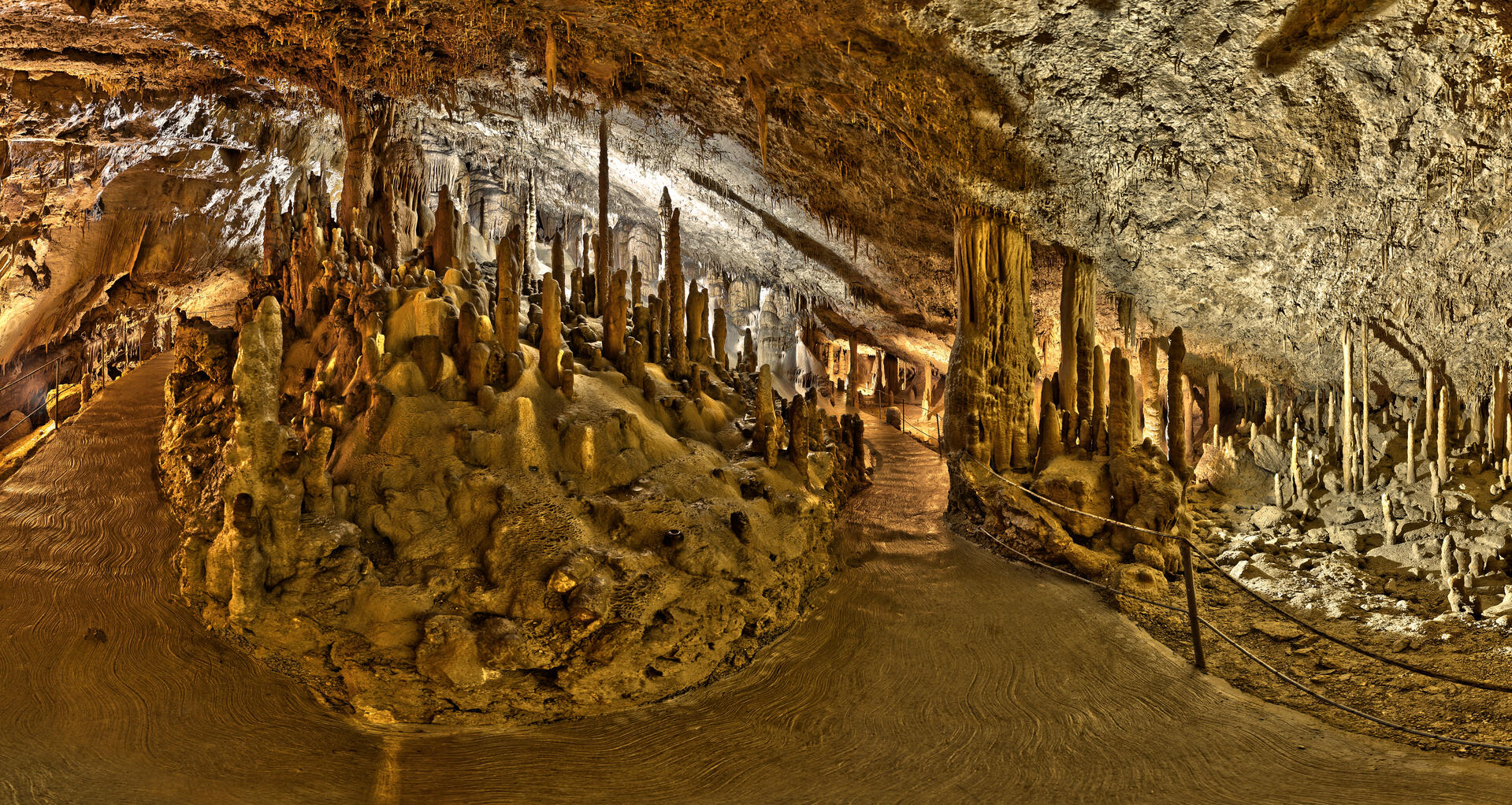
© Lander at Slovenian Wikipedia, CC BY-SA 3.0 Resized from original. (This derivative is under the same CC BY-SA license.)
World Heritage Research
Discover scientific research and academic studies that deepen our understanding of Škocjan Caves from its history and significance to its conservation, management, and contemporary challenges.
-
Erasmus Students’ Engagement with UNESCO Heritage Sites and Consumption of PDO/PGI Products: a Comparative Study of Poland and Slovenia
Erasmus students show strong engagement with UNESCO World Heritage Sites and local PDO/PGI products, driven by curiosity and academic mobility. A comparative study of Poland (Malbork Castle, Wieliczka Salt Mine) and Slovenia (Škocjan Caves, Ljubljana) revealed shared patterns in cultural tourism preferences while highlighting unique regional influences. Survey data from the University of Gdańsk and the University of Primorska, combined with field studies at key sites, demonstrated students' motivation to explore heritage landscapes and support local gastronomy. The findings suggest opportunities for heritage management and tourism marketing to enhance international student experiences, reinforcing education's role in cross-cultural connections.
Maior, C. (2025). Erasmus Students’ Engagement with UNESCO Heritage Sites and Consumption of PDO/PGI Products: a Comparative Study of Poland and Slovenia. Studies of the Industrial Geography Commission of the Polish Geographical Society, 39(3). https://doi.org/10.24917/20801653.393.4
View Publication Record | Read Publication -
Natural and anthropogenic impact on the microclimate and particulate matter in the UNESCO show cave
A study on the UNESCO-listed Škocjan Caves reveals that tourist visits significantly impact particulate matter (PM) concentrations and microclimate, with effects normalizing relatively quickly. The research found seasonal, diurnal, and spatial variations in PM10, PM2.5, and PM1 levels, as well as air temperature and CO₂, with summer showing greater influence due to higher visitor numbers. Natural factors, such as the re-suspension of cave sediments caused by strong air currents from tourist activities, and anthropogenic sources like maintenance work, electronic devices, and external emissions (e.g., from the Reka River, industry, traffic, and gypsum waste) were identified as key contributors to PM levels. The study proposes regular monitoring of PM and its sources, alongside microclimate and biological factors, to enhance sustainable tourism in this protected site.
Miler, M., Zupančič, N., Šebela, S., & Jarc, S. (2024). Natural and anthropogenic impact on the microclimate and particulate matter in the UNESCO show cave. Environmental Science and Pollution Research, 31(35), 48313–48331. https://doi.org/10.1007/s11356-024-34366-8
View Publication Record | Read Publication -
Tourism development of Vilenica and Škocjan caves according to reports by alpine societies and guides in the second half of the 19th century
A notable shift in the tourism development of Škocjan Caves and Vilenica occurred in the late 19th century, driven by the efforts of alpine societies. By the 1880s, these caves transitioned under the administration of specialized cave sections—Vilenica under the Italian section and Škocjan under the German-Austrian section—marking a pivotal moment in their tourist promotion. This study highlights how these societies, through systematic research activities and strategic initiatives, positioned the caves as significant tourist attractions during this period.
Kavrečič, P. (2024). Turistični razvoj jame Vil enica in Škocjanskih jam po poročanju planinsk ih društev in vodnikov v drugi polovici 19. stoletja. Kronika, 63(3), 547–560. https://doi.org/10.56420/kronika.63.3.09
View Publication Record | Read Publication -
Forest vegetation in the Reka gorge between the villages Škoflje and Škocjan (Škocjan Caves Regional Park) / Gozdna vegetacija v soteski Reke med Škofljami in Škocjanom (Regijski park Škocjanske jame)
A comprehensive phytosociological study of the Škocjan Caves Regional Park identifies six distinct forest and shrub communities along the Reka River gorge, including three newly described subassociations of the Lamio orvalae-Alnetum glutinosae association. This research provides a validated description of the previously provisionally characterized Corydalido ochroleucae-Ostryetum carpinifoliae, enriching the understanding of riverine forest syntaxonomy in southwestern Slovenia. The study also highlights marginal sites with unique ecological characteristics, contributing to the broader knowledge of Natura 2000 habitats.
Dakskobler, I. (2023). Forest vegetation in the Reka gorge between the villages Škoflje and Škocjan (Škocjan Caves Regional Park) / Gozdna vegetacija v soteski Reke med Škofljami in Škocjanom (Regijski park Škocjanske jame). Folia Biologica et Geologica, 64(1), 221–277. https://doi.org/10.3986/fbg0103
View Publication Record | Read Publication -
Geological structure of karst stratigraphical windows at Škocjan Caves, Slovenia
Research at Škocjan Caves, Slovenia, introduces the concept of 'karst stratigraphical windows' to describe surface exposures of older carbonate strata due to karst processes and collapse dolines. This discovery highlights how detailed geological mapping in karst areas can uncover hidden stratigraphic boundaries, providing deeper insights into subsurface structures. Unlike tectonic windows, these features arise from karst erosion and doline formation, offering a new perspective on understanding geological layers in regions with limited outcrops. The study emphasizes the importance of examining collapse dolines during surface mapping to enhance the comprehensiveness of geological data.
Šebela, S., & Novak, U. (2023). Geological structure of karst stratigraphical windows at Škocjan Caves, Slovenia. SN Applied Sciences, 5(4). https://doi.org/10.1007/s42452-023-05330-x
View Publication Record | Read Publication -
Transcriptomic analysis of cave, surface, and hybrid samples of the isopod Asellus aquaticus and identification of chromosomal location of candidate genes for cave phenotype evolution
Researchers have identified candidate genes linked to the evolution of cave-specific traits in the isopod Asellus aquaticus, including reduced pigmentation and eye size, by analyzing transcriptomes from surface-dwelling and cave populations. Using a combination of Illumina short-read sequencing and PacBio long-read Iso-seq, they mapped differential gene expression during embryonic development and in hybrid offspring. Key findings include genes involved in phototransduction and ommochrome synthesis being downregulated in cave samples, while allele-specific expression analysis revealed genes with bias toward either surface or cave phenotypes. The study also pinpointed the chromosomal locations of these candidate genes, providing a roadmap for future functional analyses to unravel the genetic basis of cave adaptation.
Lomheim, H. J., Reyes Rodas, L., Mulla, L., Freeborn, L., Sun, D. A., Sanders, S. A., & Protas, M. E. (2023). Transcriptomic analysis of cave, surface, and hybrid samples of the isopod Asellus aquaticus and identification of chromosomal location of candidate genes for cave phenotype evolution. EvoDevo, 14(1). https://doi.org/10.1186/s13227-023-00213-z
View Publication Record | Read Publication -
Along the hidden Timavo. 90° Congresso della Società Geologica Italiana - Trieste, 14-16 settembre 2021. Pre congress Field Trip T2
Researchers continue to investigate the Reka/Timavo cross-border aquifer, a complex underground network of drainage paths developed below sea level, to protect its groundwater resources. This ongoing study, supported by European projects, employs quantitative and qualitative monitoring to understand the aquifer's dynamics. The Classical Karst Region, home to this network, features thousands of dolines and over 5,000 explored caves, with less than a dozen reaching the water base level (Timavo caves). A field trip guidebook accompanies visitors along the underground path of the Reka/Timavo River, starting at Škocjan Caves (a UNESCO World Heritage site since 1986), and includes stops at Grotta Gigante cave, a surface dissolution laboratory, Doberdò Lake, and Timavo Springs. The study highlights the importance of water in shaping hypogean features through chemical dissolution and physical erosion processes.
Zini, L., Calligaris, C., & Cucchi, F. (2022). Along the hidden Timavo. 90° Congresso della Società Geologica Italiana - Trieste, 14-16 settembre 2021. Pre congress Field Trip T2. Geological Field Trips and Maps, 14(1.3), 1–69. https://doi.org/10.3301/gft.2022.03
View Publication Record | Read Publication