World Heritage Identification Number: 1643
World Heritage since: 2021
Category: Cultural Heritage
WHE Type: Buildings & Architectural Ensembles
Transboundary Heritage: No
Endangered Heritage: No
Country: 🇸🇮 Slovenia
Continent: Europe
UNESCO World Region: Europe and North America
Map
Transforming Ljubljana: Jože Plečnik's Human-Centered Urban Design
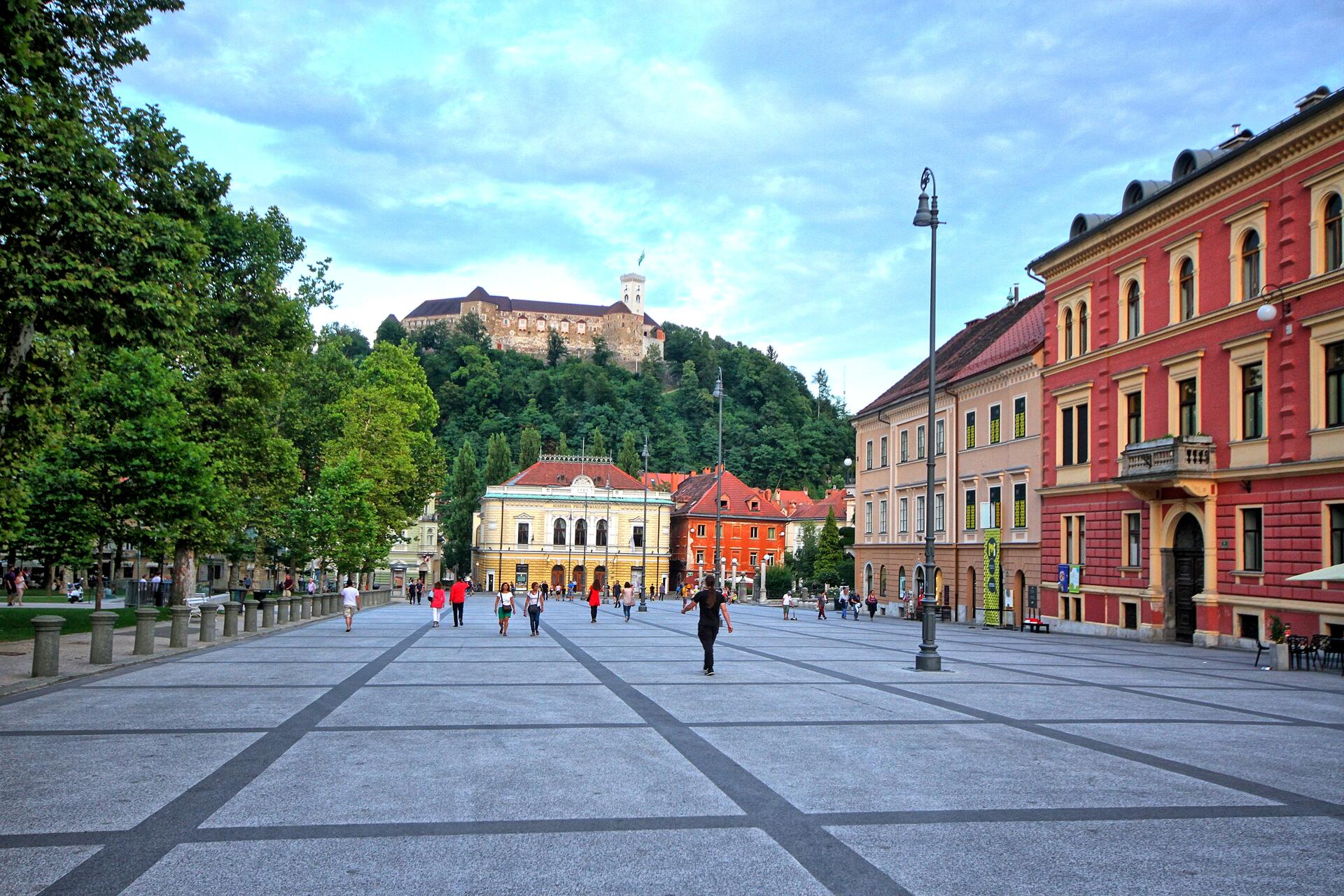
In the heart of Slovenia lies the vibrant city of Ljubljana, a testament to the visionary work of architect Jože Plečnik. Inscribed as a UNESCO World Heritage Site in 2021, the works of Plečnik in Ljubljana showcase an exceptional example of human-centered urban design that significantly transformed the city's identity.
More to come…UNESCO Description of the World Heritage Site
The works Jože Plečnik carried in Ljubljana between World War I and World War II present an example of a human centred urban design that successively changed the identity of the city following the dissolution of the Austro-Hungarian Empire, when it changed from a provincial city into the symbolic capital of the Slovenian people. The architect Jože Plečnik contributed to this transformation with his personal, profoundly human vision for the city, based on an architectural dialogue with the older city while serving the needs of emerging modern 20th century society. The property consists of a series of public spaces (squares, parks, streets, promenades, bridges) and public institutions (national library, churches, markets, funerary complex) that were sensitively integrated into the pre-existing urban, natural and cultural context and contributed to the city’s new identity. This highly contextual and human-scale urbanistic approach, as well as Plečnik’s distinctive architectural idiom, stand apart from the other predominant modernist principles of his time. It is an exceptional case of creating public spaces, buildings and green areas according to the vision of a single architect within a limited time, the limited space of an existing city, and with relatively limited resources.
UNESCO Justification of the World Heritage Site
Criterion (iv): The interventions designed by the architect Jože Plečnik throughout the city of Ljubljana in the short period between the two World Wars combine to become an outstanding example of human-centred urban renewal for the purpose of nation building after the demise of the Austro-Hungarian Empire. They are based on a harmonic relationship with the context of the space and its natural possibilities. The city is not built anew but improved with small- or large-scale interventions – new architectural ensembles, buildings and urban accents. The relationship with the past is established in various ways, from adapting the urban network and incorporating existing structures through architectural reminiscences and by establishing new cityscapes. The new urban space is not limited to a specific use but has various functions and the whole is thus imbued with new meanings.
Encyclopedia Record: The works of Jože Plečnik in Ljubljana – Human Centred Urban Design
The works of Jože Plečnik in Ljubljana – Human Centred Urban Design is a UNESCO World Heritage Site in Ljubljana, Slovenia, listed in 2021. The site encompasses selected the most prominent works of Slovenian architect Jože Plečnik in Ljubljana with their original function. During the interwar period, Plečnik worked to transform Ljubljana from a provincial city to the capital of the Slovenian nation by creating a series of public spaces and public institutions and integrating them into the pre-existing urban fabric. Sites include the St. Michael's Church in Črna Vas, and the following sites in Ljubljana: the promenade along the embankments of the Ljubljanica River and the bridges crossing it; the "Green promenade": Vegova Street with the National and University Library from French Revolution Square to Congress Square and Star Park, Trnovo Bridge, Roman Walls in Mirje, the Church of St. Francis of Assisi, and the All Saints Garden in Žale Cemetery.Additional Site Details
Area: 19.138 hectares
Number of Components: 7
Coordinates: 46.0433333333 , 14.5022222222