World Heritage Identification Number: 1558
World Heritage since: 2023
Category: Cultural Heritage
WHE Type: Cultural Landscapes
Transboundary Heritage: No
Endangered Heritage: No
Country: 🇨🇿 Czechia
Continent: Europe
UNESCO World Region: Europe and North America
Map
The Cultural Landscape of Žatec and Saaz Hops: A UNESCO World Heritage Site
The picturesque town of Žatec, nestled along the banks of the Ohře River in the Czech Republic, boasts a rich history deeply intertwined with the cultivation and trade of one of the world's most esteemed hop varieties – Saaz hops. This unique cultural landscape, recognized by UNESCO as a World Heritage Site in 2023, offers a captivating glimpse into the evolution of hop farming, processing, and trading practices spanning seven centuries.
More to come…UNESCO Description of the World Heritage Site
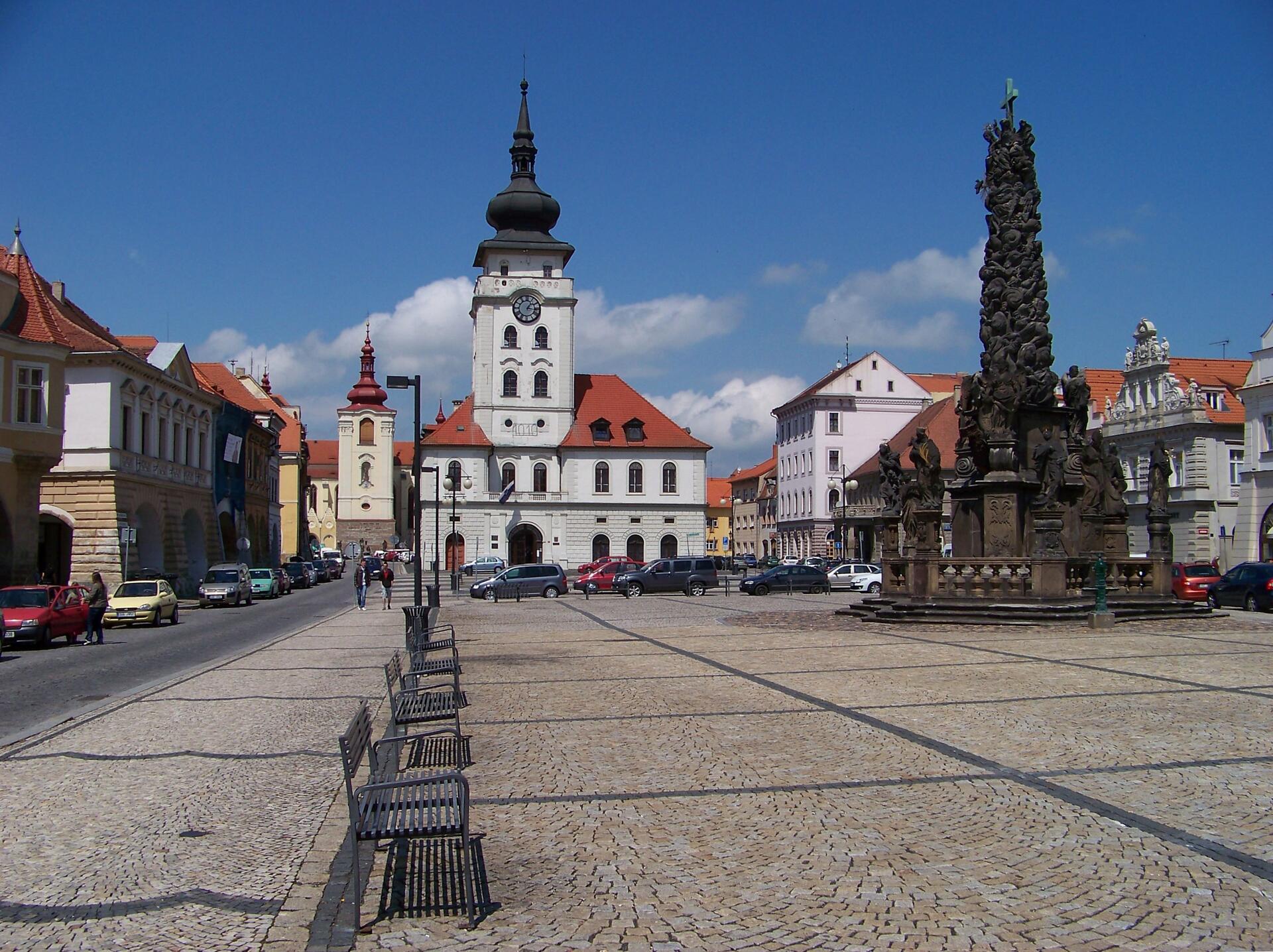
This cultural landscape has been shaped for centuries by the living tradition of cultivating and trading the world’s most renowned hop variety, used in beer production around the globe. The property includes particularly fertile hop fields near the river Ohře that have been farmed continuously for hundreds of years, as well as historic villages and buildings used for processing hops. The urban component of the property is represented by the medieval centre of Žatec with its southern extension, known as the “Prague Suburb” (Pražské předměstí) including numerous specific 19th to 20th-century industrial structures. Together, these illustrate the evolution of the agro-industrial processes and socio-economic system of growing, drying, certifying, and trading hops from the Late Middle Ages to the present.
UNESCO Justification of the World Heritage Site
Criterion (iii): Žatec and the Landscape of Saaz Hops bears exceptional testimony to a strong centuries-long cultural tradition of growing and processing the world’s most renown hops variety. Evidence of this testimony is found in the spatial configurations, urban patterns and buildings of this evolved and continuing cultural landscape. The town of Žatec became a globally recognised centre of hops in the 19th century as a result of innovations in hop production and flourishing global trade undertaken by local Czech, German and Jewish communities. This renown continues to the present day. The exceptional testimony of this cultural landscape is expressed in its traditional hop fields and buildings used for drying, packing, certifying and storing hops, as well as the related administrative, cultural and religious buildings.
Criterion (iv): Žatec and the Landscape of Saaz Hops is an outstanding example of a monoculture landscape. Associated with hop growing and processing in both rural and urban environments over a period of more than 700 years, the property includes outstanding examples of agricultural landscapes, buildings, architectural and technological ensembles. These examples illustrate various methods of hop breeding, drying, preservation, packaging and quality certification that were developed here since the Late Middle Ages and climaxed in the 19th and early 20th century. The rural landscape is particularly defined by hop fields, with their typical trellises of poles and wires. It also includes rural settlements with preserved farm buildings and barns where hops were dried and stored, and the former residence of the local landlord, the Stekník Chateau, which is a dominant landmark in the landscape as it rises above the still-used historic hop fields. The urban centre of this hop-growing landscape is the town of Žatec, with its municipal warehouses, hop drying kilns, sulphuring chambers, and hop packaging and certification facilities. The town’s exceptional skyline is accentuated by the vertical dominants of the hop-drying kilns and the tall chimneys of the sulphuring chambers.
Criterion (v): Žatec and the Landscape of Saaz Hops is an outstanding example of a traditional agricultural landscape and traditional human settlements related to growing a crop with very special requirements for climate, cultivation and processing. It illustrates continual interactions between people and their environment over a very long period of time in a well-preserved example of the cultural tradition of hop breeding, cultivation and processing in Europe. The technical knowhow and skills developed and refined here are well demonstrated by the hop fields with their characteristic trellises, drying kilns and other hop-related facilities that were built in the rural area. The processing of the hops grown here had a defining influence on the town of Žatec and its Prague Suburb, where very specific typologies of industrial facilities were created by communities associated with the hop processing business, as well as the residential buildings, educational and religious institutions and amenity centres needed to support this agro-industrial system.
Encyclopedia Record: Žatec
Žatec is a town in Louny District in the Ústí nad Labem Region of the Czech Republic. It has about 19,000 inhabitants. It lies on the Ohře River in the Most Basin.Additional Site Details
Area: 592.13 hectares
Number of Components: 2
(iv) — Outstanding example of a type of building or landscape
(v) — Outstanding example of traditional human settlement
Coordinates: 50.3202777778 , 13.62
World Heritage Research
Discover scientific research and academic studies that deepen our understanding of Žatec and the Landscape of Saaz Hops from its history and significance to its conservation, management, and contemporary challenges.
-
Relationship Between Dynamics of Plant Biometric Parameters and Leaf Area Index of Hop (Humulus lupulus L.) Plants
Researchers found that the leaf area of hop plants (Humulus lupulus L.) in Žatec, Czech Republic, reached comparable levels to maize or sorghum under organic farming conditions. The study, conducted over three years on the Premiant variety, identified a 'breaking point' (BP) between 181–195 days of the year when bine and lateral leaf areas converged. Leaf area measurements using infrared imaging and gravimetric methods showed strong correlation (r = 0.93–0.96), with total plant leaf areas ranging from 6.65 to 12.04 m², translating to a Leaf Area Index (LAI) of 2.2–4.0 at harvest. The study also established regression models linking dry biomass to leaf area dynamics and analyzed mass proportions of key plant organs.
Brant, V., Krofta, K., Zábranský, P., Hamouz, P., Procházka, P., Dreksler, J., Kroulík, M., & Fritschová, G. (2025). Relationship Between Dynamics of Plant Biometric Parameters and Leaf Area Index of Hop (Humulus lupulus L.) Plants. Agronomy, 15(4), 823. https://doi.org/10.3390/agronomy15040823
View Publication Record | Read Publication -
Revealing the Origins: An Interdisciplinary Study Into the Provenance of Sacral Microarchitecture–The Unique Case of the Church Model From Žatec in Bohemia
A rare stone model of a Romanesque church from 12th-century Žatec, Bohemia, offers unprecedented insights into the evolution of votive offerings and the intersection of artistic, architectural, and religious traditions. This unique microarchitecture, depicting a single-nave church with a semicircular apse, is one of the few surviving examples from early medieval Europe north of the Alps. The study employs X-ray powder diffraction to analyze its material provenance, while iconographic parallels—particularly with the obverse of Svatopluk's denarius (1107–1109)—suggest strong ties to contemporary visual and political culture. This artifact bridges symbolic representation and architectural practice, providing a tangible link between late antique, Byzantine, and early medieval traditions.
Tůmová, H., Čech, P., Přikryl, R., & Kuchařová, A. (2025). Revealing the Origins: An Interdisciplinary Study Into the Provenance of Sacral Microarchitecture–The Unique Case of the Church Model From Žatec in Bohemia. Open Archaeology, 11(1). https://doi.org/10.1515/opar-2025-0059
View Publication Record | Read Publication -
The Buštěhrad railway and its contribution to the development of the Žatec region
The Buštěhrad railway, operational since 1845, played a pivotal role in the rapid industrialization of the Žatec region by connecting two major coal mines (Kladno and Sokolov) and facilitating the transport of raw materials. This study highlights its significance as one of the first narrow-gauge railways in Central Europe, operated by the Buštěhrad Railway Company, which later became a key part of the Czech railway network. The research delves into the historical impact of this railway on regional development, including its contribution to urban growth and integration with international rail networks. By analyzing archival data, the authors reconstruct the railway's operational history and its lasting influence on the landscape of Žatec, now recognized as a UNESCO World Heritage Site.
Dvořáková, E., & Borovcová, A. (2024). The Buštěhrad railway and its contribution to the development of the Žatec region. Zprávy Památkové Péče, 84(1), 43–55. https://doi.org/10.56112/zpp.2024.1.04
View Publication Record | Read Publication -
Žatec and the landscape of Saaz hop on the World Heritage List
Žatec and the Landscape of Saaz Hops successfully achieved UNESCO World Heritage List status, marking a significant milestone for cultural heritage preservation in the Czech Republic. The nomination process highlighted the importance of integrating public interest and local governance with expert documentation efforts. This case study demonstrated how interdisciplinary collaboration—combining methodological expertise from the National Monument Institute, specialized knowledge on underrepresented hop-cultivation heritage, and community engagement—can effectively showcase unique cultural landscapes. The successful inscription underscores the value of targeted research in advancing lesser-known heritage types, potentially fostering future cross-sectoral cooperation at a national level.
Kučová, V. (2024). Žatec and the landscape of Saaz hop on the World Heritage List. Zprávy Památkové Péče, 84(1), 3–16. https://doi.org/10.56112/zpp.2024.1.01
View Publication Record | Read Publication -
Chimneys of hop warehouses in Žatec and their survey
A comprehensive historical and field survey conducted in 2022 has revealed new insights into the development of hop warehouse chimneys in Žatec, Czech Republic. The study, led by Michal Horáček and Martin Vonka, identified the primary functions of these structures—primarily for sulfuring or drying hops—and provided the first detailed description of the evolution and function of sulfur chambers' chimneys in the region. By analyzing standing chimneys, researchers established their historical significance within the broader context of heritage values, contributing to a deeper understanding of Žatec's hop-processing architecture.
Horáček, M., & Vonka, M. (2024). Chimneys of hop warehouses in Žatec and their survey. Zprávy Památkové Péče, 84(1), 30–42. https://doi.org/10.56112/zpp.2024.1.03
View Publication Record | Read Publication -
“More Glory than Blood”: Murder and Martyrdom in the Hussite Crusades
The Hussite Crusades, spanning from 1420 to 1431, resulted in five major military campaigns by crusader forces against the Hussites in Bohemia, all ending in decisive defeats for the crusaders. These campaigns, marked by significant numerical and strategic disadvantages, culminated in a panicked retreat through the Šumava (Bohemian Forest) during the fifth crusade, effectively halting further crusades. Prokop Holý's shift from defensive to offensive warfare between 1428 and 1433 saw Hussite forces expand their operations into neighboring regions, including Germany, Austria, Moravia, Hungary, Slovakia, Great Poland, Prussia, Silesia, and Lusatia, demonstrating a strategic evolution that challenged the crusader narrative. The study highlights the intense period of intolerance, murder, and martyrdom, where both sides fought for religious beliefs, leaving thousands of casualties and reshaping the landscape of central Europe.
Fudge, T. A. (2023). “More Glory than Blood”: Murder and Martyrdom in the Hussite Crusades. Heresy and Hussites in Late Medieval Europe, VII. https://doi.org/10.4324/9781003421047-7
View Publication Record | Read Publication -
Strategické marketingové plánování Chrámu chmele a piva
A strategic marketing plan for the non-profit Hop and Beer Temple in Žatec, Czech Republicdemonstrates how non-profit organizations can effectively leverage marketing tools to enhance tourism services without prioritizing profit. The study, a case analysis using observation, interviews, and desk research, established a vision, mission, strategic goals, and action plans for 2022, evaluating their success. It highlights the necessity of integrating external and internal environmental factors into strategic planning, even for non-profits engaged in secondary economic activities like supplementary tourism services.
Kochová, E., Hommerová, D.,. (2023). Strategické marketingové plánování Chrámu chmele a piva. Trendy V Podnikání, 1, 46–60. https://doi.org/10.24132/jbt.2023.13.1.46_60
View Publication Record | Read Publication