
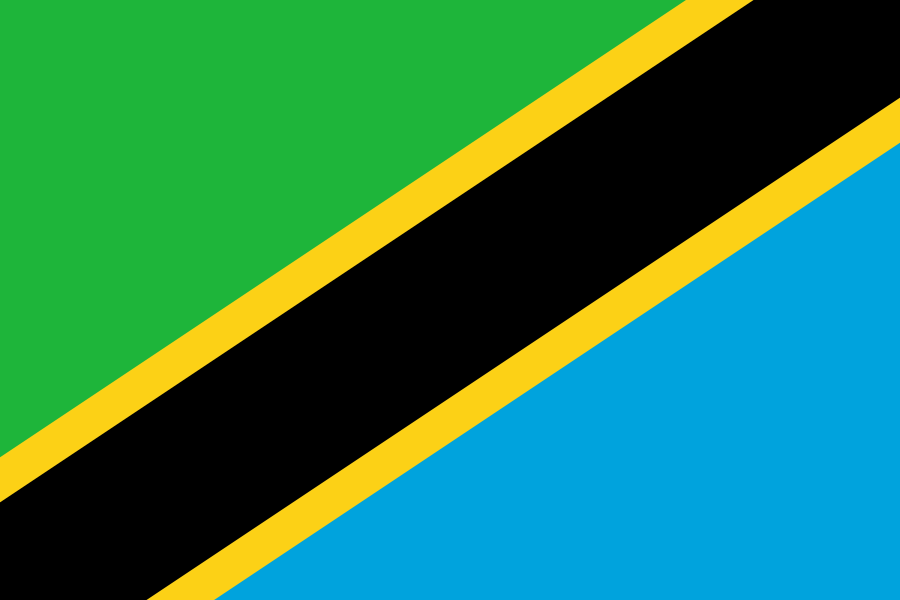
 United Republic of Tanzania
United Republic of Tanzania as a State Party to the World Heritage Convention
State Party since: August 2, 1977
Status: Ratification
Mandates to the World Heritage Committee: 1985-1991, 2015-2019, 2025-2029
Total of Mandate Years: 14
Total of Mandates: 3
WHC Electoral Group: V(a) (Africa)
World Heritage Sites in United Republic of Tanzania (7)
Cultural: 3 | Natural: 3 | Mixed: 1
- Kilimanjaro National Park · Natural
- Kondoa Rock-Art Sites · Cultural
- Ngorongoro Conservation Area · Mixed
- Ruins of Kilwa Kisiwani and Ruins of Songo Mnara · Cultural
- Selous Game Reserve · Natural
- Serengeti National Park · Natural
- Stone Town of Zanzibar · Cultural
Map of World Heritage Sites
This interactive map shows the location of all UNESCO World Heritage Sites in United Republic of Tanzania.
World Heritage Inscription Timeline
Tentative World Heritage Sites (7)
- Geometric rock art in Lake Victoria Region of Kenya, Tanzania, and Uganda · submitted: February 28, 2024
- Tendaguru Paleontological Site (TPS) · submitted: April 29, 2022
- The Central Slave and Ivory Trade Route · submitted: February 20, 2006
- Eastern Arc Mountains Forests of Tanzania · submitted: January 10, 2006
- Oldonyo Murwak · submitted: May 27, 1997
- Gombe National Park · submitted: May 27, 1997
- Jozani - Chwaka Bay Conservation Area (#) · submitted: May 27, 1997
Country Profile United Republic of Tanzania
Official Name: United Republic of Tanzania
Continent: Africa
Subregion: Eastern Africa
UNESCO Region: Africa
Capital: Dodoma
Population (2024): 68,560,157
Land Area: 885,800 km²
Currency: Tanzanian shilling (TZS)
About States Parties
States Parties are countries that have joined the World Heritage Convention. They commit to identifying, nominating, and protecting properties of outstanding cultural or natural value on their territory. States Parties are also expected to monitor and report on the condition of inscribed sites.