World Heritage Identification Number: 199
World Heritage since: 1982
Category: Natural Heritage
WHE Type: Protected Areas & National Parks
Transboundary Heritage: No
Endangered Heritage: Yes
Country: 🇹🇿 United Republic of Tanzania
Continent: Africa
UNESCO World Region: Africa
Map
The Selous Game Reserve: A Haven for African Biodiversity
The Selous Game Reserve, now officially known as the Nyerere National Park, is a sprawling expanse of pristine wilderness located in southern Tanzania, East Africa. Established in 1922, it was designated a UNESCO World Heritage Site in 1982 due to its exceptional biodiversity and extensive, untouched natural landscapes. Covering an area of approximately 50,000 square kilometers, the park serves as a vital refuge for countless African wildlife species, making it one of the largest protected areas in Africa.
More to come…UNESCO Description of the World Heritage Site
Large numbers of elephants, black rhinoceroses, cheetahs, giraffes, hippopotamuses and crocodiles live in this immense sanctuary, which measures 50,000 km2 and is relatively undisturbed by human impact. The park has a variety of vegetation zones, ranging from dense thickets to open wooded grasslands.
UNESCO Justification of the World Heritage Site
Criterion (ix): The Selous Game Reserve is one of the largest remaining wilderness areas in Africa, with relatively undisturbed ecological and biological processes, including a diverse range of wildlife with significant predator/prey relationships. The property contains a great diversity of vegetation types, including rocky acacia-clad hills, gallery and ground water forests, swamps and lowland rain forest. The dominant vegetation of the reserve is deciduous Miombo woodlands and the property constitutes a globally important example of this vegetation type. Because of this fire-climax vegetation, soils are subject to erosion when there are heavy rains. The result is a network of normally dry rivers of sand that become raging torrents during the rains; these sand rivers are one of the most unique features of the Selous landscape. Large parts of the wooded grasslands of the northern Selous are seasonally flooded by the rising water of the Rufiji River, creating a very dynamic ecosystem.
Criterion (x): The reserve has a higher density and diversity of species than any other Miombo woodland area: more than 2,100 plants have been recorded and more are thought to exist in the remote forests in the south. Similarly, the property protects an impressive large mammal fauna; it contains globally significant populations of African elephant (Loxodontha africana) (106,300), black rhinoceros (Diceros bicornis) (2,135) and wild hunting dog (Lycaon pictus). It also includes one of the world's largest known populations of hippopotamus (Hippopotamus amphibius) (18,200) and buffalo (Syncerus caffer) (204,015). There are also important populations of ungulates including sable antelope (Hippotragus niger) (7000), Lichtenstein's hartebeest (Alcelaphus lichtensteinii) (52,150), greater kudu (Tragelaphus strepsiceros), eland (Taurotragus oryx) and Nyassa wildebeest (Connochaetes albojubatus) (80,815). In addition, there is also a large number of Nile crocodile (Crocodilus niloticus) and 350 species of birds, including the endemic Udzungwa forest partridge (Xenoperdix udzungwensis) and the rufous winged sunbird (Nectarinia rufipennis). Because of this high density and diversity of species, the Selous Game Reserve is a natural habitat of outstanding importance for in-situ conservation of biological diversity.
Encyclopedia Record: Selous Game Reserve
The Selous Game Reserve, now renamed as Nyerere National Park (in-part), is a protected nature reserve and wilderness area in southern Tanzania, East Africa. It covers a total area of 50,000 km2 (19,000 sq mi), with additional buffer zones, as well. It was designated a UNESCO World Heritage Site in 1982, owing to its high levels of biodiversity and vast, undisturbed natural landscapes, such as the grasslands and the miombo woodlands habitat. Among the numerous species within the park are some of the continent's largest and most iconic, such as the bush elephant, black rhinoceros, hippopotamus, lion, leopard, spotted hyena, painted dog, Cape buffalo, Masai giraffe, plains zebra, white-bearded gnu and the giant Nile crocodile. Due to the fragility and sensitivity of the many species and ecosystems within the park, human habitation is not permitted within its bounds, and all persons entering and exiting are tallied and tracked by the Wildlife Division of the Tanzanian Ministry of Natural Resources and Tourism.Additional Site Details
Area: 5,120,000 hectares
Number of Components: 1
(x) — Contains most important habitats for biodiversity
Coordinates: -9 , 37.4
IUCN World Heritage Outlook
The 2025 Conservation Outlook on Selous Game Reserve reports the following assessment:
Source: International Union for Conservation of Nature (IUCN) · View assessment
Image
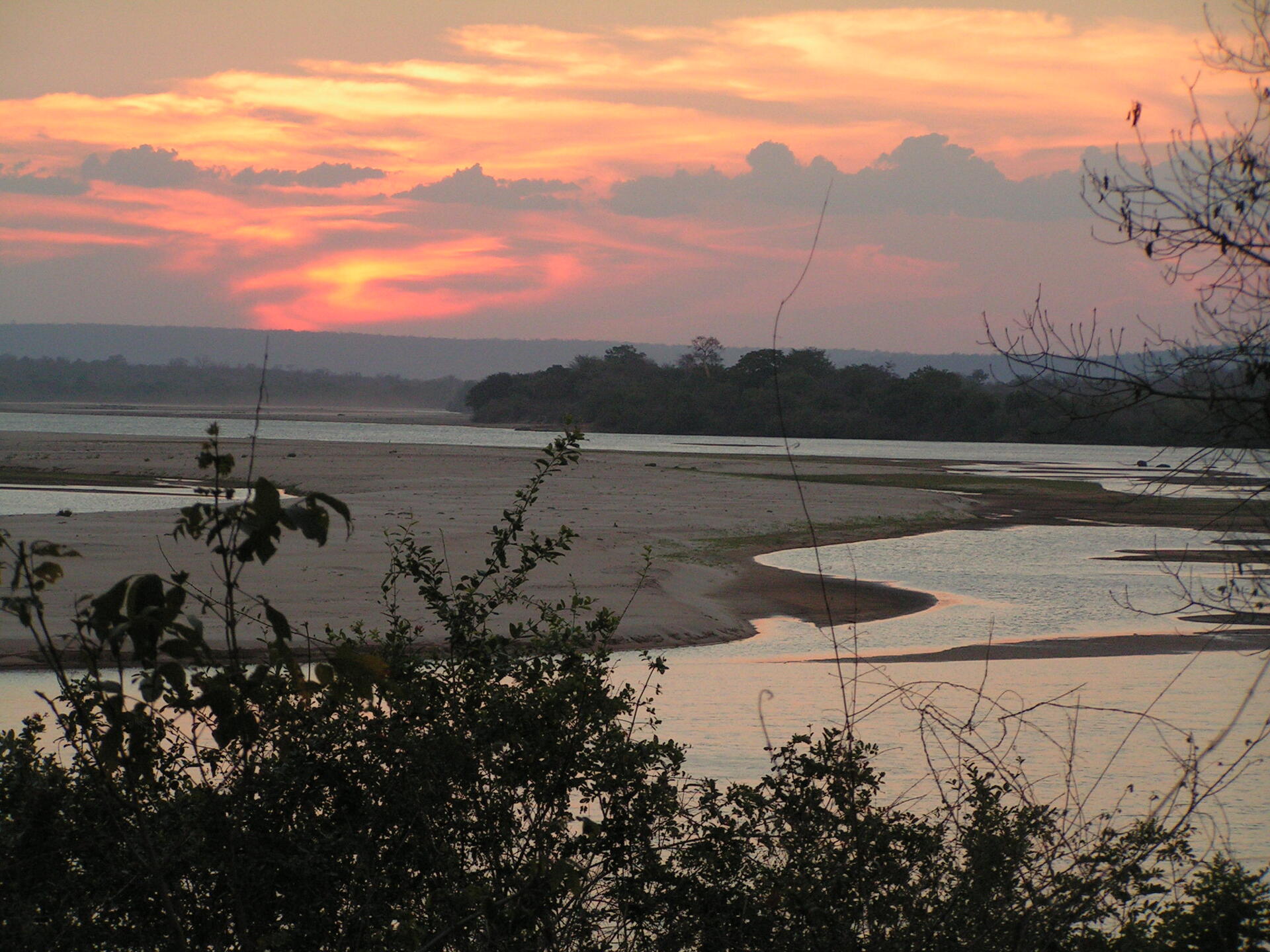
© Panii at German Wikipedia, CC BY-SA 3.0 Resized from original. (This derivative is under the same CC BY-SA license.)
World Heritage Research
Discover scientific research and academic studies that deepen our understanding of Selous Game Reserve from its history and significance to its conservation, management, and contemporary challenges.
-
Remote Sensing Applications in Miombo and the Coastal Mosaic Forests of Tanzania: Ecological Conditions and Anthropogenic Disturbances in the Selous-Niassa Wildlife Corridor, Tanzania
A critical analysis of the Selous-Niassa Wildlife Corridor reveals stable vegetation conditions from 2001 to 2012, followed by improvements from 2013 to 2020, despite fluctuating rainfall and fire incidences. Remote sensing technology was pivotal in monitoring these changes, providing non-intrusive data collection across vast, inaccessible areas. The study underscores the importance of conservation strategies that prioritize maintaining ecological connectivity while addressing human-wildlife conflicts and regulating land use practices to safeguard the corridor's integrity. This research offers actionable insights for balancing conservation goals with community well-being in the Ruvuma landscape.
Kija, H., Marealle, W., John, B., Lowassa, A., Naftali, B., Mwita, M., Mangewa, L., Katondo, R., Kashindye, A., Ikanda, D., Harris, R., & Nzunda, E. F. (2026). Remote Sensing Applications in Miombo and the Coastal Mosaic Forests of Tanzania: Ecological Conditions and Anthropogenic Disturbances in the Selous-Niassa Wildlife Corridor, Tanzania. Biodiversity Hotspot of the Coastal Forests of Eastern Africa, 265–292. https://doi.org/10.1201/9781998511099-14
View Publication Record | Read Publication -
Stepping into colonial footsteps – selling wilderness in the Selous Game Reserve, Tanzania
A critical analysis of trophy hunting tourism in the Selous Game Reserve, Tanzania, reveals that advertising by six major agencies perpetuates colonial imaginaries. These narratives depict Africa as uninhabited wilderness, reinforcing racialized, gendered, and class-based hierarchies while erasing local environmental history and community realities. The study finds that such representations sustain colonial power dynamics, framing African landscapes as wild nature in need of Western intervention and evoking fantasies of a colonial lifestyle among tourists. This research underscores the urgent need to deconstruct these narratives in wildlife tourism to foster more equitable, post/decolonial perspectives.
von Kocemba, M., Lenz, R., & Neuburger, M. (2026). Stepping into colonial footsteps – selling wilderness in the Selous Game Reserve, Tanzania. Current Issues in Tourism, 1–15. https://doi.org/10.1080/13683500.2026.2720223
View Publication Record | Read Publication -
Spatially explicit camera trap‐based lion monitoring in Tanzania's Selous–Nyerere landscape
Lion population densities in Tanzania's Selous–Nyerere landscape vary significantly, ranging from as low as 0.33 lions per 100 km² in the dry eastern Miguruwe sector of Selous Game Reserve to a high of 6.27 individuals per 100 km² in the prey-rich lakes area of Matambwe sector within Nyerere National Park. This variation is primarily driven by prey availability, which is closely tied to miombo woodland productivity. However, anthropogenic pressures, particularly near boundaries, appear to be negatively impacting lion densities. The study employed spatially explicit capture-recapture (SECR) modeling using camera trap data from seven sites across the landscape, demonstrating the effectiveness of this method for monitoring lion populations in remote areas. This approach not only provides insights into lion population dynamics but also offers a foundation for sustainable conservation strategies and evidence-based management decisions.
Searle, C. E., Strampelli, P., Parsais, S. N., Haule, L., Olesyapa, K., Salum, N. D., Hape, G., Elisa, M., Mathayo, D., Ikanda, D., Mtoka, S., Lobora, A. L., Oriol‐Cotterill, A., & Dickman, A. J. (2025). Spatially explicit camera trap‐based lion monitoring in Tanzania’s Selous–Nyerere landscape. Journal of Zoology, 326(3), 256–267. Portico. https://doi.org/10.1111/jzo.70019
View Publication Record | Read Publication -
African wild dog population status in the Selous-Nyerere landscape, southern Tanzania: Insights from camera trap surveys
A critical update on the status of African wild dogs (Lycaon pictus) in the Selous-Nyerere landscape, southern Tanzania, reveals one of Africa's most important remaining populations. Using camera trap surveys across 4,674 km² from 2020 to 2022, researchers identified 222 wild dogs and estimated a population density of 2.14 ± 0.45 adult and yearling individuals per 100 km² in Selous Game Reserve (GR). This study highlights the potential of camera traps for monitoring endangered carnivores but also notes limitations for this species. While not directly addressing mortality, it underscores the need for long-term conservation efforts to protect this vital stronghold against identified threats.
Parsais, S. N., Searle, C. E., Strampelli, P., Moyo, F., Giliba, R. A., Haule, L., Olesyapa, K. K., Salum, N. D., Hape, G., Elisa, M., Lobora, A. L., Cotterill, A., Doody, K., & Dickman, A. J. (2025). African wild dog population status in the Selous-Nyerere landscape, southern Tanzania: Insights from camera trap surveys. Global Ecology and Conservation, 60, e03621. https://doi.org/10.1016/j.gecco.2025.e03621
View Publication Record | Read Publication -
Do Wildlife Management Areas Help to Mitigate Negative Human-Wildlife Interactions? A Case of Eastern Bufferzone of Selous Game Reserve, Tanzania
Wildlife Management Areas (WMAs) in the eastern buffer zone of Tanzania's Selous Game Reserve, while successful in reducing illegal wildlife offtake and habitat destruction, paradoxically increased negative human-wildlife interactions. Following WMA establishment, crop damage surged by 28.6%, livestock predation by 40.6%, and human attacks by 79.2%. The study, applying Citizen Science Theory (CST), analyzed data from 240 households, revealing that while WMAs expanded wildlife habitats and boosted populations, they also heightened conflicts with local communities. Annual crop damage averaged 7.2±0.1 acres near WMAs, compared to 0.6±0.1 acres farther away, with lions, leopards, hyenas, crocodiles, elephants, buffalo, and hippopotamuses identified as primary culprits. The research underscores the need for enhanced wildlife control measures, such as local monitoring, deterrents, public education, and predator-proof enclosures, to mitigate these interactions effectively.
Gayo, L., & Ngonyoka, A. (2025). Do Wildlife Management Areas Help to Mitigate Negative Human-Wildlife Interactions? A Case of Eastern Bufferzone of Selous Game Reserve, Tanzania. Tropical Conservation Science, 18. https://doi.org/10.1177/19400829251340581
View Publication Record | Read Publication -
Is Convivial Conservation A Solution for Human-Wildlife Interactions Around Protected Areas?
Convivial conservation emerges as a promising framework to address human-wildlife conflicts around protected areas, offering a more equitable and sustainable approach compared to traditional methods. This study highlights that current strategies often distort livelihoods, increase conflicts, and destabilize local resource institutions without adequate compensation, exacerbating poverty and illegal activities. By integrating political ecology perspectives with convivial conservation principles—focusing on equity, organizational transformation, and environmental justice—the research proposes innovative solutions for balancing biodiversity protection with human development. The analysis is grounded in empirical data from the Selous Game Reserve in Tanzania, gathered through interviews, surveys, group discussions, and direct observations, providing a robust foundation for policy recommendations.
Wairimu John, R. (2025). Is Convivial Conservation A Solution for Human-Wildlife Interactions Around Protected Areas? Journal of the Geographical Association of Tanzania, 45(1), 44–67. https://doi.org/10.56279/jgat.v45i1.296
View Publication Record | Read Publication -
Challenges of Tourism Business Partnerships in Wildlife Management Areas around Selous Game Reserve in Tanzania
Tourism business partnerships in Tanzania's Wildlife Management Areas (WMAs), including those around the Selous Game Reserve, often exclude local communities from benefiting from wildlife resources, leading to significant challenges. A study involving 133 household heads and 74 key informants revealed that current structures undermine community participation, despite tourism's potential for mutual benefit. The research highlights the need for policy integration of community-based business strategies to foster sustainable tourism development while ensuring equitable access to benefits. This approach could mitigate stakeholder conflicts and enhance wildlife management effectiveness in Tanzanian WMAs.
John, R. W. (2025). Challenges of Tourism Business Partnerships in Wildlife Management Areas around Selous Game Reserve in Tanzania. Huria Journal of the Open University of Tanzania, 30(1), 27–51. https://doi.org/10.61538/huria.v30i1.1699
View Publication Record | Read Publication