World Heritage Identification Number: 1231
World Heritage since: 2008
Category: Cultural Heritage
WHE Type: Religious Sites & Sacred Architecture
Transboundary Heritage: No
Endangered Heritage: No
Country: 🇰🇪 Kenya
Continent: Africa
UNESCO World Region: Africa
Map
The Sacred Mijikenda Kaya Forests: A Testament to Cultural Tradition and Living History
The Sacred Mijikenda Kaya Forests, inscribed as a UNESCO World Heritage Site in 2008, stand as a testament to the rich cultural heritage and living traditions of the Mijikenda people along the Kenyan coast. Spanning over 200 kilometers, this collection of 10 distinct forest sites houses the remnants of more than 60 fortified villages, or kayas, that date back to the 16th century.
More to come…UNESCO Description of the World Heritage Site
The Mijikenda Kaya Forests consist of 10 separate forest sites spread over some 200 km along the coast containing the remains of numerous fortified villages, known as kayas, of the Mijikenda people. The kayas, created as of the 16th century but abandoned by the 1940s, are now regarded as the abodes of ancestors and are revered as sacred sites and, as such, are maintained as by councils of elders. The site is inscribed as bearing unique testimony to a cultural tradition and for its direct link to a living tradition.
UNESCO Justification of the World Heritage Site
Criterion (iii): The Kayas provide focal points for Mijikenda religious beliefs and practices, are regarded as the ancestral homes of the different Mijikenda peoples, and are held to be sacred places. As such they have metonymic significance to Mijikenda and are a fundamental source of Mijikenda’s sense of ‘being-in-the-world’ and of place within the cultural landscape of contemporary Kenya. They are seen as a defining characteristic of Mijikenda identity.
Criterion (v): Since their abandonment as preferred places of settlement, Kayas have been transferred from the domestic aspect of the Mijikenda landscape to its spiritual sphere. As part of this process, certain restrictions were placed on access and the utilisation of natural forest resources. As a direct consequence of this, the biodiversity of the Kayas and forests surrounding them has been sustained. The Kayas are under threat both externally and from within Mijikenda society through the decline of traditional knowledge and respect for practices.
Criterion (vi): The Kayas are now the repositories of spiritual beliefs of the Mijikenda and are seen as the sacred abode of their ancestors. As a collection of sites spread over a large area, they are associated with beliefs of local and national significance, and possibly regional significance as the sites extend beyond the boundaries of Kenya.
Encyclopedia Record: Kaya (Mijikenda)
A kaya is a sacred site of the Mijikenda people in the former Coast Province of Kenya. Often located within sacred forests, a kaya is considered to be an intrinsic source of ritual power and the origin of cultural identity; it is also a place of prayer for members of the Mijikenda ethnic group. The settlement, ritual centre, and fortified enclosure associated with the forest are also part of the kaya. This ecozone is thought to be the only living example of what the ecosystem was like during the early settlement period of the East African coast. In the present day, the kaya is also referred to as a traditional organizational unit of the Mijikenda. Eleven of the approximately 60 separate makaya have been grouped together and inscribed as the Sacred Mijikenda Kaya Forests, a UNESCO World Heritage Site.Additional Site Details
Area: 1,538 hectares
Number of Components: 8
(v) — Outstanding example of traditional human settlement
(vi) — Directly associated with events or living traditions
Coordinates: -3.9319444444 , 39.5961111111
Image
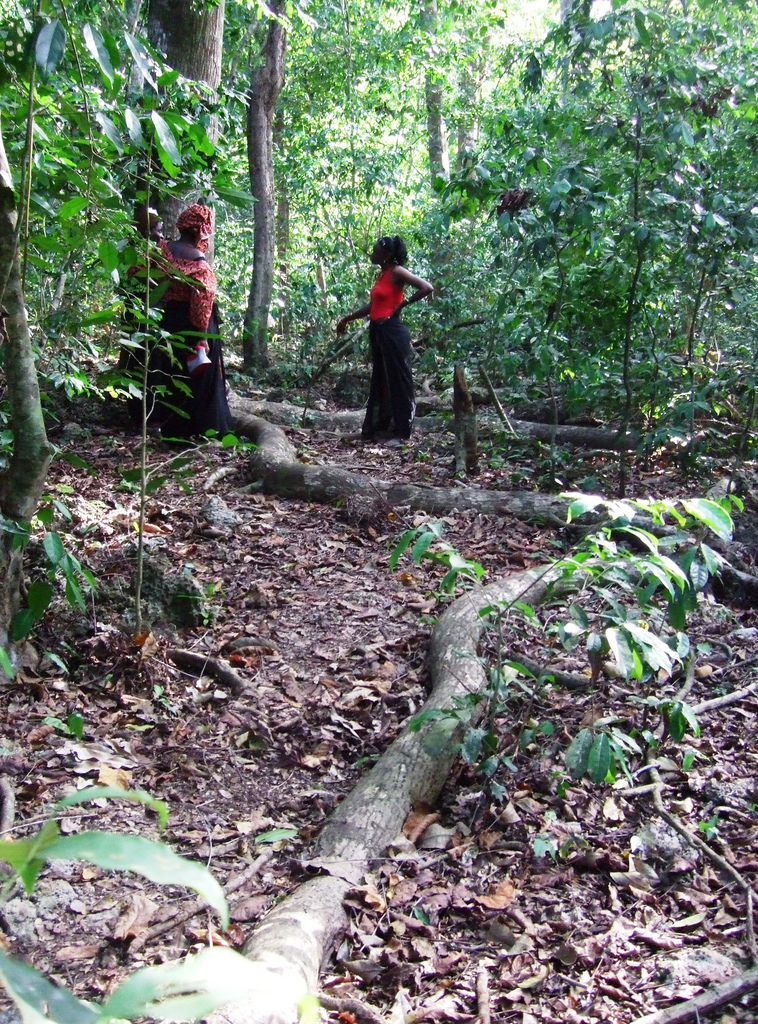
© Victor Ochieng from London, United Kingdom, CC BY-SA 2.0 Resized from original. (This derivative is under the same CC BY-SA license.)
World Heritage Research
Discover scientific research and academic studies that deepen our understanding of Sacred Mijikenda Kaya Forests from its history and significance to its conservation, management, and contemporary challenges.
-
The Mutual Influence of Culture and Music: A Study of Mijikenda Kaya Songs and Society in Kenya
Mijikenda kaya songs serve as a vital link between cultural identity and social cohesion, reinforcing spiritual beliefs, moral values, and communal organization while also adapting to the pressures of urbanization, modernization, and globalization. This study reveals that these songs act as both a preservative of indigenous knowledge and a dynamic element in Mijikenda society, influencing—and being influenced by—cultural transformation. Using ethnomusicological and sociocultural approaches, researchers analyzed oral histories, ritual practices, and contemporary reinterpretations to demonstrate the reciprocal relationship between music and culture. The findings underscore the importance of safeguarding these musical traditions to maintain social peace and continuity in modern Kenyan society.
Mutuku, J. M. (2026). The Mutual Influence of Culture and Music: A Study of Mijikenda Kaya Songs and Society in Kenya. Bulletin of the Transilvania University of Braşov. Series VIII: Performing Arts, 227–232. https://doi.org/10.31926/but.pa.2025.18.67.3.17
View Publication Record | Read Publication -
Mining sacred nature: Extractivism and constrained agency in Kenya's sacred forests
Structural power, manifested through land dispossession and extractive practices by mining companies and the state, significantly constrains the agency of local communities in Kenya's Sacred Mijikenda Kaya Forests. This constraint negatively impacts collective action norms, resource access, and the capacity to resist extractivism and state interference. The study identifies six interconnected domains—historical, social, cultural, economic, political, and psychological—that shape these constraints, ultimately influencing community motivation and ability to achieve desirable outcomes. Using a case study approach, the research highlights the complex interplay between culture, society, and nature in the face of extractive pressures.
Kioko, E. M., Nzau, J. M., & Wafula, C. B. (2026). Mining sacred nature: Extractivism and constrained agency in Kenya’s sacred forests. The Extractive Industries and Society, 27, 101948. https://doi.org/10.1016/j.exis.2026.101948
View Publication Record | Read Publication -
Indigenous Knowledge in the Conservation of African Heritage Sites: Case Study of the Sacred Mijikenda Kaya Forests
Indigenous knowledge systems, including taboos and adaptive ecological practices, continue to play a vital role in preserving the biodiversity of Kenya's Sacred Mijikenda Kaya Forests, even as they evolve with social change. While younger generations are shifting away from traditional spiritual interpretations, there is a growing emphasis on ecological values. The study highlights emerging hybrid approaches that integrate indigenous knowledge with modern conservation practices, often supported by NGOs and government partnerships. This dynamic adaptation underscores the evolving nature of authenticity in indigenous knowledge, which remains both culturally meaningful and ecologically relevant. The findings suggest that combining indigenous and scientific knowledge offers a sustainable model for heritage management, positioning the Mijikenda Kayas as a critical case study for global biocultural preservation efforts.
Irungu, R. W., & Twahir, F. (2026). Indigenous Knowledge in the Conservation of African Heritage Sites: Case Study of the Sacred Mijikenda Kaya Forests. Heritage Authenticity in Theory and Practice in Africa, 205–218. https://doi.org/10.1007/978-981-92-2619-1_15
View Publication Record | Read Publication -
Land use and land cover changes in the Mijikenda Kaya sacred forests of Coastal Kenya: impacts on culture and conservation of UNESCO World Heritage Sites
Over the past three decades, Kenya's sacred Mijikenda Kaya forests—part of UNESCO World Heritage Sites—have experienced dramatic ecological and cultural decline. A study reveals that forest cover in Kaya Kauma and Kaya Rabai has shrunk by 46.0 ha (10.9%) and 895.7 ha (134.8%), respectively, while agricultural land, settlements, and mining expanded significantly. Key drivers include population growth, illegal logging, and the erosion of traditional cultural practices, which have privatized sacred ritual areas. The research combines remote sensing data with interviews and field observations to highlight the urgent need for integrated conservation strategies that address both ecological degradation and the loss of indigenous knowledge.
Fungomeli, M., Mensuro, G., & Kioko, E. (2025). Land use and land cover changes in the Mijikenda Kaya sacred forests of Coastal Kenya: impacts on culture and conservation of UNESCO World Heritage Sites. https://doi.org/10.21203/rs.3.rs-6119007/v1
View Publication Record | Read Publication -
Individual knowledge acquisition by teachers to promote the ecological value of sacred Kaya forests in southern Kenya
Environmental education remains underprioritized in Kenyan schools, with only one-third of teachers incorporating such topics into their lessons. A study found that teachers who had received environmental education themselves were more likely to integrate it into their teaching. However, there was a notable lack of emphasis on the conservation of Kaya forests for their spiritual heritage. Only those teachers with a personal connection to the local culture and Kaya forests recognized their high biological and cultural significance, underscoring the importance of integrating culturally relevant content in environmental education. The study recommends increasing the priority of environmental education in school curricula to foster awareness and preserve both biological and cultural diversity.
Habel, J., Nowotny, L., & Ulrich, W. (2025). Individual knowledge acquisition by teachers to promote the ecological value of sacred Kaya forests in southern Kenya. Ecology and Society, 30(2). https://doi.org/10.5751/es-16005-300227
View Publication Record | Read Publication -
Enhancing Ecological Connectivity in a Kaya Forest Landscape Through Biocultural Heritage Territory (BCHT) Management Model
A biocultural heritage territory (BCHT) management model effectively enhances ecological connectivity and biodiversity conservation in sacred Kaya forests of Kenya. This approach, led by Indigenous Mijikenda communities, integrates traditional knowledge, cultural values, and agrobiodiversity practices to protect over 196 plant species, including six endangered endemics, while supporting local livelihoods. Socioeconomic surveys revealed that most households earn under $200 monthly, with higher recognition of cultural values among the elderly. The model promotes women's and youth involvement in decision-making at 30% and 20%, respectively, and establishes biocultural enterprises and communal funds for conservation. Initiatives like indigenous tree planting and traditional crop diversification further bolster agrobiodiversity and food security, demonstrating a sustainable path for managing biodiversity-rich landscapes.
Wekesa, C., Ndalilo, L., Swiderska, K., & Rutto, G. (2025). Enhancing Ecological Connectivity in a Kaya Forest Landscape Through Biocultural Heritage Territory (BCHT) Management Model. Ensuring Ecological Connectivity in Socio-Ecological Production Landscapes and Seascapes (SEPLS), 31–47. https://doi.org/10.1007/978-981-95-1474-8_3
View Publication Record | Read Publication -
Resilience Strategies during the Climate Crisis: Reading the “Book of Nature” with Kauma Traditionalism Religion
Indigenous Kauma traditionalism offers a resilient framework for climate adaptation through its sacred relationship with nature, known as the 'Book of Nature.' This study reveals that Kauma cosmology, rooted in African eco-spirituality, provides sustainable environmental stewardship practices that have historically mitigated climate impacts like famine and flooding. By analyzing oral traditions, proverbs, and songs, researchers reconstruct ecological insights embedded in indigenous spirituality, advocating for their reintegration into modern climate solutions. The findings highlight the potential of indigenous knowledge systems to enhance both theological and ecological scholarship, emphasizing the need to balance 'Two Books'—nature and scripture—for holistic resilience strategies.
T. Kabugi, P., Kerata Chacha, B., & Mwangi, J. (2025). Resilience Strategies during the Climate Crisis: Reading the “Book of Nature” with Kauma Traditionalism Religion. African Journal of Religion, Ethics and Theology, 1(2). https://doi.org/10.63811/n4bmt830
View Publication Record | Read Publication