World Heritage Identification Number: 403
World Heritage since: 1987
Category: Natural Heritage
WHE Type: Protected Areas & National Parks
Transboundary Heritage: No
Endangered Heritage: No
Country: 🇹🇿 United Republic of Tanzania
Continent: Africa
UNESCO World Region: Africa
Map
Kilimanjaro National Park: A Unique Blend of Biodiversity and Cultural Significance
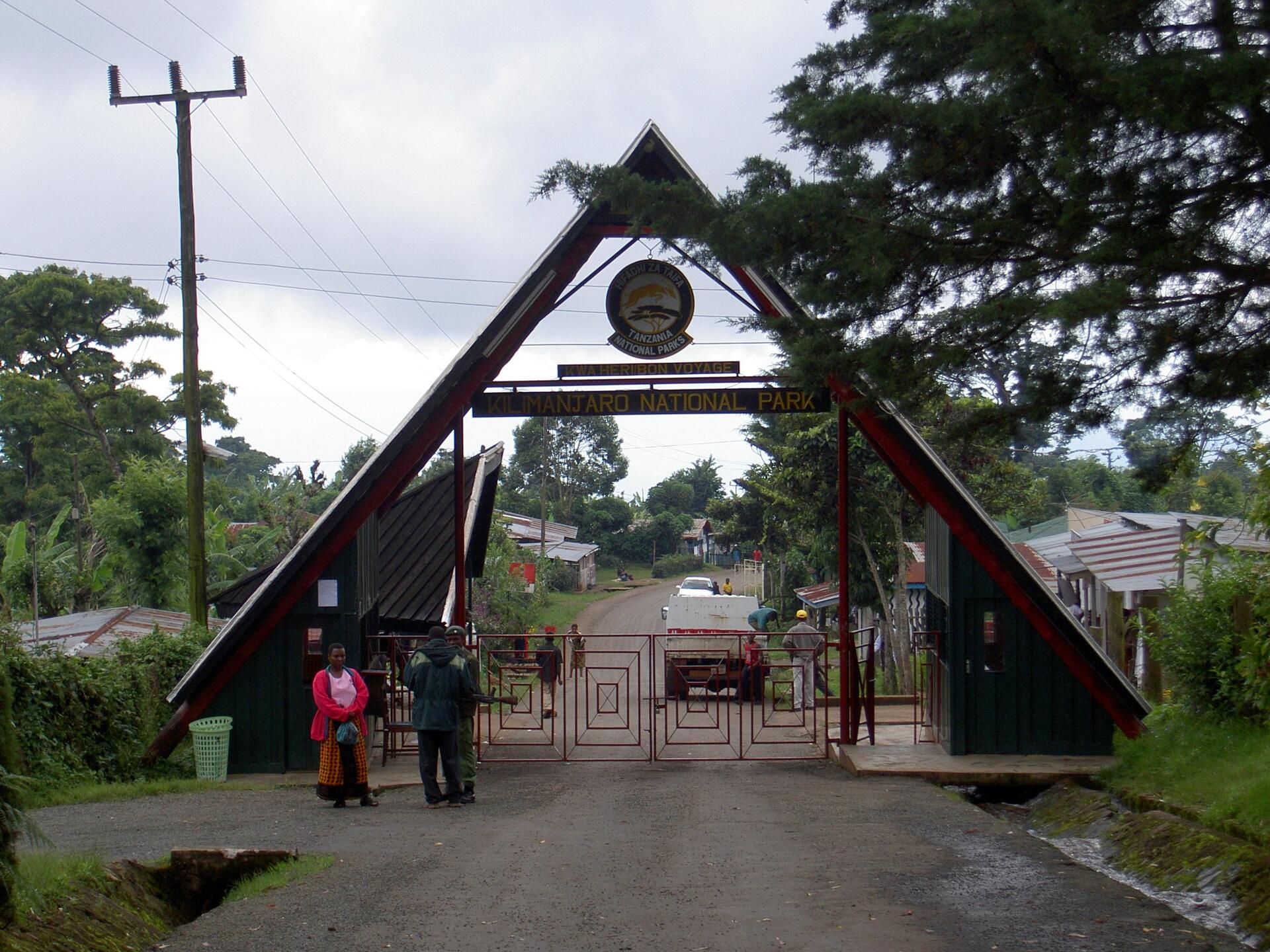
Kilimanjaro National Park, located in the Kilimanjaro Region of Tanzania, is a testament to the rich biodiversity and cultural significance that Africa has to offer. Established in 1973, this national park spans an area of approximately 1,688 square kilometers, making it a significant conservation area within the East African landscape.
The park is most notably known for being home to Mount Kilimanjaro, the highest peak in Africa, standing at a towering 5,895 meters above sea level. Its snow-capped summit, which can be seen from miles away, serves as a symbol of Africa's diverse topography and geological history. The mountain itself is a stratovolcano composed of three volcanic cones, with its most recent major eruptive activity occurring approximately 150,000 to 200,000 years ago
Kilimanjaro National Park is not just a haven for mountaineers but also for a variety of wildlife species. The park's lower slopes are covered in montane forests, providing habitat for numerous mammals, including the African elephant, leopard, buffalo, and various primate species such as the blue monkey and the black-and-white colobus monkey. These forests also serve as important migratory corridors for various bird species, making the park a popular destination for ornithologists.
As one ascends the mountain, the vegetation changes dramatically, transitioning from dense forests to moorlands and eventually reaching the barren alpine desert at the summit. Each of these ecosystems supports unique flora and fauna, contributing to the park's rich biodiversity. However, its primary inscription reason with UNESCO was its status as a superlative natural phenomenon due to its height, form, and isolation.
Beyond its natural beauty, Kilimanjaro National Park holds significant cultural value. The Chagga people, who inhabit the foothills of the mountain, have a deep connection with Kilimanjaro. They rely on the mountain for water, agriculture, and spiritual practices. The park's management recognizes the importance of these cultural ties and works to balance conservation efforts with the needs of local communities.
In recognition of its global importance, Kilimanjaro National Park was designated a UNESCO World Heritage Site in 1987. In 2013, it was also widely recognized as one of the Seven Natural Wonders of Africa, an informal designation highlighting its exceptional natural significance. Despite these accolades, the park faces ongoing challenges, including climate change, human population growth, and illegal poaching. However, ongoing conservation efforts aim to preserve this unique blend of biodiversity and cultural significance for future generations to enjoy.
UNESCO Description of the World Heritage Site
At 5,895 m, Kilimanjaro is the highest point in Africa. This volcanic massif stands in splendid isolation above the surrounding plains, with its snowy peak looming over the savannah. The mountain is encircled by mountain forest. Numerous mammals, many of them endangered species, live in the park.
UNESCO Justification of the World Heritage Site
Criterion vii: Mount Kilimanjaro is one of the largest volcanoes in the world. It has three main volcanic peaks, Kibo, Mawenzi, and Shira. With its snow-capped peak and glaciers, it is the highest mountain in Africa. The mountain has five main vegetation zones from the lowest to the highest point: Lower slopes, montane forest, heath and moorland, alpine desert and summit. The whole mountain including the montane forest belt is very rich in species, in particular mammals, many of them endangered species. For this combination of features but mostly its height, its physical form and snow cap and its isolation above the surrounding plains, Mount Kilimanjaro is considered an outstanding example of a superlative natural phenomenon.
Encyclopedia Record: Kilimanjaro National Park
Kilimanjaro National Park is a national park of Tanzania situated about 300 kilometres (190 mi) south of the equator in the Kilimanjaro Region, Tanzania, near the region of Moshi. The park includes the whole of Mount Kilimanjaro above the tree line and the surrounding montane forest belt above 1,820 metres (5,970 ft). It covers an area of 1,688 square kilometres (652 sq mi), 2°50'–3°10'S 37°10'–37°40'E. The park is administered by the Tanzania National Parks Authority (TANAPA). It was established as a national park in 1973. It was declared a World Heritage Site by UNESCO in 1987 and one of the Seven Natural Wonders of Africa in 2013.Additional Site Details
Area: 75,575 hectares
Number of Components: 1
Coordinates: -3.06667 , 37.36667
IUCN World Heritage Outlook
The 2025 Conservation Outlook on Kilimanjaro National Park reports the following assessment:
Source: International Union for Conservation of Nature (IUCN) · View assessment
World Heritage Research
Discover scientific research and academic studies that deepen our understanding of Kilimanjaro National Park from its history and significance to its conservation, management, and contemporary challenges.
-
Interplays between nature’s contributions to people, values of nature, and emotions expressed by smallholder farmers in Kilimanjaro, Tanzania: insights for inclusive conservation
Smallholder farmers' relationships with nature in Kilimanjaro National Park reveal three distinct emotional, value-based associations that challenge traditional conservation paradigms. The study identifies a link between unpleasant emotions and material/regulating benefits below the park's border, contrasting with pleasant emotions tied to non-material contributions and relational values (e.g., sense of place) in homegardens. A third pattern connects instrumental and relational values with social cohesion across all farmers. These findings underscore the need for inclusive conservation strategies that recognize diverse human-nature interactions, reduce access restrictions, and expand benefit-sharing mechanisms beyond material gains.
Sanya, J., Pearson, J., Mwampamba, T. H., Sesabo, J. K., & Martín-López, B. (2026). Interplays between nature’s contributions to people, values of nature, and emotions expressed by smallholder farmers in Kilimanjaro, Tanzania: insights for inclusive conservation. Sustainability Science, 21(3), 1059–1082. https://doi.org/10.1007/s11625-025-01776-7
View Publication Record | Read Publication -
Arcopotamonautes johnstoni
A comprehensive rediagnosis of the freshwater crab species Arcopotamonautes johnstoni, endemic to Kilimanjaro National Park and surrounding regions, reveals distinct morphological traits that differentiate it from previously synonymized taxa. The study, based on extensive examination of type material and specimens from Tanzania and Kenya, clarifies its taxonomic status by analyzing carapace structure, sternal features, chelipeds, and male gonopods. A. johnstoni is characterized by a sharp-edged postfrontal crest, smooth branchiostegite regions, and unique gonopod morphology, including a U-shaped dorsal membrane in the distal end of G1 SA. The species exhibits a wide adult size range (69.0–84.0 mm carapace width) and occupies year-round streams and rivers in high-altitude forested areas, though its area of occupancy is smaller due to seasonal water availability in savanna regions. While currently listed as Least Concern on the IUCN Red List, long-term habitat threats from human population growth pose potential risks. This research resolves taxonomic ambiguities and provides critical baseline data for future conservation efforts.
Cumberlidge, N., Daniels, S. R., Kipyegon, J. K., & Galaszewski, T. (2026). Arcopotamonautes johnstoni. Zenodo. https://doi.org/10.5281/ZENODO.19487688
View Publication Record | Read Publication -
Understanding the multidimensionality of the Kilimanjaro social-ecological system: insights for building desirable futures
This interdisciplinary study reveals that enhancing access to Kilimanjaro National Park for local actors and integrating traditional agroforestry can significantly increase multifunctionality, defined as the balance between Nature's Contributions to People (NCP) supply and demand. The research demonstrates that desirable futures for the Kilimanjaro social-ecological system require local agency and polycentric governance, combining national commitments like land-use planning with local collective actions such as restoration programs. By integrating multiple forms of knowledge—scientific, local, and experiential—the study provides a quantitative, holistic approach to addressing trade-offs between human needs and ecosystem functions, offering actionable insights for sustainability in complex social-ecological systems.
Kinabo, N. R. Understanding the multidimensionality of the Kilimanjaro social-ecological system: insights for building desirable futures. https://doi.org/10.21248/gups.97930
View Publication Record | Read Publication -
Community Perceptions on Conservation, Livelihood Vulnerability and Quality of Life Around Tanzania’s Kilimanjaro National Park
A study on Kilimanjaro National Park reveals that improved quality of life correlates with stronger conservation attitudes, particularly among highly vulnerable communities. The research found that as livelihood vulnerability decreases, the relationship between quality of life and conservation support weakens. This suggests that targeted development efforts could enhance both conservation outcomes and community well-being. The findings were derived from a questionnaire survey across four villages bordering the park, analyzed using partial least square structural equation modeling.
Lyakurwa, G. J., Chepkwony, M. C., & Sabuhoro, E. (2025). Community Perceptions on Conservation, Livelihood Vulnerability and Quality of Life Around Tanzania’s Kilimanjaro National Park. Land, 14(2), 334. https://doi.org/10.3390/land14020334
View Publication Record | Read Publication -
Soil Seed Bank Composition and Diversity in Areas Invaded with Invasive Alien Species in the Lower Montane Forest of Kilimanjaro National Park, Tanzania
A study on Kilimanjaro National Park reveals that soil seed banks in lower montane forests invaded by alien species are rich in non-woody and a few woody species, with the highest density found in areas dominated by Pinus patula. The research, comparing five sites—four invaded by distinct invasive species (Acacia mearnsii, Cupressus lusitanica, Eucalyptus spp., and P. patula) and one natural forest—used a seedling emergence method to assess seed density across three soil depth classes. Findings indicate that topsoil (1–5 cm) harbors significantly more seeds than deeper layers, while invasive species like A. mearnsii, P. patula, Grevillea robusta, and Poa annua dominate the seed bank. This suggests that forest restoration efforts must consider both persistent soil seed banks and external dispersal mechanisms alongside reforestation techniques.
Kikoti, I. A., Ndangalasi, H. J., Kayombo, C. J., & Musoma, R. M. (2025). Soil Seed Bank Composition and Diversity in Areas Invaded with Invasive Alien Species in the Lower Montane Forest of Kilimanjaro National Park, Tanzania. East African Journal of Environment and Natural Resources, 8(1), 195–218. https://doi.org/10.37284/eajenr.8.1.2873
View Publication Record | Read Publication -
Population Patterns and Environmental Determinants of Warburgia ugandensis (Sprague) in Northern Tanzania
Warburgia ugandensis, a medicinal tree native to East Africa, faces declining populations due to unsustainable harvesting and habitat degradation. A study across northern Tanzania's mountainous regions revealed that its population density varies significantly with land use and elevation, with forest reserves and higher elevations (2001–2500 m a.s.l) supporting the highest densities. Environmental factors such as temperature, soil organic carbon, pH, and nitrogen were found to be critical determinants of its distribution. Spatial mapping identified population hotspots around Mt. Kitumbeine and Mt. Kilimanjaro, emphasizing these areas as priorities for conservation. The findings underscore the need for targeted management strategies that consider both environmental parameters and land-use types.
Mollel, L. K., Munishi, L. K., & Giliba, R. A. (2025). Population Patterns and Environmental Determinants of Warburgia ugandensis (Sprague) in Northern Tanzania. African Journal of Ecology, 63(7). Portico. https://doi.org/10.1111/aje.70101
View Publication Record | Read Publication -
Broadening the Justifications for Inclusive Conservation: Values Associated With Nature's Contributions to People
A study on Kilimanjaro National Park reveals that combining the Nature's Contributions to People (NCP) and plural valuation frameworks provides deeper insights into people-nature relationships, crucial for inclusive conservation. Researchers identified five distinct clusters of NCP preferences among 623 participants—farmers, conservationists, tour guides, and tourists—each exhibiting unique intrinsic, instrumental, and relational values. This approach better captures the multidimensionality of these relationships compared to using either framework alone. The findings underscore the need for diversified, place-based conservation strategies that balance biodiversity protection with ecosystem functioning while recognizing diverse human values.
Gross, M., von Wehrden, H., Mwampamba, T. H., Sanya, J., Pearson, J., Sesabo, J. K., Riechers, M., Arbieu, U., Böhning‐Gaese, K., & Martín‐López, B. (2025). Broadening the Justifications for Inclusive Conservation: Values Associated With Nature’s Contributions to People. Conservation Letters, 18(5). Portico. https://doi.org/10.1111/conl.13129
View Publication Record | Read Publication