World Heritage Identification Number: 1535
World Heritage since: 2017
Category: Cultural Heritage
WHE Type: Religious Sites & Sacred Architecture
Transboundary Heritage: No
Endangered Heritage: No
Country: 🇯🇵 Japan
Continent: Asia
UNESCO World Region: Asia and the Pacific
Map
Exploring the Sacred Island of Okinoshima and Associated Sites in the Munakata Region
The Sacred Island of Okinoshima and Associated Sites in the Munakata Region, located approximately 60 kilometers off the western coast of Kyushu island, Japan, is an extraordinary testament to the ancient tradition of worshipping a sacred island. This site, inscribed on the UNESCO World Heritage List in 2017, offers a unique glimpse into the evolution of religious practices spanning the 4th to the 9th centuries AD.
More to come…UNESCO Description of the World Heritage Site
Located 60 km off the western coast of Kyushu island, the island of Okinoshima is an exceptional example of the tradition of worship of a sacred island. The archaeological sites that have been preserved on the island are virtually intact, and provide a chronological record of how the rituals performed there changed from the 4th to the 9th centuries AD. In these rituals, votive objects were deposited as offerings at different sites on the island. Many of them are of exquisite workmanship and had been brought from overseas, providing evidence of intense exchanges between the Japanese archipelago, the Korean Peninsula and the Asian continent. Integrated within the Grand Shrine of Munakata, the island of Okinoshima is considered sacred to this day.
UNESCO Justification of the World Heritage Site
Criterion (ii): The Sacred Island of Okinoshima exhibits important interchanges and exchanges amongst the different polities in East Asia between the 4th and the 9th centuries, which is evident from the abundant finds and objects with a variety of origins deposited at sites on the Island where rituals for safe navigation were performed. The changes, in object distribution and site organisation, attest to the changes in rituals, which in turn reflect the nature of the process of dynamic exchanges that took place in those centuries, when polities based on the Asian mainland, the Korean Peninsula and the Japanese Archipelago, were developing a sense of identity and that substantially contributed to the formation of Japanese culture.
Criterion (iii): The Sacred Island of Okinoshima is an exceptional example of the cultural tradition of worshipping a sacred island, as it has evolved and been passed down from ancient times to the present. Remarkably, archaeological sites that have been preserved on the Island are virtually intact, and provide a chronological record of how the rituals performed there changed over a period of some five hundred years, from the latter half of the 4th to the end of the 9th centuries. In these rituals, vast quantities of precious votive objects were deposited as offerings at different sites on the Island, attesting to changes in rituals. While direct offerings on Okinoshima Island ceased in the 9th century AD, the worship of the Island continued in the form of worshipping the Three Female Deities of Munakata at three distinct worship sites of Munakata Taisha – Okitsu-miya on Okinoshima, Nakatsu-miya on Oshima, and Hetsu-miya, along with “distant worship” exemplified by the open views from Oshima and the main island of Kyushu toward Okinoshima.
Encyclopedia Record: Sacred Island of Okinoshima and Associated Sites in the Munakata Region
Sacred Island of Okinoshima and Associated Sites in the Munakata Region (「神宿る島」宗像・沖ノ島と関連遺産群), officially Sacred Island of Okinoshima and Associated Sites in the Munakata Region, is a group of sites in northwest Kyūshū, Japan, that was inscribed on the UNESCO World Heritage List in 2017, under criteria ii and iii.Additional Site Details
Area: 98.93 hectares
Number of Components: 8
(iii) — Unique or exceptional testimony to a cultural tradition
Coordinates: 34.245 , 130.1055555556
Image
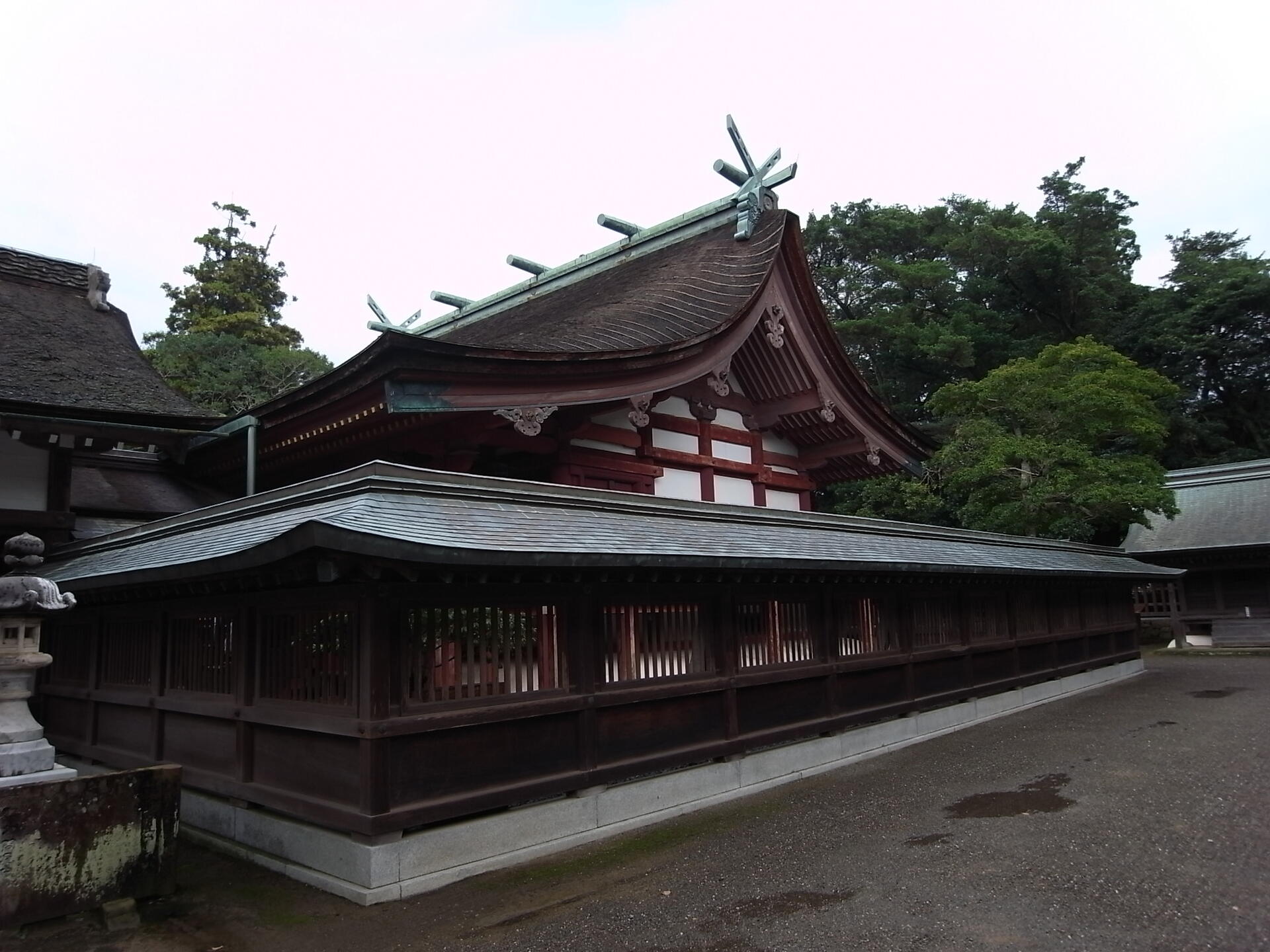
© Jerry fish tkc, CC BY-SA 3.0 Resized from original. (This derivative is under the same CC BY-SA license.)
World Heritage Research
Discover scientific research and academic studies that deepen our understanding of Sacred Island of Okinoshima and Associated Sites in the Munakata Region from its history and significance to its conservation, management, and contemporary challenges.
-
World Cultural Heritage and women’s exclusion from sacred sites in Japan
Women's exclusion from Okinoshima, a remote and uninhabited island central to Japan's cultural and religious heritage, gained international attention during its World Heritage inscription process. Despite the island's significance as part of the 'Sacred Island of Okinoshima and Associated Sites in the Munakata Region,' which was inscribed in 2017, its restrictive access policies—particularly barring women due to religious beliefs—remained a contentious issue. The study highlights how this exclusion clashed with global heritage values, prompting petitions to national and international bodies from July 2015 onward. While the island's tangible heritage, such as shrines and artifacts, has been extensively documented in Japanese scholarship, the social and ethical dimensions of its preservation received comparatively less attention until its World Heritage recognition.
DeWitt, L. E. (2020). World Cultural Heritage and women’s exclusion from sacred sites in Japan. Sacred Heritage in Japan, 65–86. https://doi.org/10.4324/9780429265976-4
View Publication Record | Read Publication -
Landform mapping of Okinoshima island and sea bed of Munakata city
A comprehensive landform mapping of Okinoshima Island and the seabed of Munakata City reveals significant geological insights, contributing to the understanding of the Sacred Island of Okinoshima and Associated Sites in the Munakata Region. The study identifies a horseshoe-shaped caldera structure formed by the set of islands, with Okinoshima rising approximately 340 meters above a flat seabed. Topographic analysis shows a shallow flat table to the west and a concave area inclining eastward. Using GIS, the research integrates ground elevation maps, slope maps, relief maps, and 3D images, alongside geospatial data from GSI and JHA, to classify landforms such as crests, steep cliffs, and talus cones. The findings highlight restricted access areas while providing valuable references for understanding the island's formative processes.
Kuroki, T. (2019). Landform mapping of Okinoshima island and sea bed of Munakata city. Abstracts of the ICA, 1, 1–2. https://doi.org/10.5194/ica-abs-1-199-2019
View Publication Record | Read Publication -
Report on the 2017 Inscription of “Sacred Island of Okinoshima and Associated Sites in the Munakata Region" as a Unesco World Heritage Site
UNESCO's 2017 inscription of the 'Sacred Island of Okinoshima and Associated Sites in the Munakata Region' as a World Heritage Site highlights the cultural and historical significance of Kyushu, Japan, and its broader maritime connections. The tiny, remote island of Okinoshima, despite its challenging accessibility, has been a locus of ritual practices for over 500 years, with four distinct forms of rituals documented. However, the reasons behind its sacredness remain unclear due to limited access and historical records. Unlike other ancient Japanese sites, Okinoshima's role in mythology and its association with the Munakata region are distinctive. A government-built harbor in 1951 facilitated military access but did not address the broader cultural and historical questions surrounding the site.
Dewitt, L. E. (2018). Report on the 2017 Inscription of “Sacred Island of Okinoshima and Associated Sites in the Munakata Region” as a Unesco World Heritage Site. Journal of Asian Humanities at Kyushu University, 3, 135–140. https://doi.org/10.5109/1924413
View Publication Record | Read Publication -
Comparative Study of Inscription Process of Islands Property on UNESCO's World Heritage List: Focusing on 'The Southwestern Coast Tidal Flats' in Korea and 'The Sacred Island of Okinoshima and Associated Sites in the Munakata Region' in Japan
A comparative analysis of the UNESCO World Heritage inscription processes for 'The Southwestern Coast Tidal Flats' in Korea and 'The Sacred Island of Okinoshima and Associated Sites in the Munakata Region' in Japan reveals two key differences: shared awareness among stakeholders in Japan, leading to systematic participation and governance, versus fragmented engagement in Korea. While Japan's site was inscribed in 2017, Korea's remains on a tentative list after seven years, highlighting the importance of cohesive local stakeholder involvement and policy network dynamics for successful heritage recognition.
Kim, B.-S. (2017). Comparative Study of Inscription Process of Islands Property on UNESCO’s World Heritage List: Focusing on ‘The Southwestern Coast Tidal Flats’ in Korea and ‘The Sacred Island of Okinoshima and Associated Sites in the Munakata Region’ in Japan. Journal of Marine and Island Cultures, 6(2). https://doi.org/10.21463/jmic.2017.06.2.04
View Publication Record | Read Publication