World Heritage Identification Number: 1740
World Heritage since: 2025
Category: Cultural Heritage
WHE Type: Archaeological Sites
Transboundary Heritage: No
Endangered Heritage: No
Country: 🇰🇷 Republic of Korea
Continent: Asia
UNESCO World Region: Asia and the Pacific
Map
6,000 Years in Stone: Exploring the Petroglyphs Along the Bangucheon Stream
The Petroglyphs Along the Bangucheon Stream, inscribed as a UNESCO World Heritage Site in 2025, offer a captivating glimpse into the rich history and cultural expressions of the ancient civilizations that once thrived along the southeastern coast of the Korean Peninsula. This unique site, spanning approximately three kilometers, is situated along the Bangucheon Stream—a tributary of the Taehwa River—and boasts two significant rock art sites: the Daegok-ri and Cheonjeon-ri petroglyphs.
The Daegok-ri petroglyphs, also known as the Bangudae Petroglyphs, are the most famous among these ancient engravings. Located within the Daegokcheon Valley, this National Treasure of South Korea (No. 285) is found on a vertical riverside cliff along the Bangucheon Stream. The petroglyphs are concentrated on a rock face measuring approximately 4.5 meters high and 8 meters wide, featuring over 300 individual images carved onto the flat rock surface. These engravings date back approximately 6,000 years (from 5,000 BCE to the 9th century CE), providing a remarkable chronological span of human artistic expression.
The Cheonjeon-ri petroglyphs, while less densely concentrated than their counterparts at Daegok-ri, are equally valuable for understanding the region's prehistoric and early historic periods. Located approximately 0.7 kilometers upstream from Bangudae Terrace, the site contains both prehistoric rock art and later inscriptions associated with the Silla period. Together, the two sites demonstrate how the Bangucheon landscape remained a place of cultural expression over thousands of years.
Cheonjeon-ri provides an important bridge between prehistoric rock art and Korea's early historic period. Alongside ancient figurative and geometric carvings, the site contains Silla-period inscriptions that record the activities and presence of people associated with the kingdom's elite, including Hwarang. These inscriptions provide an unusually valuable epigraphic record of Silla-period society and demonstrate how the same landscape continued to carry cultural meaning long after the prehistoric carvings were made.
The petroglyphs depict a diverse array of subjects, including humans, animals, marine life, hunting scenes, geometric patterns and writing. The animal images are rendered with remarkable attention to anatomical and ecological detail, allowing specialists to distinguish individual species. Together, the engravings provide evidence of the lifeways, artistic practices and cultural development of communities that inhabited the region over many centuries.
Beyond mere representations, the maritime carvings at Daegok-ri offer a meticulously detailed visual archive of prehistoric hunting. The carvings include whales and other aquatic animals, while scenes involving boats, hunting equipment and whaling activities provide valuable evidence of prehistoric maritime practices. The animal representations are sufficiently detailed that specialists can distinguish several species, including northern right whales, humpback whales and gray whales. UNESCO describes the prehistoric whale and whaling imagery as especially significant because such subject matter is only rarely represented in rock art around the world.
One particularly striking aspect of these petroglyphs is their centuries-long preservation, attributed to the unique geology of the Bangucheon Stream area, where the hard, resistant rock provides an ideal surface for rock art. At the same time, the site's relationship with the surrounding water system has created significant conservation challenges. A dam constructed outside the southern boundary of the property's buffer zone created substantial environmental pressure on part of the petroglyphs in the past, although UNESCO reports that its negative impact has now been largely mitigated.
Conservation nevertheless remains an important regional challenge. The authorities continue to monitor the property's physical and biological conditions, while UNESCO has highlighted the potential drying out of the Daegok-ri panel in connection with the redevelopment of the Sayeon Dam. The issue requires careful coordination between cultural-heritage conservation, water management and infrastructure planning. UNESCO has specifically recommended that progress on the Sayeon Dam works be reported to the World Heritage Centre.
In addition to their artistic and historical significance, the Petroglyphs Along the Bangucheon Stream represent an exceptional record of the long cultural history of the Korean Peninsula. Their inscription on the UNESCO World Heritage List recognizes both their artistic mastery and the approximately 6,000-year tradition of rock carving preserved along the Bangucheon Stream.
Altogether, the Petroglyphs Along the Bangucheon Stream provide an extraordinary opportunity to explore the history, culture and artistic achievements of the communities that lived along the Korean Peninsula's southeastern coast. From detailed images of whales and other animals to later historic inscriptions, the site preserves evidence of changing ways of life and artistic expression across thousands of years. Its exceptional continuity makes the petroglyphs a remarkable testament to human creativity and cultural memory.
UNESCO Description of the World Heritage Site
The property is located along the Bangucheon Stream on the Republic of Korea’s southeastern coast, spanning about three kilometers through a landscape of stratified cliffs. It features two significant rock art sites: the Daegok-ri and Cheonjeon-ri Petroglyphs. These panels contain dense concentrations of engravings created by successive generations from 5,000 BCE to the 9th century CE. Carved using stone and metal tools, the petroglyphs depict a wide range of imagery and reflect both prehistoric and historic cultural expressions.UNESCO Justification of the World Heritage Site
Criterion (i): The Petroglyphs along the Bangucheon Stream display a wide range of images executed with great artistic mastery over the course of millennia by the coastal inhabitants of East Asia. The acute sense of observation reflected in the realistic depictions of various motifs and their specific compositions demonstrate the exceptional aesthetic sense of these artists. Their creativity is particularly evocative in prehistoric images depicting whales and certain stages of whaling, a subject only rarely represented in rock art around the world.
Criterion (iii): The Petroglyphs along the Bangucheon Stream attest to a tradition of rock carving that was practised for approximately 6,000 years within the landscape formed by the Bangucheon Stream. These rock carvings are exceptional because they demonstrate a complex form of artistic expression and concisely illustrate the cultural evolution of the coastal inhabitants of the peninsula over this long period.
Encyclopedia Record: Bangudae Petroglyphs
The Bangudae (Daegok-ri) Petroglyphs are pre-historic engravings on flat vertical rock faces on the riverside of the Daegokcheon (Bangucheon) stream, a branch of the Taehwa River, which runs eastward and joins the East Sea at Ulsan. They are the National Treasure of South Korea No. 285 and were registered on the UNESCO World Heritage List in 2025.Additional Site Details
Area: 43.69 hectares
Number of Components: 1
(iii) — Unique or exceptional testimony to a cultural tradition
Coordinates: 35.60845 , 129.1739972222
Image
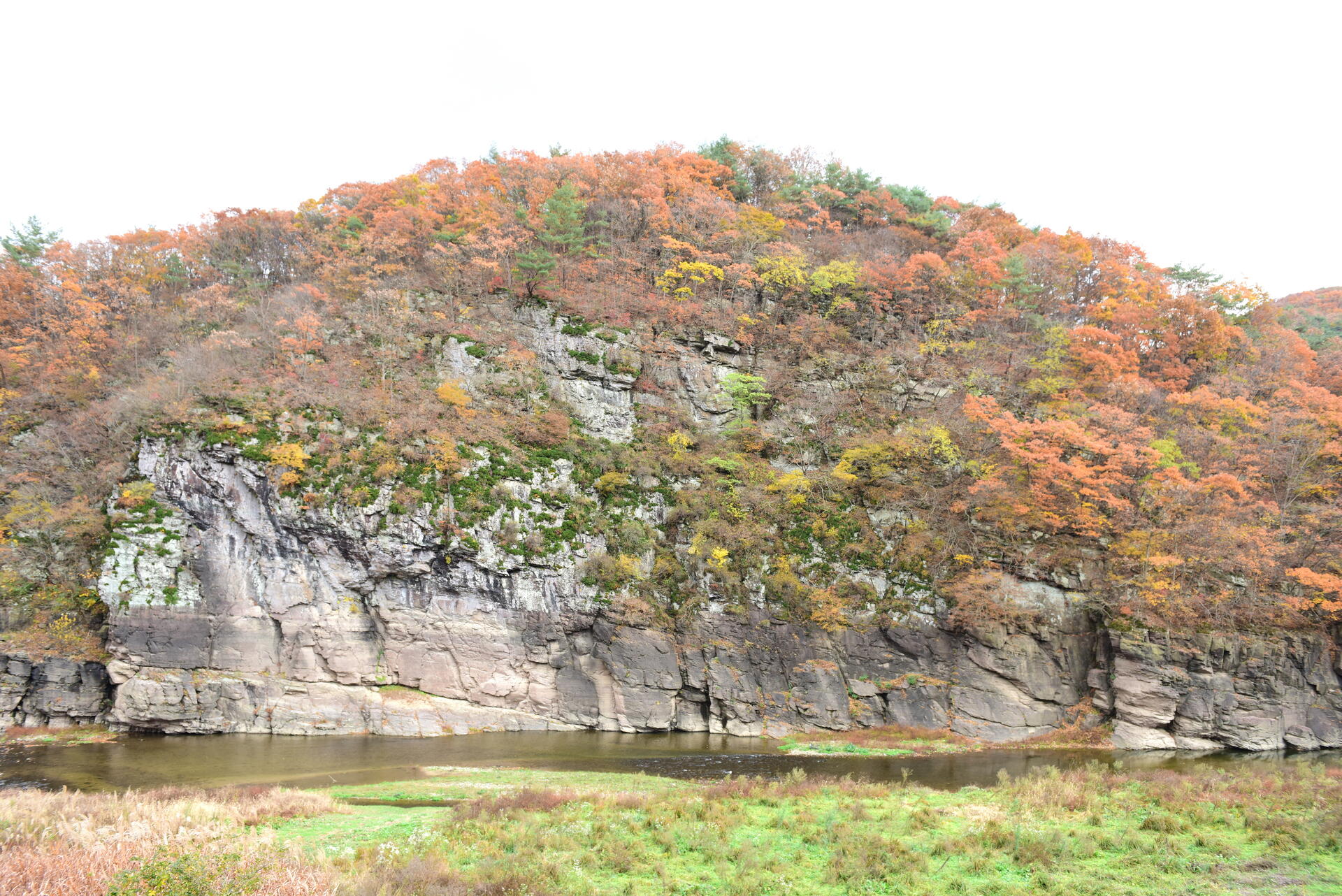
© Korea Heritage Service , CC BY-SA 4.0 Resized from original. (This derivative is under the same CC BY-SA license.)
World Heritage Research
Discover scientific research and academic studies that deepen our understanding of Petroglyphs along the Bangucheon Stream from its history and significance to its conservation, management, and contemporary challenges.
-
A Study on the Accumulated Placeness of ‘Petroglyphs along the Bangucheon Stream’ in Taehwagang River : Focusing on Bangudae Petroglyphs
This study reveals that the petroglyphs along the Bangucheon Stream, particularly the Bangudae Petroglyphs, hold significant cultural and ecological value as they intricately depict prehistoric whale ecology. The research highlights the accumulated 'placeness' of these petroglyphs, emphasizing their spatial and environmental significance. By analyzing the interplay between light, shadow, and time, the study suggests that the petroglyphs may have been designed to interact with sunlight in meaningful ways, potentially serving as a form of 'sunlight petroglyph.' Furthermore, the findings indicate that the petroglyphs' location, characterized by cliffs, ravines, and submerged rocks, offers unique acoustic properties, necessitating expanded excavation efforts. The study advocates for comprehensive conservation efforts that extend beyond visible petroglyphs to include their subterranean environment, aiming to enhance the site's status as a UNESCO World Heritage Site.
Lee, K.-W., & Hong, J.-Y. (2023). A Study on the Accumulated Placeness of ‘Petroglyphs along the Bangucheon Stream’ in Taehwagang River : Focusing on Bangudae Petroglyphs. Humanities Contents, 70, 239–260. https://doi.org/10.18658/humancon.2023.09.239
View Publication Record | Read Publication